


Immune reconstitution in recipients of photodepleted HLA-identical sibling donor stem cell transplantations: T cell subset frequencies predict outcome
- PMID: 21684345
- PMCID: PMC3179560
- DOI: 10.1016/j.bbmt.2011.05.017
Immune reconstitution in recipients of photodepleted HLA-identical sibling donor stem cell transplantations: T cell subset frequencies predict outcome
Abstract
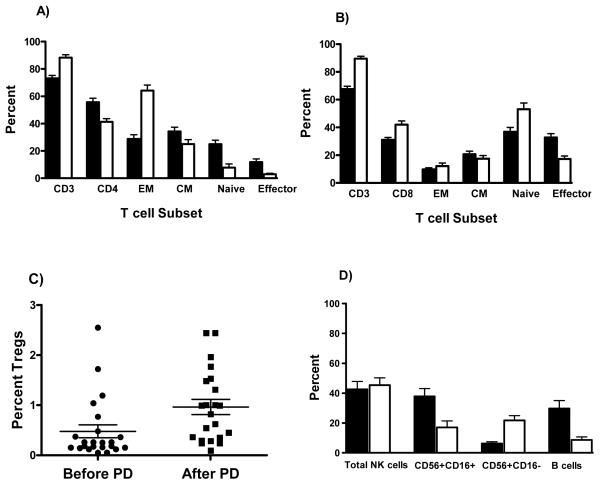
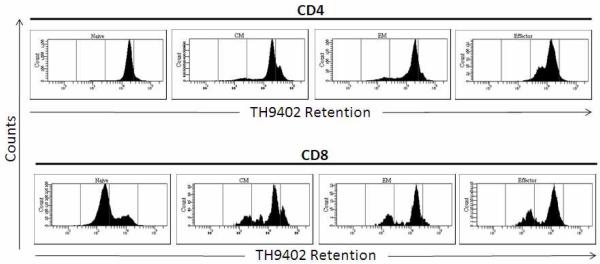
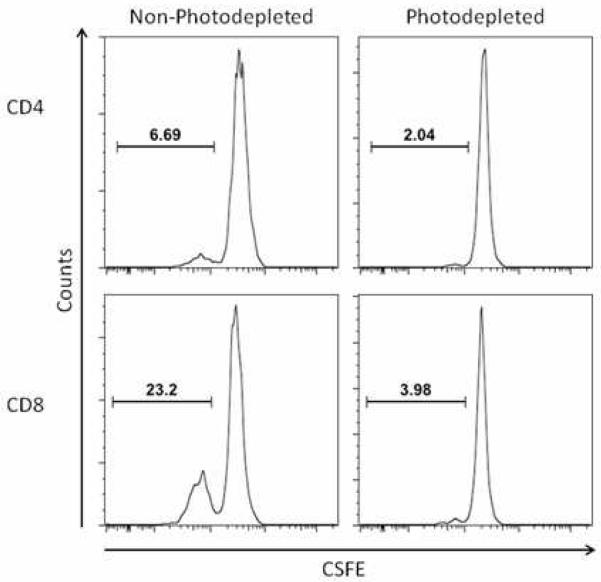
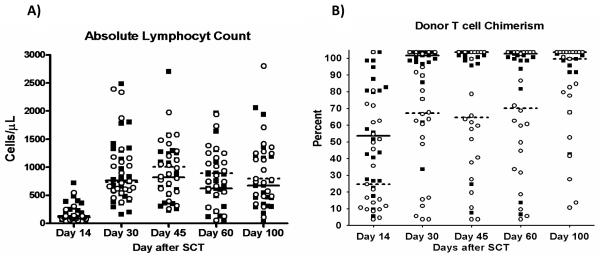
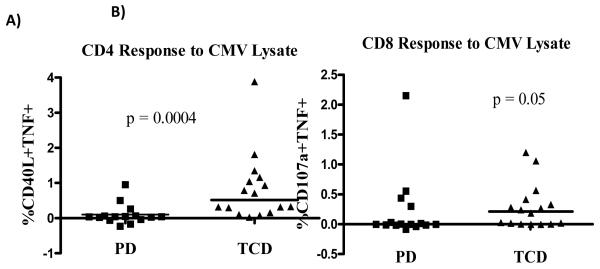
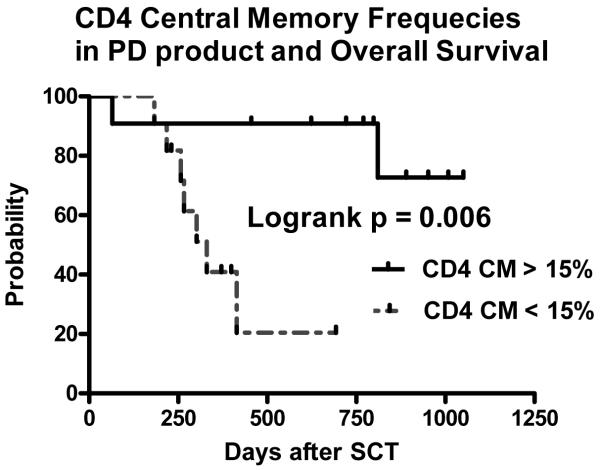
We evaluated an ex vivo photodepletion (PD) technique to selectively deplete graft-versus-host disease (GVHD) alloreacting T cells given to 24 human leukocyte antigen (HLA)-identical sibling stem cell transplantation (SCT) recipients. Donor lymphocytes were activated by 72-hour exposure to irradiated in vitro expanded recipient T lymphocytes and pulsed with a TH9402 photosensitizer. Alloactivated T cells preferentially retaining the photosensitizer were eliminated by light exposure. The PD product showed an inverted CD4(+)/CD8(+) ratio with greatest depletion occurring in the CD4(+) naive and central memory populations. In contrast, the CD8(+) naive and effector cells were relatively conserved, reflecting the differential extrusion of TH9402 by T cell subsets. Cytomegalovirus reactive T cells were reduced in the PD product and in recipient blood 100 days after SCT when compared with contemporaneous HLA-identical sibling donor T cell-depleted SCT recipients. Although PD SCT recipients experienced similar absolute lymphocyte counts during the first 100 days after SCT, they achieved 100% donor T cell chimerism more rapidly and had higher CD8(+) naive T cell counts early after SCT. SCT recipients of PD products with the lowest CD4 central memory content had the highest risk of developing chronic GVHD (cGVHD) (P = .04) and a poorer survival (P = .03). Although the persistence of CD8(+) naive T cells may have contributed to important antileukemia responses resulting in a relatively low relapse rate, our findings emphasize the role of donor memory T cells and CD4 cells in establishing immune competence post-SCT. Although PD is associated with excellent outcomes in the haploidentical setting, the low frequency of alloactivations in HLA-matched pairs makes the PD approach used by our group for allodepletion in HLA-matched sibling transplantations an inefficient technique.
Published by Elsevier Inc.
Figures
References
-
- Dazzi F, Fozza C. Disease relapse after haematopoietic stem cell transplantation: risk factors and treatment. Best Pract Res Clin Haematol. 2007 Jun;20(2):311–27. - PubMed
-
- Fujiwara H, Sconocchia G, Melenhorst J, Eniafe R, Nakamura R, Hensel N, et al. Tissue-restricted T cell alloresponses across HLA barriers: selection and identification of leukemia-restricted CTL in HLA-mismatched stimulator-responder pairs. Bone Marrow Transplant. 2003 Aug;32(4):371–8. - PubMed
-
- Mavroudis DA, Dermime S, Molldrem J, Jiang YZ, Raptis A, van Rhee F, et al. Specific depletion of alloreactive T cells in HLA-identical siblings: a method for separating graft-versus-host and graft-versus-leukaemia reactions. Br J Haematol. 1998 Jun;101(3):565–70. - PubMed
-
- Mielke S, Solomon SR, Barrett AJ. Selective depletion strategies in allogeneic stem cell transplantation. Cytotherapy. 2005;7(2):109–15. - PubMed
Publication types
MeSH terms
Substances
Grants and funding
LinkOut - more resources
Full Text Sources
Other Literature Sources
Medical
Research Materials
