


Chemometric analysis of the amino acid requirements of antioxidant food protein hydrolysates
- PMID: 21686175
- PMCID: PMC3116181
- DOI: 10.3390/ijms12053148
Chemometric analysis of the amino acid requirements of antioxidant food protein hydrolysates
Abstract
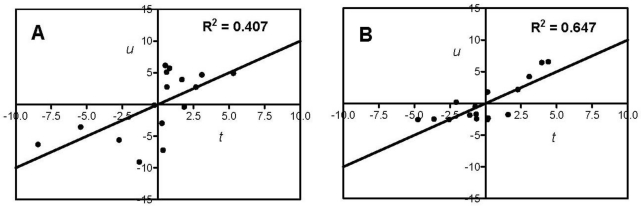
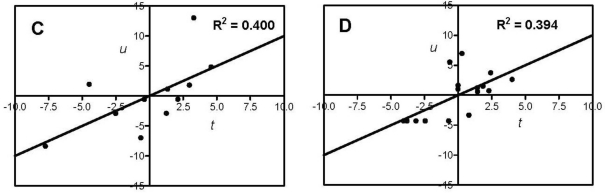
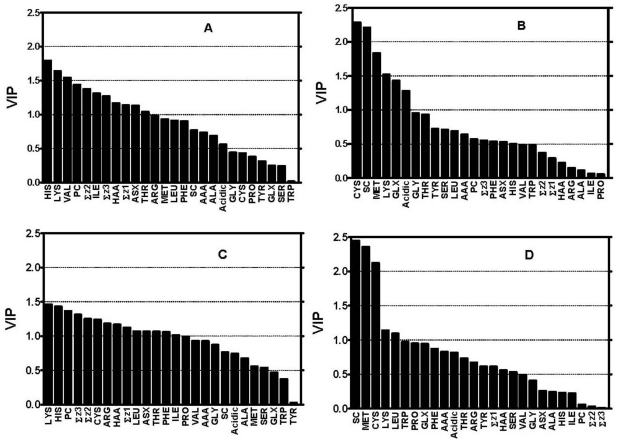
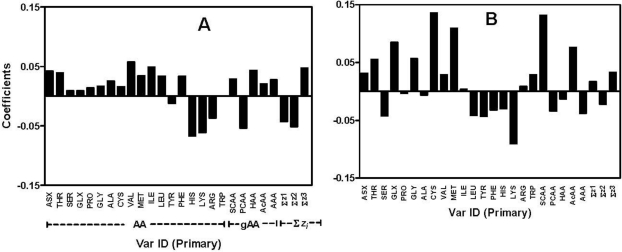
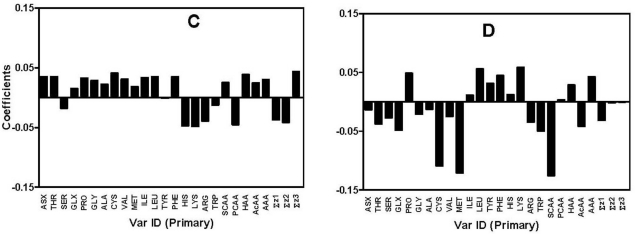
The contributions of individual amino acid residues or groups of amino acids to antioxidant activities of some food protein hydrolysates were investigated using partial least squares (PLS) regression method. PLS models were computed with amino acid composition and 3-z scale descriptors in the X-matrix and antioxidant activities of the samples in the Y-matrix; models were validated by cross-validation and permutation tests. Based on coefficients of the resulting models, it was observed that sulfur-containing (SCAA), acidic and hydrophobic amino acids had strong positive effects on scavenging of 2,2-diphenyl-1-picrylhydrazyl (DPPH) and H(2)O(2) radicals in addition to ferric reducing antioxidant power. For superoxide radicals, only lysine and leucine showed strong positive contributions while SCAA had strong negative contributions to scavenging by the protein hydrolysates. In contrast, positively-charged amino acids strongly contributed negatively to ferric reducing antioxidant power and scavenging of DPPH and H(2)O(2) radicals. Therefore, food protein hydrolysates containing appropriate amounts of amino acids with strong contribution properties could be potential candidates for use as potent antioxidant agents. We conclude that information presented in this work could support the development of low cost methods that will efficiently generate potent antioxidant peptide mixtures from food proteins without the need for costly peptide purification.
Keywords: amino acids; antioxidant prop1erties; chemometrics; free radicals; partial least square regression; reactive oxygen species.
Figures
References
-
- Elias RJ, Kellerby SS, Decker EA. Antioxidant activity of proteins and peptides. Crit. Rev. Food Sci. Nutr. 2008;48:430–441. - PubMed
-
- Udenigwe CC, Lu YL, Han CH, Hou WC, Aluko RE. Flaxseed protein-derived peptide fractions: Antioxidant properties and inhibition of lipopolysaccharide-induced nitric oxide production in murine macrophages. Food Chem. 2009;116:277–284.
-
- Prior RL, Wu X, Schaich K. Standardized methods for the determination of antioxidant capacity and phenolics in foods and dietary supplements. J. Agric. Food Chem. 2005;53:4290–4302. - PubMed
-
- Huang D, Ou B, Prior RL. The chemistry behind antioxidant capacity assays. J. Agric. Food Chem. 2005;53:1841–1856. - PubMed
-
- Pownall TL, Udenigwe CC, Aluko RE. Amino acid composition and antioxidant properties of pea seed (Pisum sativum L.) enzymatic protein hydrolysate fractions. J. Agric. Food Chem. 2010;58:4712–4718. - PubMed
Publication types
MeSH terms
Substances
LinkOut - more resources
Full Text Sources
Medical
