


doi: 10.4061/2011/450939.
Epub 2011 Apr 21.
Olfactory loss in Parkinson's disease
Affiliations
- PMID: 21687752
- PMCID: PMC3109349
- DOI: 10.4061/2011/450939
Item in Clipboard
Olfactory loss in Parkinson's disease
Parkinsons Dis.
2011.
Abstract
Impairment of olfaction is a characteristic and early feature of Parkinson's disease. Recent data indicate that >95% of patients with Parkinson's disease present with significant olfactory loss. Deficits in the sense of smell may precede clinical motor symptoms by years and can be used to assess the risk for developing Parkinson's disease in otherwise asymptomatic individuals. This paper summarizes the available information about olfactory function in Parkinson's disease, indicating the advantageous use of olfactory probes in early and differential diagnosis.
Figures
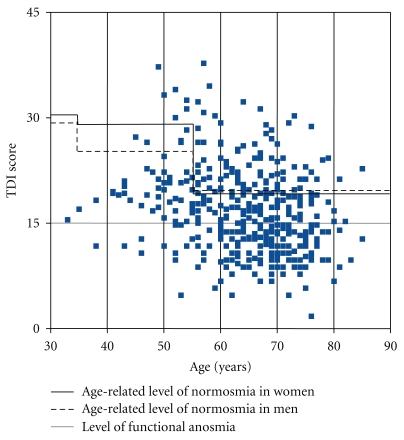
Olfactory function of the total number of 400 PD patients. Results are shown as a composite TDI score (sum of odor threshold, odor discrimination, and odor identification score) adjusted to age-related norms [6].
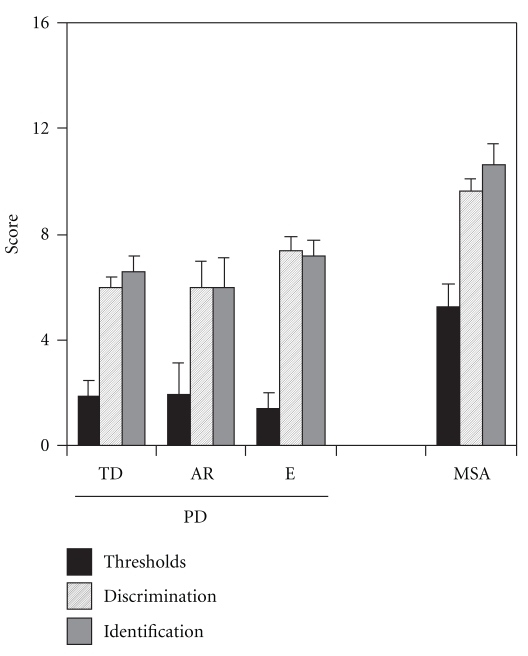
Olfactory function in PD subtypes (TD: tremor-dominant, AR: akinetic-rigid, e: equivalent type) and multiple system atrophy (MSA) [7].
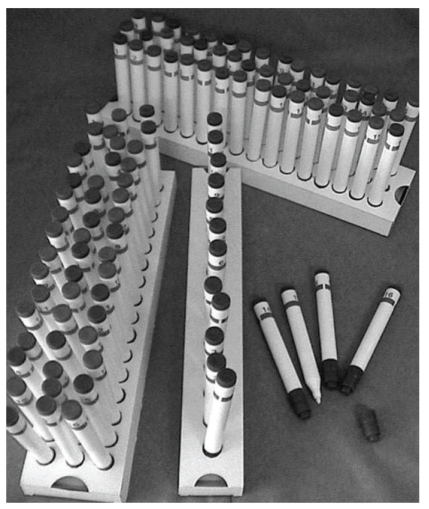
“Sniffin' Sticks” test kit which is comprised of 3 individual tests of olfactory function (phenyl ethyl alcohol odor threshold, odor discrimination, and odor identification). The scores of the individual tests are summated to the so-called “TDI score” which is a reliable means to estimate the degree of olfactory function.
References
-
- Politis M, Wu K, Molloy S, Bain PG, Chaudhuri KR, Piccini P. Parkinson’s disease symptoms: the patient’s perspective. Movement Disorders. 2010;25(11):1646–1651. - PubMed
-
- Ansari KA, Johnson A. Olfactory function in patients with Parkinson’s disease. Journal of Chronic Diseases. 1975;28(9):493–497. - PubMed
-
- Ward CD, Hess WA, Calne DB. Olfactory impairment in Parkinson’s disease. Neurology. 1983;33:943–946. - PubMed
-
- Doty RL, Deems DA, Stellar S. Olfactory dysfunction in parkinsonism: a general deficit unrelated to neurologic signs, disease stage, or disease duration. Neurology. 1988;38:1237–1244. - PubMed
LinkOut - more resources
Full Text Sources
