


Freshwater Bacteria are Stoichiometrically Flexible with a Nutrient Composition Similar to Seston
- PMID: 21687767
- PMCID: PMC3109486
- DOI: 10.3389/fmicb.2010.00132
Freshwater Bacteria are Stoichiometrically Flexible with a Nutrient Composition Similar to Seston
Abstract
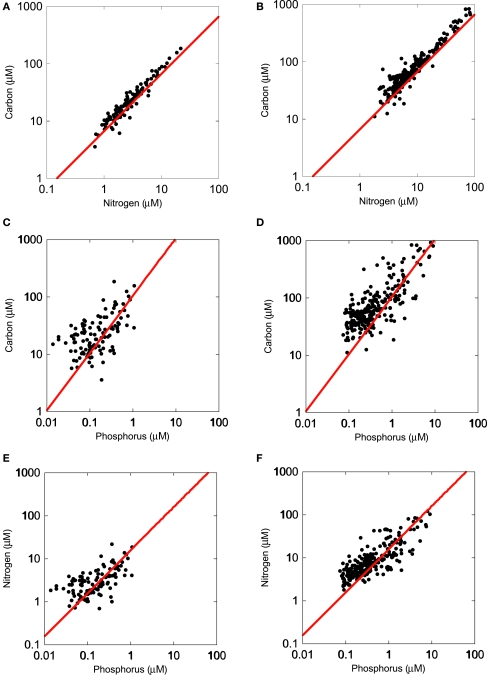
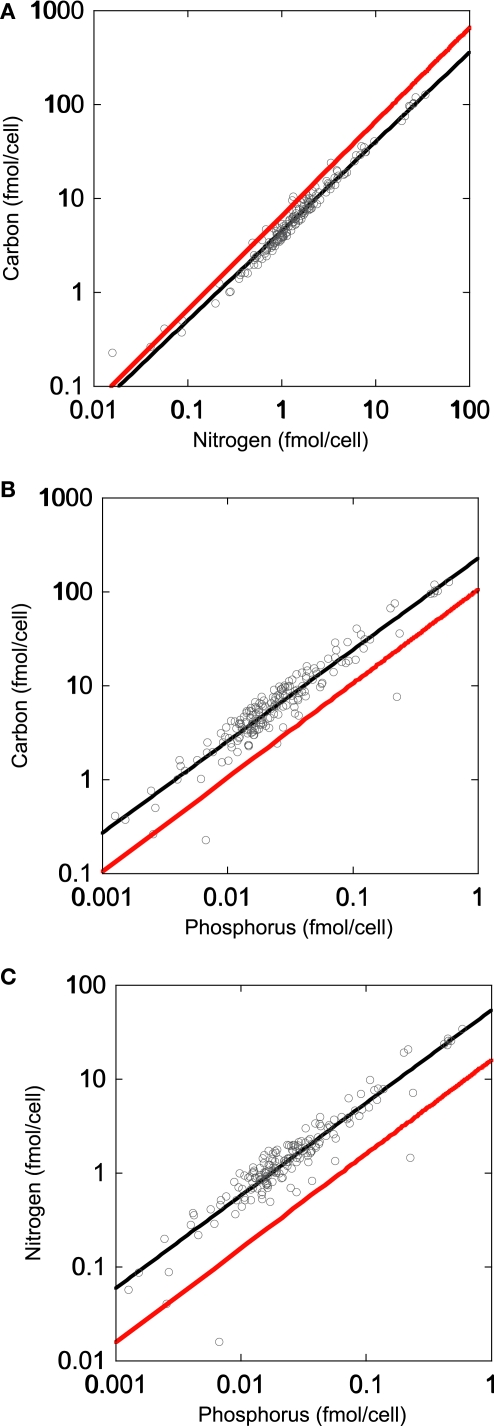
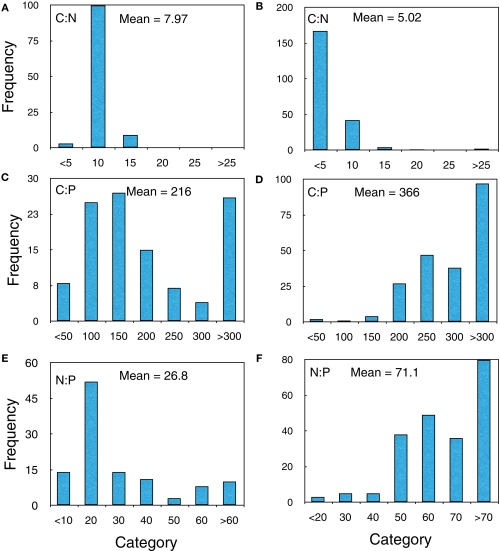
Although aquatic bacteria are assumed to be nutrient-rich, they out-compete other foodweb osmotrophs for nitrogen (N) and phosphorus (P) an apparent contradiction to resource ratio theory. This paradox could be resolved if aquatic bacteria were demonstrated to be nutrient-poor relative other portions of the planktonic food web. In a survey of >120 lakes in the upper Midwest of the USA, the nutrient content of bacteria was lower than previously reported and very similar to the Redfield ratio, with a mean biomass composition of 102:12:1 (C:N:P). Individual freshwater bacterial isolates grown under P-limiting and P-replete conditions had even higher C:P and N:P ratios with a mean community biomass composition ratio of 875C:179N:1P suggesting that individual strains can be extremely nutrient-poor, especially with respect to P. Cell-specific measurements of individual cells from one lake confirmed that low P content could be observed at the community level in natural systems with a mean biomass composition of 259C:69N:1P. Variability in bacterial stoichiometry is typically not recognized in the literature as most studies assume constant and nutrient-rich bacterial biomass composition. We present evidence that bacteria can be extremely P-poor in individual systems and in culture, suggesting that bacteria in freshwater ecosystems can either play a role as regenerators or consumers of inorganic nutrients and that this role could switch depending on the relationship between bacterial biomass stoichiometry and resource stoichiometry. This ability to switch roles between nutrient retention and regeneration likely facilitates processing of terrestrial organic matter in lakes and rivers and has important implications for a wide range of bacterially mediated biogeochemical processes.
Keywords: carbon; heterotrophs; nitrogen; nutrient regeneration; phosphorus; stoichiometry.
Figures


References
-
- APHA.(1992). Standard Methods for the Examination of Water and Wastewater. Washington, DC: APHA
-
- Azam F., Fenchel T., Field J. G., Gray J. S., Meyer-Reil L. A., Thingstad F. (1983). The ecological role of water-column microbes in the sea. Mar. Ecol. Prog. Ser. 10, 257–263 10.3354/meps010257 - DOI
-
- Biddanda B., Ogdahl M., Cotner J. (2001). Dominance of bacterial metabolism in oligotrophic relative to eutrophic waters. Limnol. Oceanogr. 46, 730–739 10.4319/lo.2001.46.3.0730 - DOI
LinkOut - more resources
Full Text Sources
