


Age differences in brain activity during emotion processing: reflections of age-related decline or increased emotion regulation?
- PMID: 21691052
- PMCID: PMC3388265
- DOI: 10.1159/000328465
Age differences in brain activity during emotion processing: reflections of age-related decline or increased emotion regulation?
Abstract
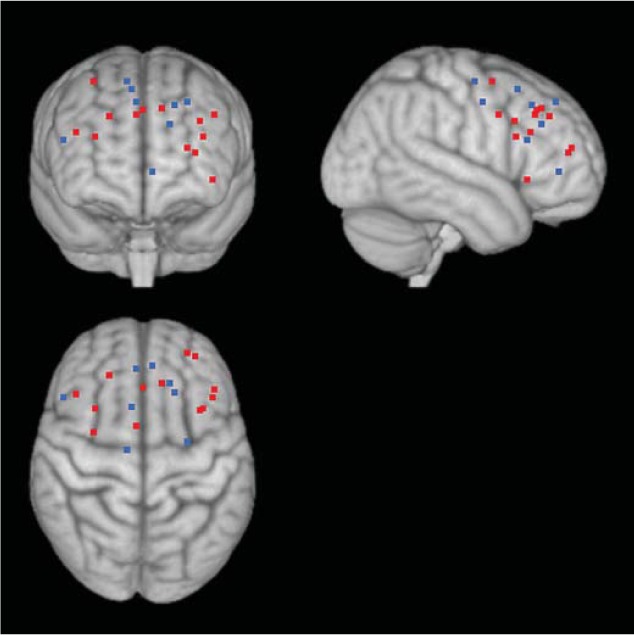
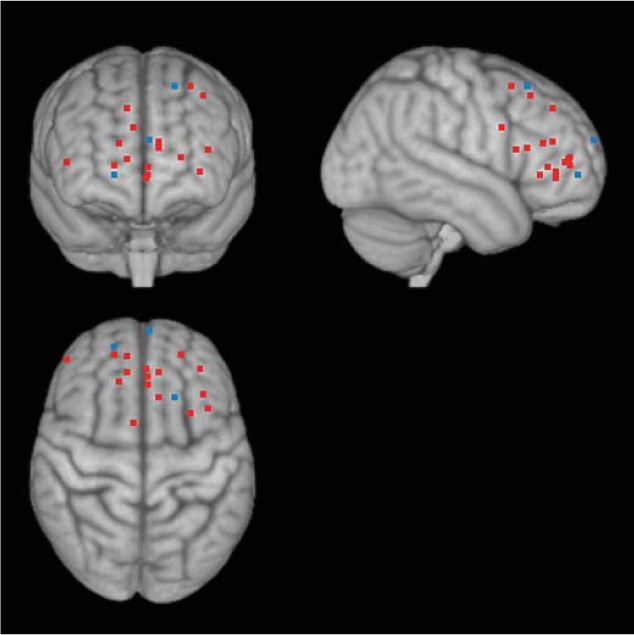
Despite the fact that physical health and cognitive abilities decline with aging, the ability to regulate emotion remains stable and in some aspects improves across the adult life span. Older adults also show a positivity effect in their attention and memory, with diminished processing of negative stimuli relative to positive stimuli compared with younger adults. The current paper reviews functional magnetic resonance imaging studies investigating age-related differences in emotional processing and discusses how this evidence relates to two opposing theoretical accounts of older adults' positivity effect. The aging-brain model [Cacioppo et al. in: Social Neuroscience: Toward Understanding the Underpinnings of the Social Mind. New York, Oxford University Press, 2011] proposes that older adults' positivity effect is a consequence of age-related decline in the amygdala, whereas the cognitive control hypothesis [Kryla-Lighthall and Mather in: Handbook of Theories of Aging, ed 2. New York, Springer, 2009; Mather and Carstensen: Trends Cogn Sci 2005;9:496-502; Mather and Knight: Psychol Aging 2005;20:554-570] argues that the positivity effect is a result of older adults' greater focus on regulating emotion. Based on evidence for structural and functional preservation of the amygdala in older adults and findings that older adults show greater prefrontal cortex activity than younger adults while engaging in emotion-processing tasks, we argue that the cognitive control hypothesis is a more likely explanation for older adults' positivity effect than the aging-brain model.
Copyright © 2011 S. Karger AG, Basel.
Figures
References
-
- Charles ST, Piazza JR. Age differences in affective well-being: context matters. Soc Personal Psychol Compass. 2009;3:1–14.
-
- Kryla-Lighthall N, Mather M. The role of cognitive control in older adults’ emotional well-being; In: Berngtson V, Gans D, Putney N, Silverstein M, editors. Handbook of Theories of Aging, ed 2. New York: Springer Publishing; 2009. pp. 323–344.
-
- Mather M, Carstensen LL. Aging and motivated cognition: the positivity effect in attention and memory. Trends Cogn Sci. 2005;9:496–502. - PubMed
-
- Mather M, Carstensen LL. Aging and attentional biases for emotional faces. Psychol Sci. 2003;14:409. - PubMed
Publication types
MeSH terms
Grants and funding
LinkOut - more resources
Full Text Sources
Medical
