. 2011;6(6):e20284.
doi: 10.1371/journal.pone.0020284. Epub 2011 Jun 14.

Gene-disease network analysis reveals functional modules in mendelian, complex and environmental diseases

Affiliations

Gene-disease network analysis reveals functional modules in mendelian, complex and environmental diseases

Anna Bauer-Mehren et al. PLoS One. 2011.

Abstract

Background: Scientists have been trying to understand the molecular mechanisms of diseases to design preventive and therapeutic strategies for a long time. For some diseases, it has become evident that it is not enough to obtain a catalogue of the disease-related genes but to uncover how disruptions of molecular networks in the cell give rise to disease phenotypes. Moreover, with the unprecedented wealth of information available, even obtaining such catalogue is extremely difficult.

Principal findings: We developed a comprehensive gene-disease association database by integrating associations from several sources that cover different biomedical aspects of diseases. In particular, we focus on the current knowledge of human genetic diseases including mendelian, complex and environmental diseases. To assess the concept of modularity of human diseases, we performed a systematic study of the emergent properties of human gene-disease networks by means of network topology and functional annotation analysis. The results indicate a highly shared genetic origin of human diseases and show that for most diseases, including mendelian, complex and environmental diseases, functional modules exist. Moreover, a core set of biological pathways is found to be associated with most human diseases. We obtained similar results when studying clusters of diseases, suggesting that related diseases might arise due to dysfunction of common biological processes in the cell.

Conclusions: For the first time, we include mendelian, complex and environmental diseases in an integrated gene-disease association database and show that the concept of modularity applies for all of them. We furthermore provide a functional analysis of disease-related modules providing important new biological insights, which might not be discovered when considering each of the gene-disease association repositories independently. Hence, we present a suitable framework for the study of how genetic and environmental factors, such as drugs, contribute to diseases.

Availability: The gene-disease networks used in this study and part of the analysis are available at http://ibi.imim.es/DisGeNET/DisGeNETweb.html#Download.


Conflict of interest statement

Competing Interests: The authors have declared that no competing interests exist.

Figures

Figure 1
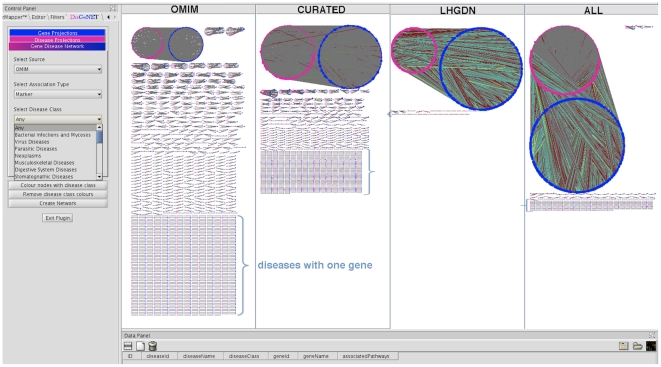
Figure 1. Cytoscape screenshot depicting the four gene-disease networks.
Gene (blue) and disease (magenta) nodes are connected by edges in different colors corresponding to the type of association in our gene-disease association ontology. Grey represents Marker association, red denotes GeneticVariation, blue corresponds to Therapeutic class, green to RegulatoryModification.
Figure 2
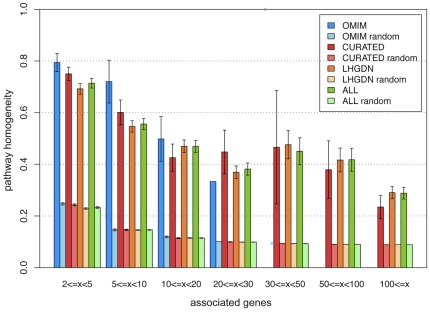
Figure 2. Pathway homogeneity for individual diseases.
Mean pathway homogeneity values of single diseases and random controls are plotted for all four networks binned by the number of associated gene products per disease. Pathway homogeneity values range from 0 to 1, where 1 means that all gene products associated with the disease are annotated to the same pathway. Confidence intervals of 95% were added to allow comparison of real to random values. For OMIM, there are only two diseases with more than 30 gene products annotated, both with a pathway homogeneity of 1.
Figure 3
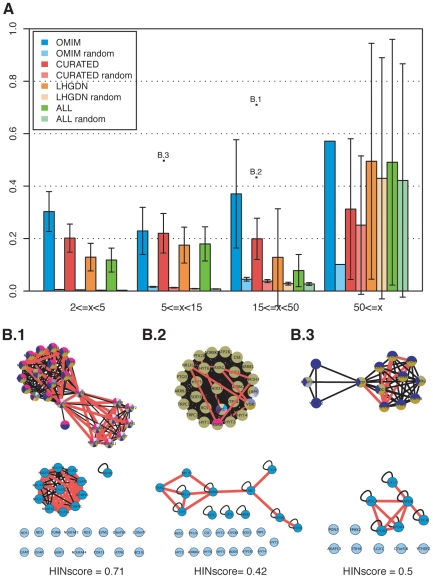
Figure 3. HINscores for phenotypically derived gene clusters.
A: Mean HINscores plotted for different cluster sizes for all networks and random controls. B: Selected gene clusters denoted as B.1, B.2, B.3 and their corresponding HIN subgraphs from the CURATED dataset. In the phenotypically derived gene clusters (upper part) red edges represent physical interactions among the gene products. In the HIN subgraphs (lower part), red edges denote phenotypic relationship among the corresponding genes. Nodes in light blue belong to the phenotypically derived gene clusters that are not present in HIN. B.1 is associated with mitochondrial respiratory chain deficiencies, Leigh and Alexander Disease. B.2 corresponds to Hypertension and Cardiovascular Diseases. B.3 represents different types of Hyperlipoproteinemia. Nodes are colored according to their disease class (see Fig. S4).
Figure 4
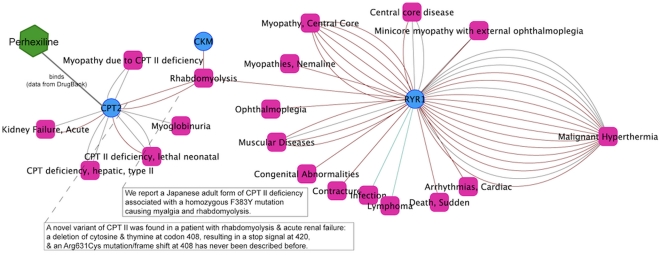
Figure 4. Knowledge about genetic basis of diseases can shed light on mechanisms underlying drug adverse reactions.
A network of genes and diseases around Rhabdomyolisis is displayed. The drug Perhexiline is used for treatment of Angina Pectoris and has as therapeutic target CPT13. In addition, it can also target CPT2. Since deficiencies in CPT2 function are associated with Rhabdomyolisis, it can be proposed that Perhexiline causes Rhabdomyolisis through its action on CPT2.
Figure 5
Figure 5. Candidate disease gene prediction.
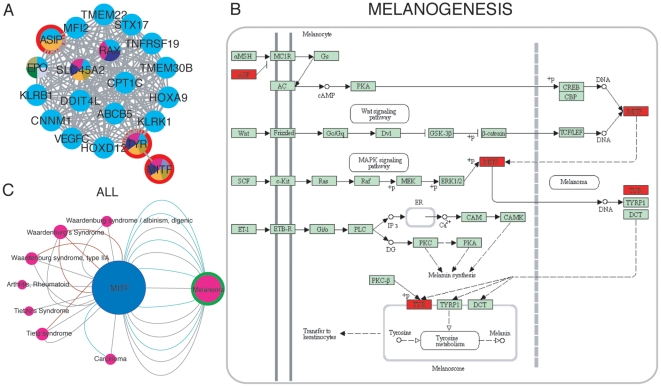
A: Phenotypically derived gene cluster associated with Melanoma. MITF is the only gene in the cluster not associated with Melanoma. B: The Melanogenesis pathway (KEGG: hsa:04916) with genes MITF, TYR and ASP (ASIP in A) colored in red. C: Neighborhood of MITF gene in network ALL.
Figure 6
Figure 6. Identification of shared mechanisms of different diseases.
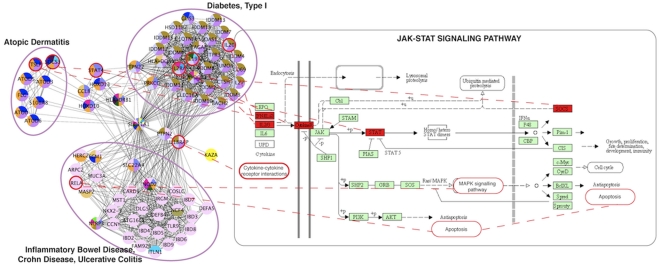
A cluster containing genes associated with distinct diseases is shown on the left part of the figure. There are three main disease groups, Atopic Dermatitis (an autoimmune skin disease), Diabetes Mellitus Type I (an early onset, insulin-dependent, autoimmune disease), and Inflammatory Bowel Diseases (including Crohn Disease and Ulcerative Colitis). Diseases are coloured according to their disease class (see Fig. S4). The most significantly enriched Jak-STAT signaling pathway is displayed with some nodes from the cluster colored in red (right part).

References

    1. Botstein D, Risch N. Discovering genotypes underlying human phenotypes: past successes for mendelian disease, future approaches for complex disease. Nat Genet. 2003;33:228–237. - PubMed
    1. Kann MG. Advances in translational bioinformatics: computational approaches for the hunting of disease genes. Brief Bioinform. 2010;11:96–110. - PMC - PubMed
    1. Scriver CR, Waters PJ. Monogenic traits are not simple: lessons from phenylketonuria. Trends Genet. 1999;15:267–272. - PubMed
    1. Hirschhorn JN, Daly MJ. Genome-wide association studies for common diseases and complex traits. Nat Rev Genet. 2005;6:95–108. - PubMed
    1. Cokol M, Iossifov I, Weinreb C, Rzhetsky A. Emergent behavior of growing knowledge about molecular interactions. Nat Biotechnol. 2005;23:1243–1247. - PubMed

Publication types