


The impact of economic crises on communicable disease transmission and control: a systematic review of the evidence
- PMID: 21695209
- PMCID: PMC3112201
- DOI: 10.1371/journal.pone.0020724
The impact of economic crises on communicable disease transmission and control: a systematic review of the evidence
Abstract
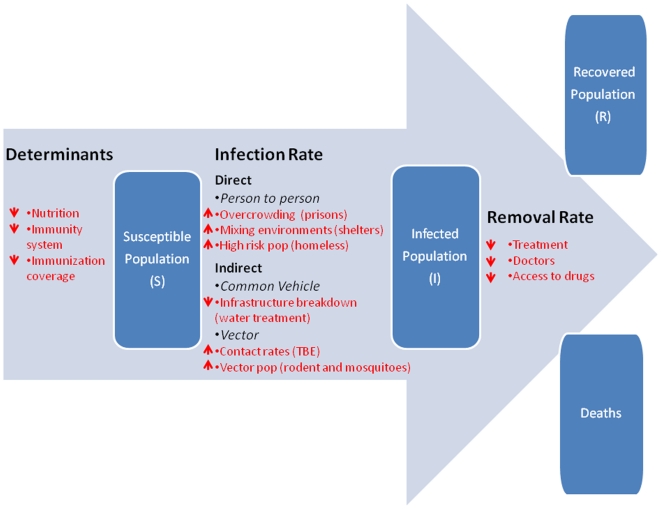
There is concern among public health professionals that the current economic downturn, initiated by the financial crisis that started in 2007, could precipitate the transmission of infectious diseases while also limiting capacity for control. Although studies have reviewed the potential effects of economic downturns on overall health, to our knowledge such an analysis has yet to be done focusing on infectious diseases. We performed a systematic literature review of studies examining changes in infectious disease burden subsequent to periods of crisis. The review identified 230 studies of which 37 met our inclusion criteria. Of these, 30 found evidence of worse infectious disease outcomes during recession, often resulting from higher rates of infectious contact under poorer living circumstances, worsened access to therapy, or poorer retention in treatment. The remaining studies found either reductions in infectious disease or no significant effect. Using the paradigm of the "SIR" (susceptible-infected-recovered) model of infectious disease transmission, we examined the implications of these findings for infectious disease transmission and control. Key susceptible groups include infants and the elderly. We identified certain high-risk groups, including migrants, homeless persons, and prison populations, as particularly vulnerable conduits of epidemics during situations of economic duress. We also observed that the long-term impacts of crises on infectious disease are not inevitable: considerable evidence suggests that the magnitude of effect depends critically on budgetary responses by governments. Like other emergencies and natural disasters, preparedness for financial crises should include consideration of consequences for communicable disease control.
Conflict of interest statement
Figures
References
-
- Wade R. Essays on global financial crisis: The crisis as opportunity. Cambridge Journal of Economics. 2009 (in press)
-
- OECD. Workshop on structural reforms and economic resilience: evidence and policy implications. Paris: OECD; 2009.
-
- Padoan P. What is the economic outlook for OECD countries? An interim assessment. Paris: OECD; 2010.
-
- Marmot M, Bell R. How will the financial crisis affect health? British Medical Journal. 2009;338:1314. - PubMed
-
- Stuckler D, Basu S, McKee M, Suhrcke M. Responding to the economic crisis: a primer for public health professionals. Journal of Public Health Policy. 2010 in press. - PubMed
Publication types
MeSH terms
LinkOut - more resources
Full Text Sources
Other Literature Sources
Medical
Miscellaneous
