


Diffusion imaging with prospective motion correction and reacquisition
- PMID: 21695721
- PMCID: PMC3121006
- DOI: 10.1002/mrm.22837
Diffusion imaging with prospective motion correction and reacquisition
Abstract
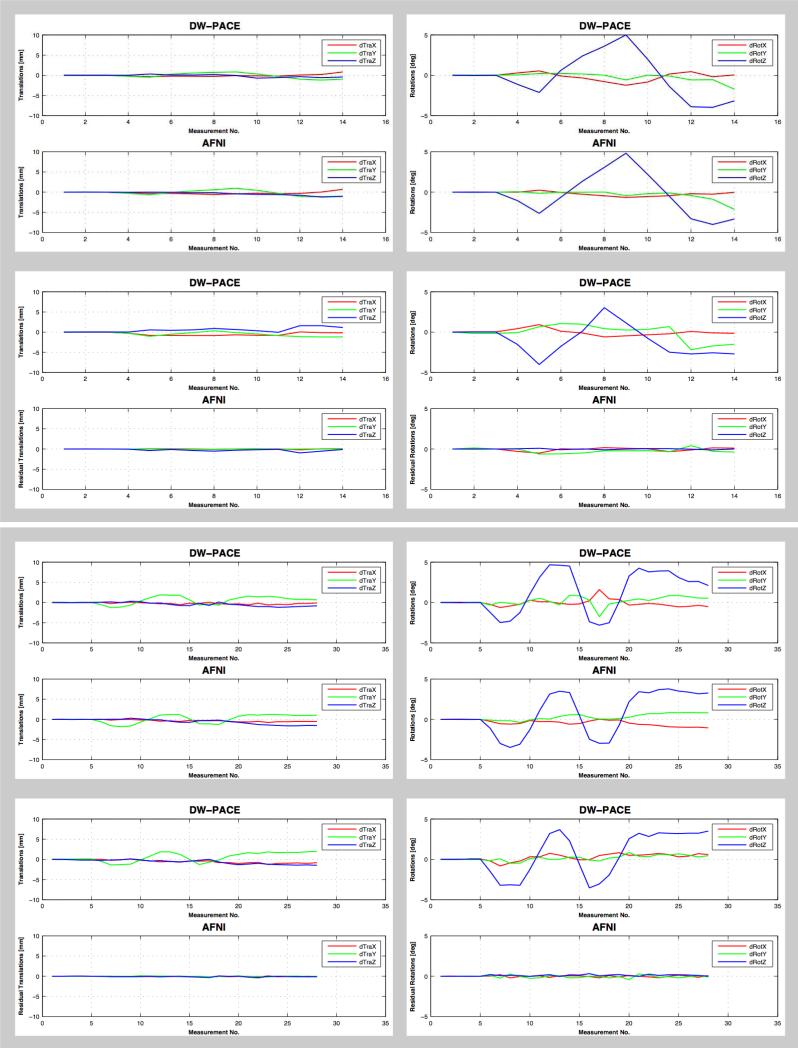
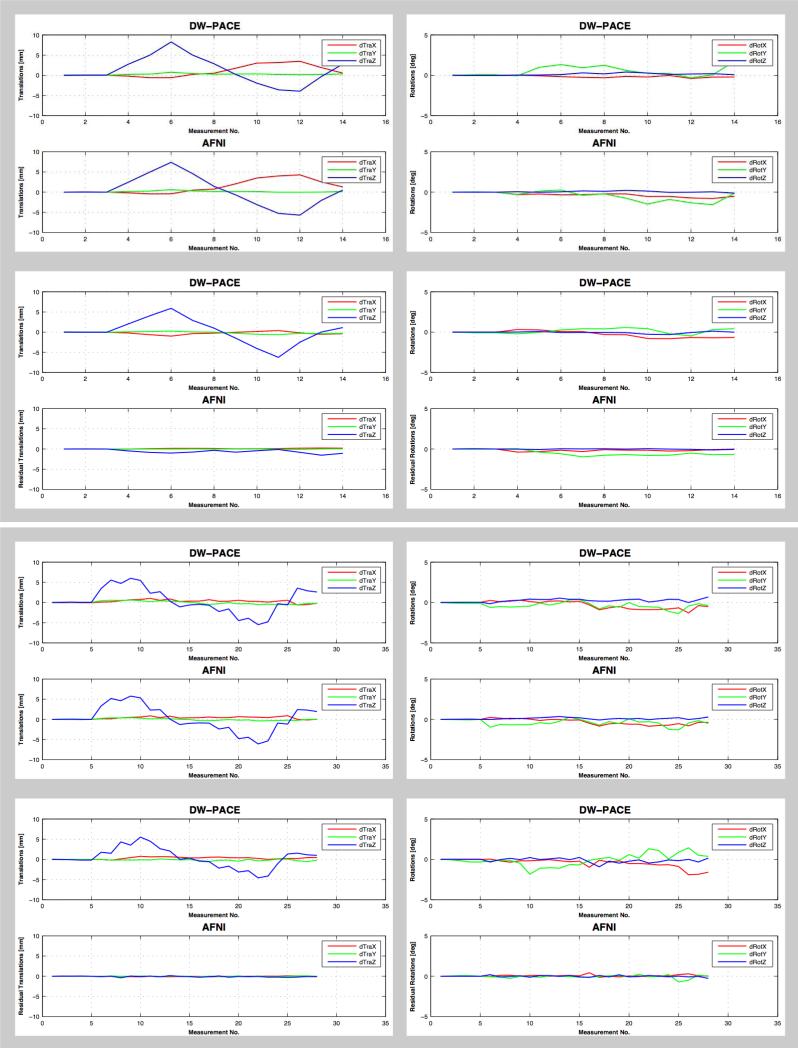
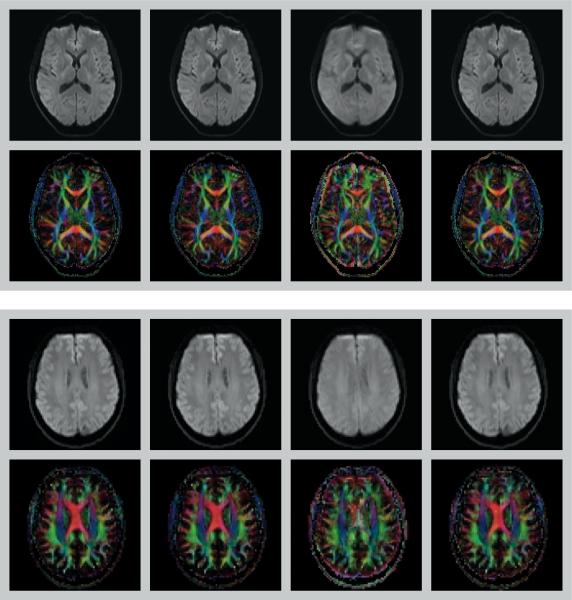
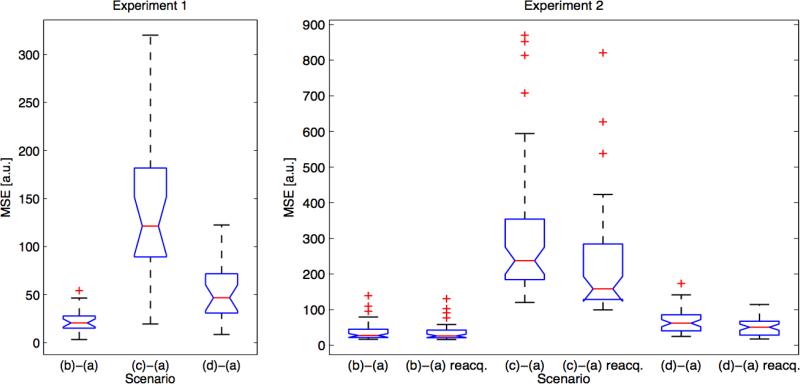
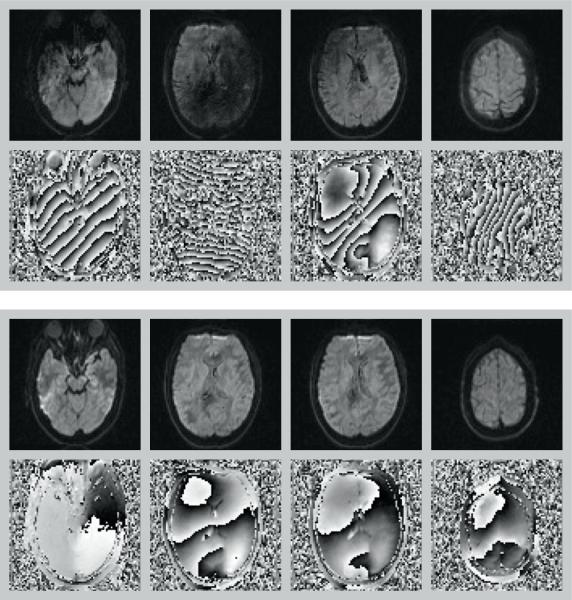
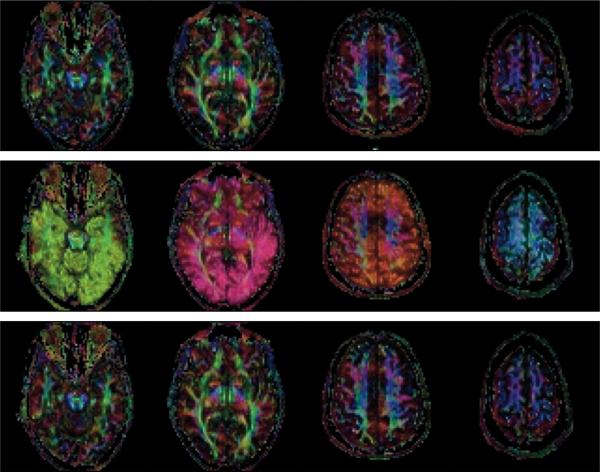
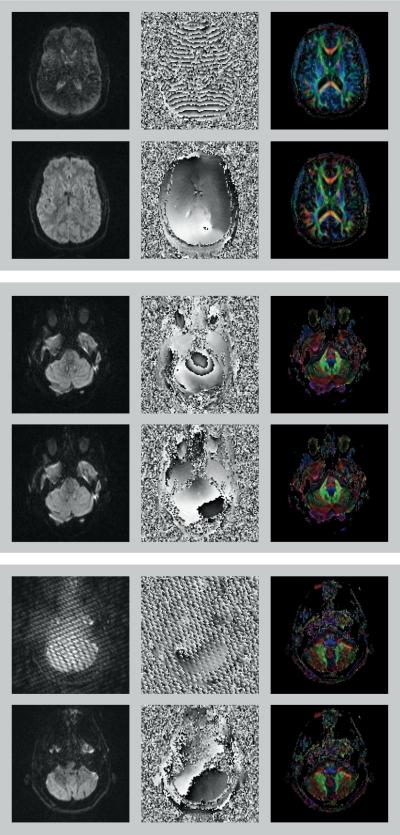
A major source of artifacts in diffusion-weighted imaging is subject motion. Slow bulk subject motion causes misalignment of data when more than one average or diffusion gradient direction is acquired. Fast bulk subject motion can cause signal dropout artifacts in diffusion-weighted images and results in erroneous derived maps, e.g., fractional anisotropy maps. To address both types of artifacts, a fully automatic method is presented that combines prospective motion correction with a reacquisition scheme. Motion correction is based on the prospective acquisition correction method modified to work with diffusion-weighted data. The images to reacquire are determined automatically during the acquisition from the imaging data, i.e., no extra reference scan, navigators, or external devices are necessary. The number of reacquired images, i.e., the additional scan duration can be adjusted freely. Diffusion-weighted prospective acquisition correction corrects slow bulk motion well and reduces misalignment artifacts like image blurring. Mean absolute residual values for translation and rotation were <0.6 mm and 0.5°. Reacquisition of images affected by signal dropout artifacts results in diffusion maps and fiber tracking free of artifacts. The presented method allows the reduction of two types of common motion related artifacts at the cost of slightly increased acquisition time.
Copyright © 2011 Wiley-Liss, Inc.
Figures
References
-
- Stejskal EO, Tanner JE. Spin Diffusion Measurements: Spin Echoes in the Presence of a Time□Dependent Field Gradient. J. Chem. Phys. 1965;42(1):288–92.
-
- Schaefer PW, Grant PE, Gonzalez RG. Diffusion-weighted MR imaging of the brain. Radiology. 2000 Nov;217(2):331–45. - PubMed
-
- Johansen-Berg H, Rushworth MF. Using diffusion imaging to study human connectional anatomy. Annu Rev Neurosci. 2009;32:75–94. - PubMed
-
- Pipe JG, Farthing VG, Forbes KP. Multishot diffusion-weighted FSE using PROPELLER MRI. Magn Reson Med. 2002 Jan;47(1):42–52. - PubMed
-
- Liu C, Bammer R, Kim DH, Moseley ME. Self-navigated interleaved spiral (SNAILS): application to high-resolution diffusion tensor imaging. Magn Reson Med. 2004 Dec;52(6):1388–96. - PubMed
Publication types
MeSH terms
Grants and funding
- S10RR023043/RR/NCRR NIH HHS/United States
- S10 RR019254/RR/NCRR NIH HHS/United States
- S10 RR019307/RR/NCRR NIH HHS/United States
- 5R01CA137254-02/CA/NCI NIH HHS/United States
- S10RR021110/RR/NCRR NIH HHS/United States
- S10RR019307/RR/NCRR NIH HHS/United States
- S10 RR023043/RR/NCRR NIH HHS/United States
- S10RR019254/RR/NCRR NIH HHS/United States
- P41RR14075/RR/NCRR NIH HHS/United States
- S10 RR023401/RR/NCRR NIH HHS/United States
- R01 CA137254/CA/NCI NIH HHS/United States
- S10 RR021110/RR/NCRR NIH HHS/United States
- S10RR023401/RR/NCRR NIH HHS/United States
- P41 RR014075/RR/NCRR NIH HHS/United States
LinkOut - more resources
Full Text Sources
Other Literature Sources
