


A high antioxidant spice blend attenuates postprandial insulin and triglyceride responses and increases some plasma measures of antioxidant activity in healthy, overweight men
- PMID: 21697300
- PMCID: PMC3138637
- DOI: 10.3945/jn.111.138966
A high antioxidant spice blend attenuates postprandial insulin and triglyceride responses and increases some plasma measures of antioxidant activity in healthy, overweight men
Abstract
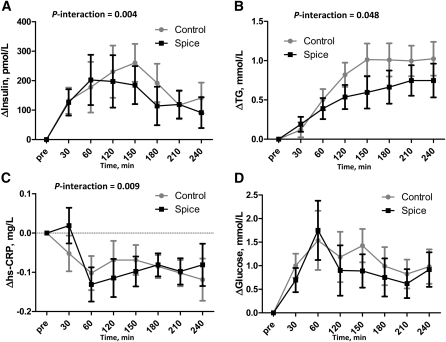
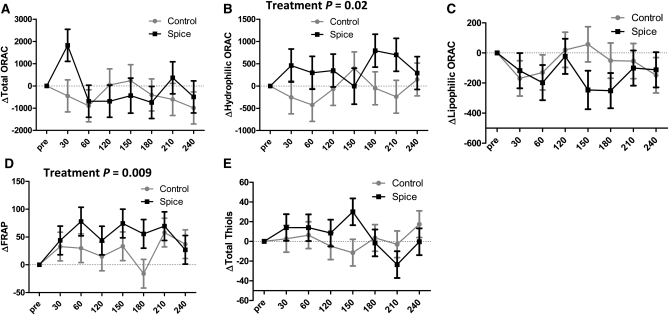
There is much interest in the potential of dietary antioxidants to attenuate in vivo oxidative stress, but little characterization of the time course of plasma effects exists. Culinary spices have demonstrated potent in vitro antioxidant properties. The objective of this study was to examine whether adding 14 g of a high antioxidant spice blend to a 5060-kJ (1200 kcal) meal exerted significant postprandial effects on markers of plasma antioxidant status and metabolism. Healthy overweight men (n = 6) consumed a control and spiced meal in a randomized crossover design with 1 wk between testing sessions. Blood was sampled prior to the meal and at 30-min intervals for 3.5 h (total of 8 samples). Mixed linear models demonstrated a treatment × time interaction (P < 0.05) for insulin and TG, corresponding with 21 and 31% reductions in postprandial levels with the spiced meal, respectively. Adding spices to the meal significantly increased the ferric reducing antioxidant power, such that postprandial increases following the spiced meal were 2-fold greater than after the control meal (P = 0.009). The hydrophilic oxygen radical absorbance capacity (ORAC) of plasma also was increased by spices (P = 0.02). There were no treatment differences in glucose, total thiols, lipophilic ORAC, or total ORAC. The incorporation of spices into the diet may help normalize postprandial insulin and TG and enhance antioxidant defenses.
Conflict of interest statement
Author disclosures: A. C. Skulas-Ray, P. M. Kris-Etherton, D. L. Teeter, C-Y. O. Chen, J. P. Vanden Heuvel, and S. G. West, no conflicts of interest.
Figures
References
-
- Valko M, Leibfritz D, Moncol J, Cronin MT, Mazur M, Telser J. Free radicals and antioxidants in normal physiological functions and human disease. Int J Biochem Cell Biol. 2007;39:44–84 - PubMed
-
- van den Berg R, Haenen GR, van den Berg H, Bast A. Transcription factor NF-kappaB as a potential biomarker for oxidative stress. Br J Nutr. 2001;86 Suppl 1:S121–7 - PubMed
-
- Biesalski HK. Polyphenols and inflammation: basic interactions. Curr Opin Clin Nutr Metab Care. 2007;10:724–8 - PubMed
-
- USDA NDL Oxygen radical absorbance capacity (ORAC) of selected foods 2007. Beltsville (MD): Beltsville Human Nutrition Research Center; 2007
Publication types
MeSH terms
Substances
Grants and funding
LinkOut - more resources
Full Text Sources
Medical
Miscellaneous
