. 2011 Aug 1;187(3):1113-9.
doi: 10.4049/jimmunol.1100056. Epub 2011 Jun 22.

The novel costimulatory programmed death ligand 1/B7.1 pathway is functional in inhibiting alloimmune responses in vivo

Affiliations

The novel costimulatory programmed death ligand 1/B7.1 pathway is functional in inhibiting alloimmune responses in vivo

Jun Yang et al. J Immunol. .

Abstract

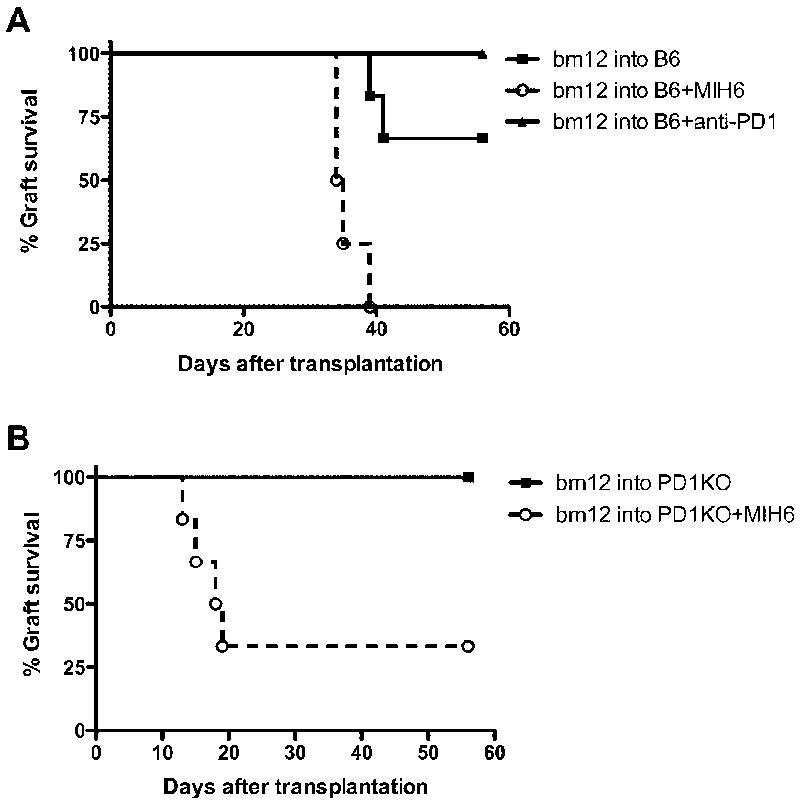
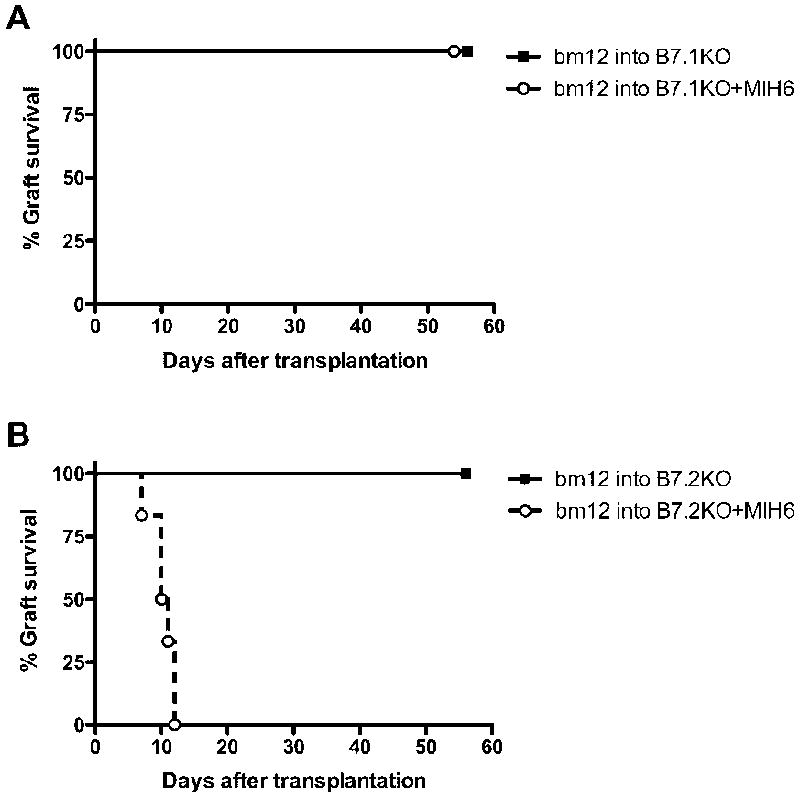
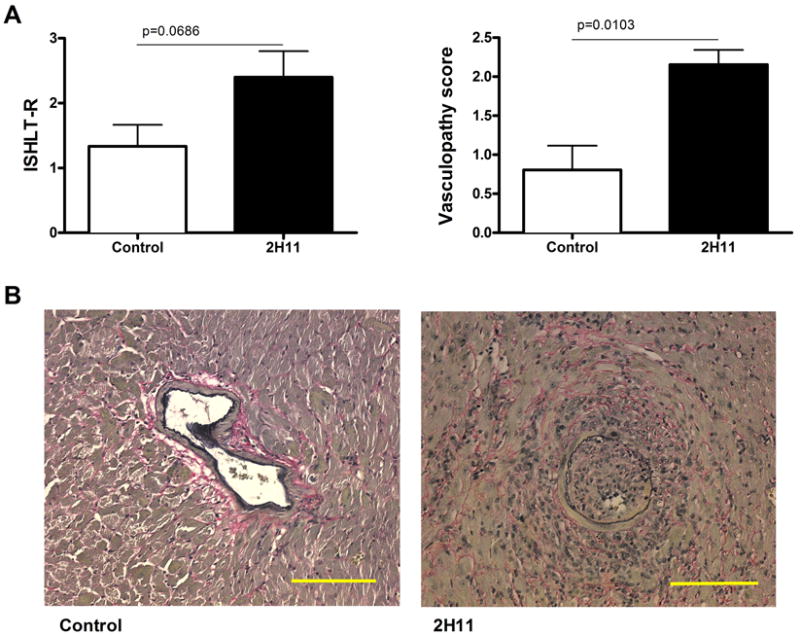
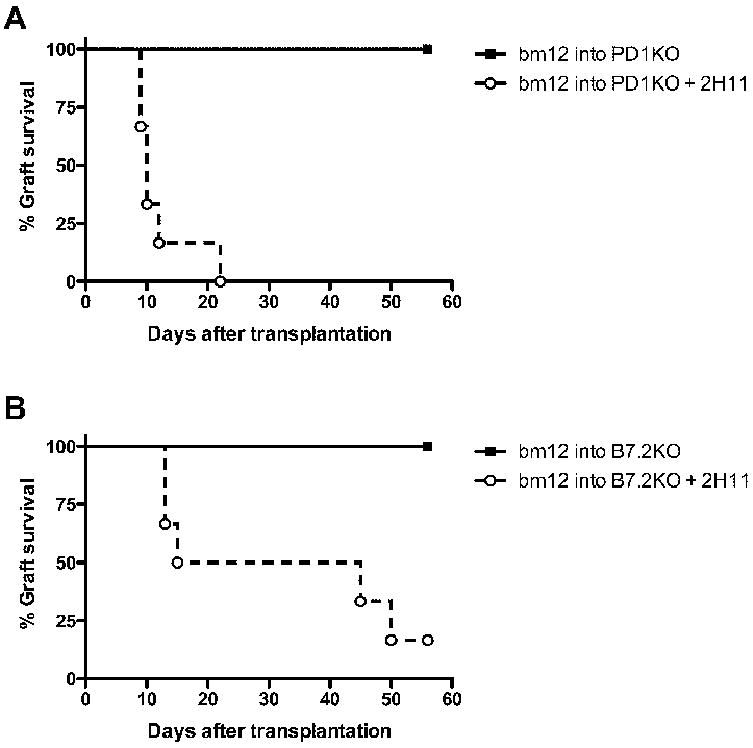
The programmed death ligand 1 (PDL1)/programmed death 1 (PD1) costimulatory pathway plays an important role in the inhibition of alloimmune responses as well as in the induction and maintenance of peripheral tolerance. It has been demonstrated recently that PDL1 also can bind B7.1 to inhibit T cell responses in vitro. Using the bm12 into B6 heart transplant model, we investigated the functional significance of this interaction in alloimmune responses in vivo. PD1 blockade unlike PDL1 blockade failed to accelerate bm12 allograft rejection, suggesting a role for an additional binding partner for PDL1 other than PD1 in transplant rejection. PDL1 blockade was able to accelerate allograft rejection in B7.2-deficient recipients but not B7.1-deficient recipients, indicating that PDL1 interaction with B7.1 was important in inhibiting rejection. Administration of the novel 2H11 anti-PDL1 mAb, which only blocks the PDL1-B7.1 interaction, aggravated chronic injury of bm12 allografts in B6 recipients. Aggravated chronic injury was associated with an increased frequency of alloreactive IFN-γ-, IL-4-, and IL-6-producing splenocytes and a decreased percentage of regulatory T cells in the recipients. Using an in vitro cell culture assay, blockade of the interaction of PDL1 on dendritic cells with B7.1 on T cells increased IFN-γ production from alloreactive CD4(+) T cells, whereas blockade of dendritic cell B7.1 interaction with T cell PDL1 did not. These data indicate that PDL1 interaction with B7.1 plays an important role in the inhibition of alloimmune responses in vivo and suggests a dominant direction for PDL1 and B7.1 interaction.


Conflict of interest statement

DISCLOSURES The authors have no financial conflicts of interest.

Figures

Figure 1
Figure 1. Disparate allograft outcome following PD1 and PDL1 blockade in the single MHC class II-mismatched transplant model
(A) bm12 cardiac grafts transplanted into B6 WT recipients had a median survival time of greater than 56 days. Anti-PD1 mAbs treatment had similar allograft survival times to untreated group; however, allograft rejection was remarkably accelerated when recipients were treated with dual-blockade MIH6 anti-PDL1 mAb. (B) Bm12 cardiac grafts transplanted into a PD1-deficient recipients had a median survival time of greater than 56 days. When PD1KO recipients were treated with anti-PDL1 mAb, (MIH6) allograft rejection was remarkably accelerated despite PD1 deficiency. N= 6 for each group.
Figure 2
Figure 2. PDL1 blockade leads to accelerated cardiac allograft loss in B7.2-deficient but not in B7.1-deficient recipients
bm12 cardiac grafts transplanted into B6 B7.1- or B7.2-deficient recipients had a median survival time of greater than 56 days. When treated with MIH6 anti-PDL1 mAb, B7.2-deficient recipients rejected all allografts within 10 days (B), while allografts survived long-term in B7.1- deficient recipients (A). N= 6 for each group.
Figure 3
Figure 3. Blockade of PDL1: B7.1 pathway leads to enhanced cardiac allograft vasculopathy in the single MHC class II-mismatched transplant model
The hearts from bm12 mice were transplanted into B6 WT recipients and treated with 2H11 anti-PDL1 mAb, which exclusively blocks PDL1: B7.1 pathway. (A) 2H11 treatment significantly increased vasculopathy score by 56 days after transplantation as compared with no treatment. ISHLT grade was also increased, although differences did not reach statistical significance. Values shown represent mean ± SEM histological score obtained from 3 individual mice. (B) Representative photomicrographs of elastin staining show advanced vasculopathy in 2H11-treated allografts. Bars, 200 μm.
Figure 4
Figure 4. Blockade of PDL1: B7.1 pathway accelerated cardiac allograft rejection in PD1 and B7.2 deficient recipients
(A) bm12 hearts were transplanted into PD1KO recipients and the recipients were treated with 2H11 anti-PDL1 mAb. The survival time of cardiac allografts was significantly shortened as compared to controls. (B) bm12 hearts were transplanted into B7.2-deficient B6 recipients and the recipients treated with 2H11. Bm12 cardiac grafts transplanted into B6 B7.2-deficient recipients had a median survival time of greater than 56 days, while 2H11 precipitated allograft loss. N= 6 for each group.
Figure 5
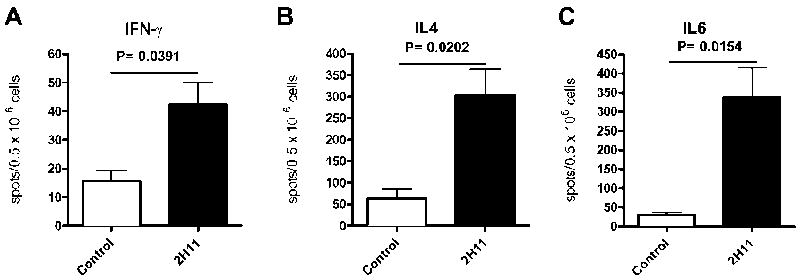
Figure 5. PDL1: B7.1 blockade upregulates production of Th1, Th2 and proinflammatory cytokines in B6 recipients of bm12 hearts
IFN-γ (A), IL-4 (B) and IL-6 (C) production by the splenocytes from B6 recipients of bm12 heart grafts assessed at 10 days post-Tx by ELISPOT. Data represent mean ± SEM of triplicate wells from three mice per group.
Figure 6
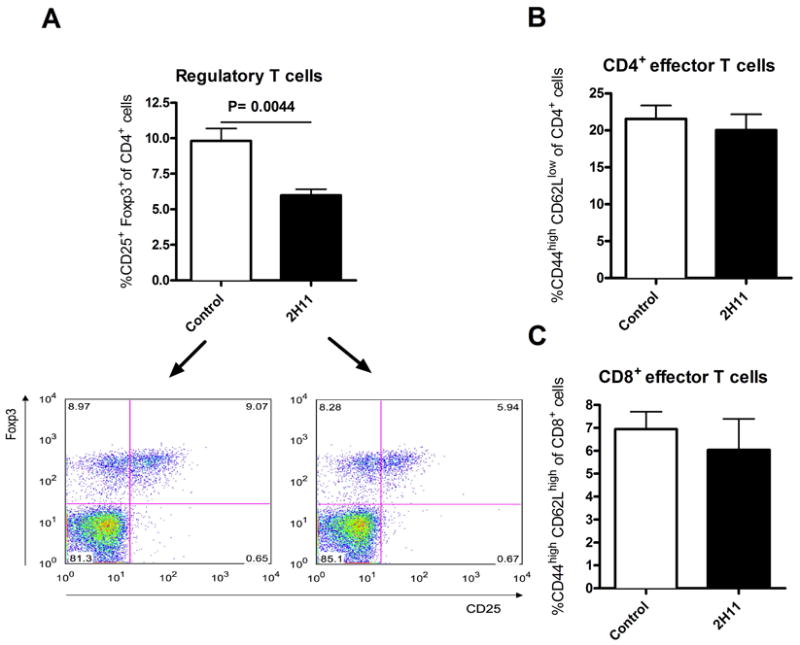
Figure 6. PDL1: B7.1 blockade decreases CD4+CD25+Foxp3+ regulatory T cells in spleens of B6 recipients of bm12 hearts without affecting effector T cells
FACS analysis of splenocytes from B6 recipients of bm12 hearts with or without 2H11 treatment at 10 -14 days post-Tx showed that 2H11 treatment resulted in a significantly lower percentage of CD4+CD25+Foxp3+ regulatory T cells than controls (A). The percentage of CD4+ and CD8+ effector/memory phenotype (CD44highCD62Llow) was similar between the 2H11-treated and control recipients (B and C). Bar graphs show means ±SEM. All results are representative of at least three different sets of experiments.
Figure 7
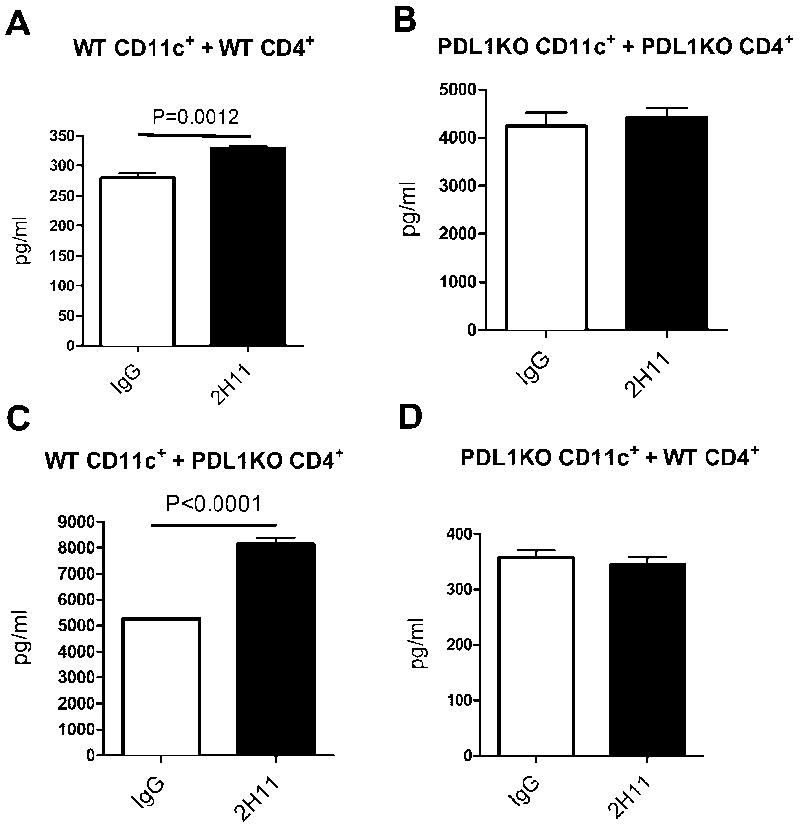
Figure 7. The interaction of PDL1 on APCs with B7.1 on T cells plays a dominant role in bidirectional interactions between these two molecules
Fourteen days after B6 WT skin was transplanted into Balb/c WT or PDL1KO recipients, spleens and lymph nodes from recipients were harvested and CD4+ T cells were isolated. CD4+ T cells were then cultured with irradiated CD11c+ cells from Flt-3L-injected B6 WT or PDL1KO mice. Cell-free supernatants of individual wells were removed after 48 h of incubation with 2H11 or control IgG and analyzed by a Luminex for IFN-γ production. 2H11 mildly increased IFN-γ-production by CD4+ T cells when PDL1 was present on both APCs and T cells (A), however no effect was seen when PDL1 was absent on both cells (B). In addition, 2H11 did not enhance IFN-γ production when PDL1 was absent on CD11c+ cells alone (D). 2H11 increased IFN-γ production when PDL1 was present on the APC side but absent in T cells (C). Bar graphs show means ±SEM. All results are representative of at least three different sets of experiments with 3 mice.

References

    1. Dong VM, Womer KL, Sayegh MH. Transplantation tolerance: the concept and its applicability. Pediatr Transplant. 1999;3:181–192. - PubMed
    1. Freeman GJ, Long AJ, Iwai Y, Bourque K, Chernova T, Nishimura H, Fitz LJ, Malenkovich N, Okazaki T, Byrne MC, Horton HF, Fouser L, Carter L, Ling V, Bowman MR, Carreno BM, Collins M, Wood CR, Honjo T. Engagement of the PD-1 immunoinhibitory receptor by a novel B7 family member leads to negative regulation of lymphocyte activation. J Exp Med. 2000;192:1027–1034. - PMC - PubMed
    1. Tseng SY, Otsuji M, Gorski K, Huang X, Slansky JE, Pai SI, Shalabi A, Shin T, Pardoll DM, Tsuchiya H. B7-DC, a new dendritic cell molecule with potent costimulatory properties for T cells. J Exp Med. 2001;193:839–846. - PMC - PubMed
    1. Latchman Y, Wood CR, Chernova T, Chaudhary D, Borde M, Chernova I, Iwai Y, Long AJ, Brown JA, Nunes R, Greenfield EA, Bourque K, Boussiotis VA, Carter LL, Carreno BM, Malenkovich N, Nishimura H, Okazaki T, Honjo T, Sharpe AH, Freeman GJ. PD-L2 is a second ligand for PD-1 and inhibits T cell activation. Nat Immunol. 2001;2:261–268. - PubMed
    1. Brown JA, Dorfman DM, Ma FR, Sullivan EL, Munoz O, Wood CR, Greenfield EA, Freeman GJ. Blockade of programmed death-1 ligands on dendritic cells enhances T cell activation and cytokine production. J Immunol. 2003;170:1257–1266. - PubMed

Publication types

MeSH terms