


Microbial symbiosis with the innate immune defense system of the skin
- PMID: 21697881
- PMCID: PMC3174284
- DOI: 10.1038/jid.2011.182
Microbial symbiosis with the innate immune defense system of the skin
Abstract
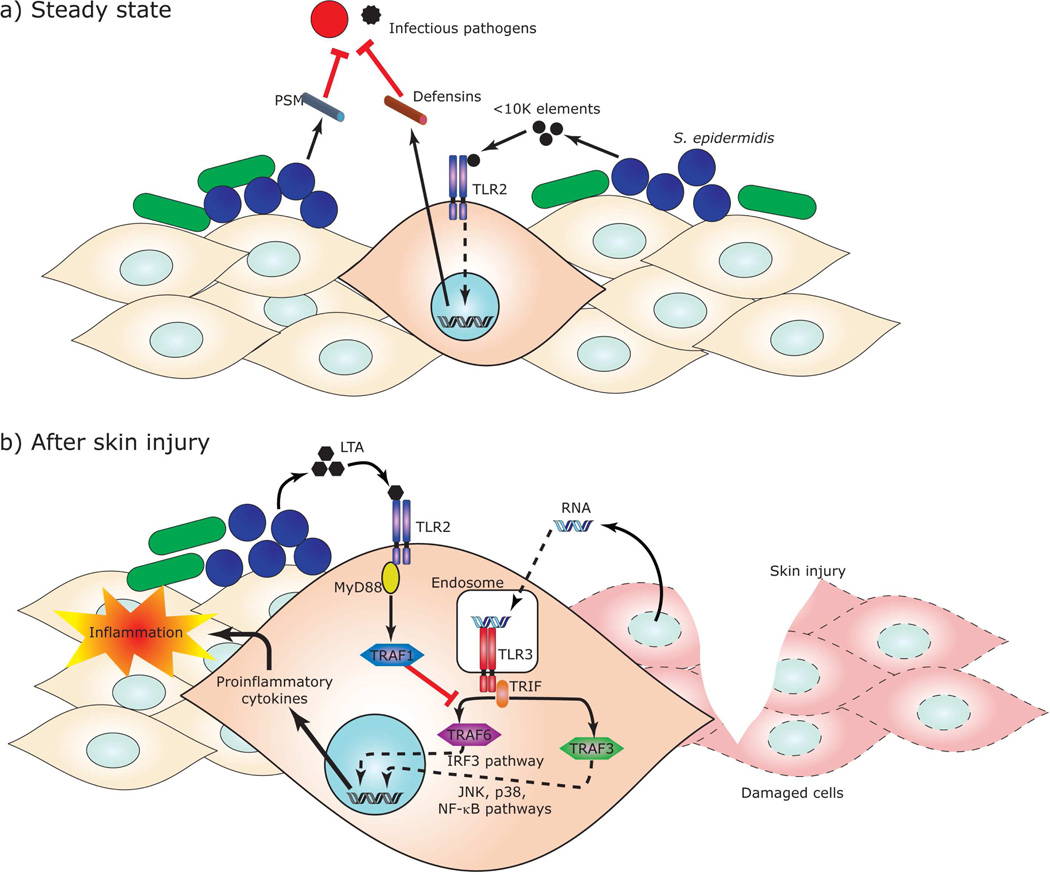
Skin protects itself against infection through a variety of mechanisms. Antimicrobial peptides (AMPs) are major contributors to cutaneous innate immunity, and this system, combined with the unique ionic, lipid, and physical barrier of the epidermis, is the first-line defense against invading pathogens. However, recent studies have revealed that our skin's innate immune system is not solely of human origin. Staphylococcus epidermidis, a major constituent of the normal microflora on healthy human skin, acts as a barrier against colonization of potentially pathogenic microbes and against overgrowth of already present opportunistic pathogens. Our resident commensal microbes produce their own AMPs, act to enhance the normal production of AMPs by keratinocytes, and are beneficial to maintaining inflammatory homeostasis by suppressing excess cytokine release after minor epidermal injury. These observations indicate that the normal human skin microflora protects skin by various modes of action, a conclusion supported by many lines of evidence associating diseases such as acne, atopic dermatitis, psoriasis, and rosacea with an imbalance of the microflora even in the absence of classical infection. This review highlights recent observations on the importance of innate immune systems and the relationship with the normal skin microflora to maintain healthy skin.
Figures
References
-
- Abtin A, Eckhart L, Glaser R, Gmeiner R, Mildner M, Tschachler E. The antimicrobial heterodimer S100A8/S100A9 (calprotectin) is upregulated by bacterial flagellin in human epidermal keratinocytes. J Invest Dermatol. 2010;130:2423–2430. - PubMed
-
- Abtin A, Eckhart L, Mildner M, Ghannadan M, Harder J, Schroder JM, et al. Degradation by stratum corneum proteases prevents endogenous RNase inhibitor from blocking antimicrobial activities of RNase 5 and RNase 7. J Invest Dermatol. 2009;129:2193–2201. - PubMed
-
- Bastos MC, Ceotto H, Coelho ML, Nascimento JS. Staphylococcal antimicrobial peptides: relevant properties and potential biotechnological applications. Curr Pharm Biotechnol. 2009;10:38–61. - PubMed
-
- Bensch KW, Raida M, Magert HJ, Schulz-Knappe P, Forssmann WG. hBD-1: a novel beta-defensin from human plasma. FEBS Lett. 1995;368:331–335. - PubMed
-
- Bojar RA, Holland KT. Acne and Propionibacterium acnes. Clin Dermatol. 2004;22:375–379. - PubMed
Publication types
MeSH terms
Substances
Grants and funding
LinkOut - more resources
Full Text Sources
Other Literature Sources
Medical
