


Diversity of the human skin microbiome early in life
- PMID: 21697884
- PMCID: PMC3182836
- DOI: 10.1038/jid.2011.168
Diversity of the human skin microbiome early in life
Abstract
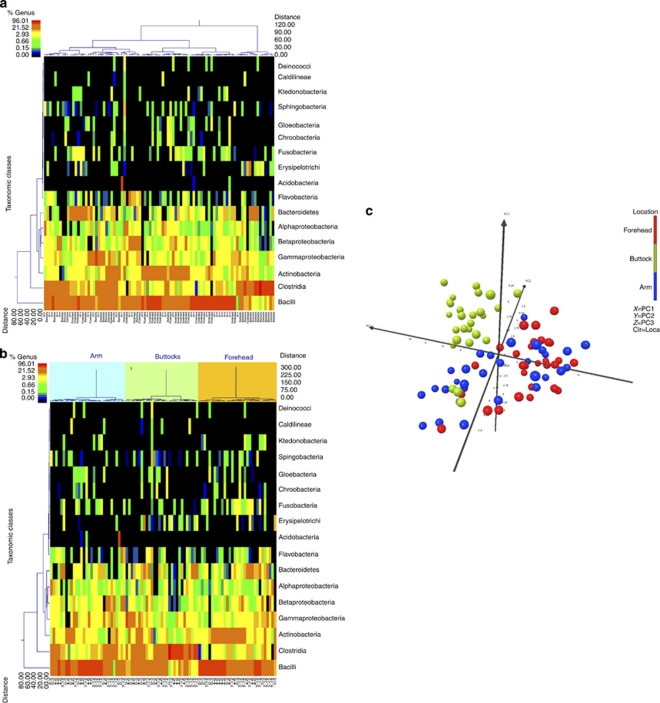
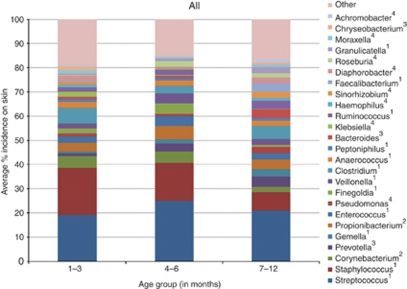
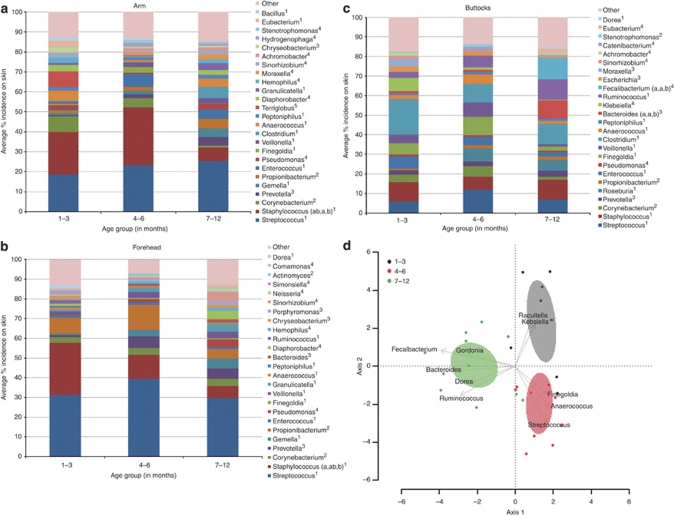
Within days after birth, rapid surface colonization of infant skin coincides with significant functional changes. Gradual maturation of skin function, structure, and composition continues throughout the first years of life. Recent reports have revealed topographical and temporal variations in the adult skin microbiome. Here we address the question of how the human skin microbiome develops early in life. We show that the composition of cutaneous microbial communities evolves over the first year of life, showing increasing diversity with age. Although early colonization is dominated by Staphylococci, their significant decline contributes to increased population evenness by the end of the first year. Similar to what has been shown in adults, the composition of infant skin microflora appears to be site specific. In contrast to adults, we find that Firmicutes predominate on infant skin. Timely and proper establishment of healthy skin microbiome during this early period might have a pivotal role in denying access to potentially infectious microbes and could affect microbiome composition and stability extending into adulthood. Bacterial communities contribute to the establishment of cutaneous homeostasis and modulate inflammatory responses. Early microbial colonization is therefore expected to critically affect the development of the skin immune function.
Figures
References
-
- Agache P, Blanc D, Barrand C, et al. Sebum levels during the first year of life. Br J Dermatol. 1980;103:643–649. - PubMed
-
- Benn CS, Thorsen P, Jensen JS, et al. Maternal vaginal microflora during pregnancy and the risk of asthma hospitalization and use of antiasthma medication in early childhood. J Allergy Clin Immunol. 2002;110:72–77. - PubMed
-
- Callard RE, Harper JI. The skin barrier, atopic dermatitis and allergy: a role for Langerhans cells. Trends Immunol. 2007;28:294–298. - PubMed
-
- Chiou YB, Blume-Peytavi U. Stratum corneum maturation. A review of neonatal skin function. Skin Pharmacol Physiol. 2004;17:57–66. - PubMed
Publication types
MeSH terms
LinkOut - more resources
Full Text Sources
Other Literature Sources
Medical
