


The effects of a long-term psychosocial stress on reproductive indicators in the baboon
- PMID: 21702002
- PMCID: PMC3478381
- DOI: 10.1002/ajpa.21538
The effects of a long-term psychosocial stress on reproductive indicators in the baboon
Abstract
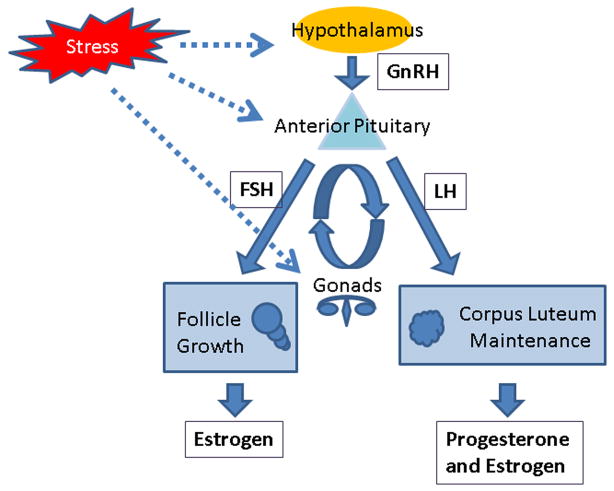
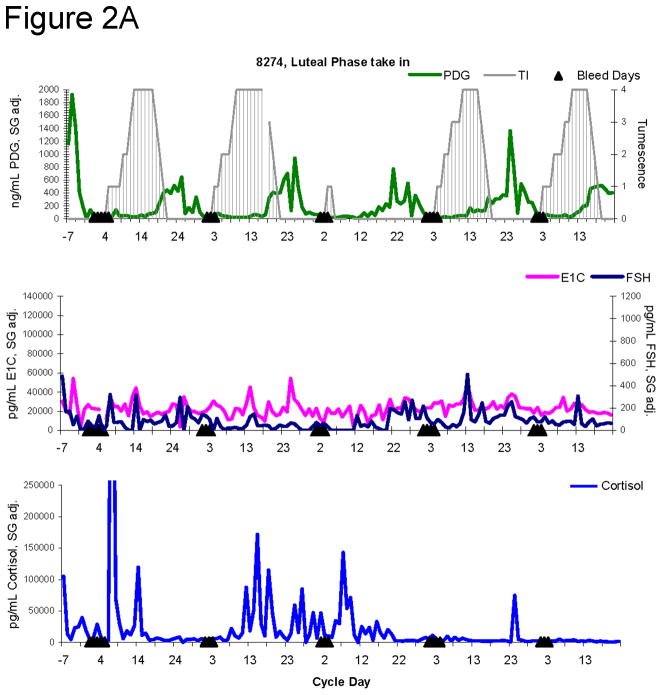
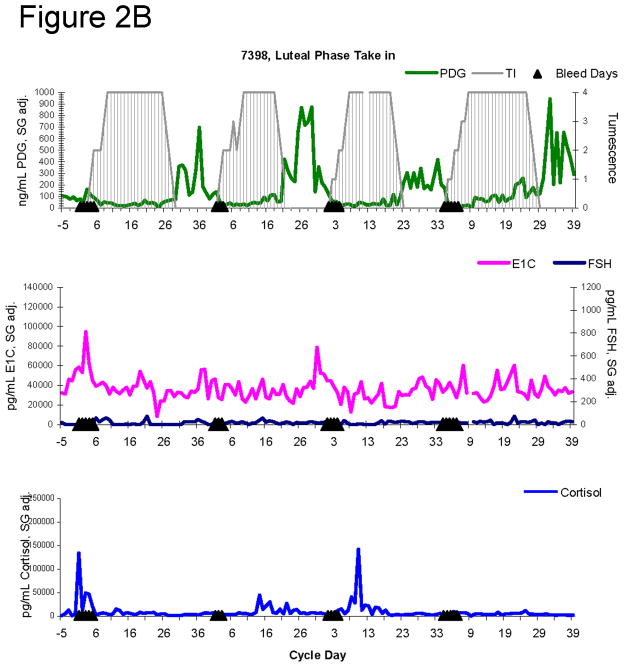
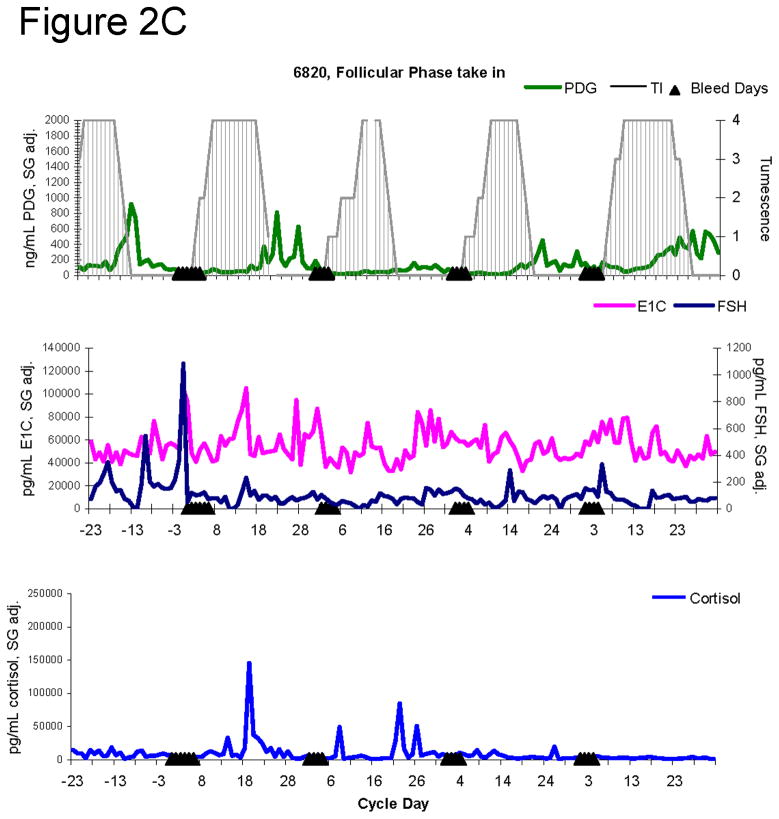
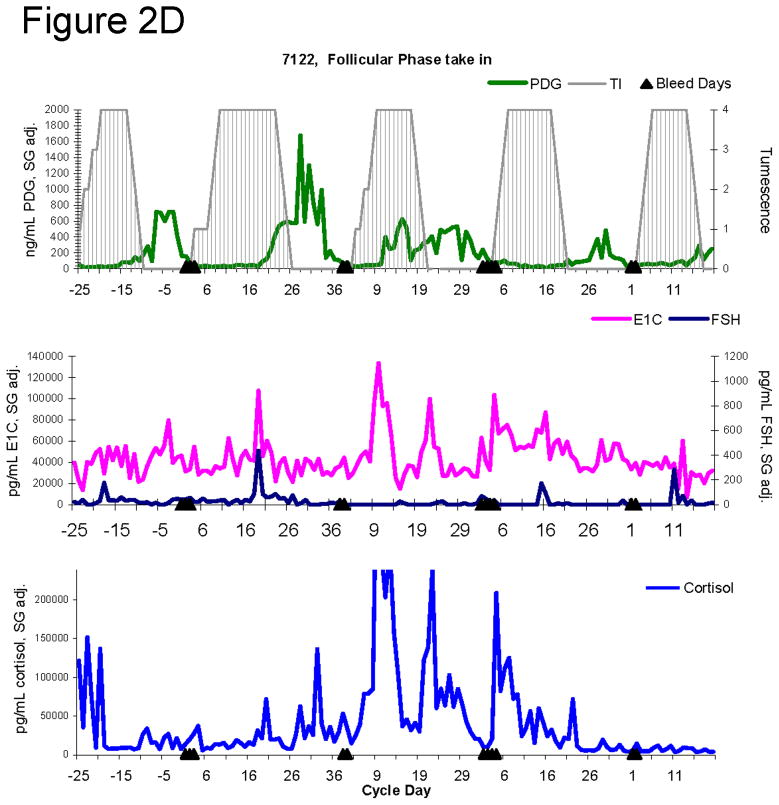
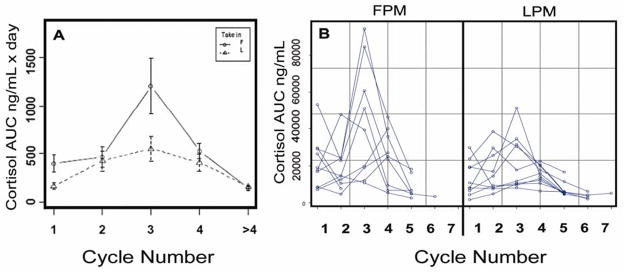
Psychosocial stress is thought to negatively impact fecundity, but human studies are confounded by variation in nutrition and lifestyle. Baboons offer a useful model to test the effect of prolonged mild stress on reproductive indicators in a controlled setting. Following relocation from social groups to solitary housing, a previously documented stressful event for nonhuman primates, daily urine samples, tumescence, and menstrual bleeding were monitored in twenty baboons (Papio sp.) for 120-150 days. Specimens were assayed for estrone conjugates (E1C), pregnanediol-3-glucuronide (PDG), follicle-stimulating hormone (FSH), and cortisol. Linear mixed effects models examined (1) the effects of stress on frequency of anovulation, hormone levels, tumescence and cycle length, and (2) the relationship of cortisol with reproductive indicators. Despite cortisol levels indicative of stress, anovulation was negligible (1% in 102 cycles). PDG, FSH, cycle length, and tumescence declined during the first four cycles, but began recovery by the fifth. Cortisol was negatively associated with FSH but not associated with PDG, E1C or tumescence. Ovulation, E1C, and luteal phase length were not affected. Tumescence tracked changes in FSH and PDG, and thus may be a useful indicator of stress on the reproductive axis. Elevated cortisol was associated with reduced FSH, supporting a model of cortisol action at the hypothalamus rather than the gonad. After four to five menstrual cycles the reproductive indicators began recovery, suggesting adjustment to new housing conditions. In conclusion, individual housing is stressful for captive baboons, as reflected by cortisol and reproductive indicators, although ovulation, a relatively direct proxy for fecundity, is unaffected.
Copyright © 2011 Wiley-Liss, Inc.
Figures

References
-
- Baird DD, Weinberg CR, Zhou H, Kamel F, McConnaughey DR, Kesner JS, Wilcox AJ. Preimplantation urinary hormone profiles and the probability of conception in healthy women. Fertil Steril. 1999;71:40–49. - PubMed
-
- Bercovitch FB, Goy RW. The socioendocrinology of reproductive development and reproductive success in macaques. In: Ziegler TE, Bercovitch FB, editors. Socioendocrinology of primate reproduction. New York: Wiley-Liss; 1990. pp. 59–93.
-
- Berkman LF, Syme SL. Social networks, host resistance, and mortality: a nine-year follow-up study of Alameda County residents. Am J Epidemiol. 1979;109:186–204. - PubMed
-
- Bethea CL, Pau FK, Fox S, Hess DL, Berga SL, Cameron JL. Sensitivity to stress-induced reproductive dysfunction linked to activity of the serotonin system. Fertil Steril. 2005;83:148–155. - PubMed
Publication types
MeSH terms
Substances
Grants and funding
LinkOut - more resources
Full Text Sources
Medical
