


Examining the aging process through the stress-coping framework: application to driving cessation in later life
- PMID: 21702704
- PMCID: PMC5704988
- DOI: 10.1080/13607863.2011.583633
Examining the aging process through the stress-coping framework: application to driving cessation in later life
Abstract
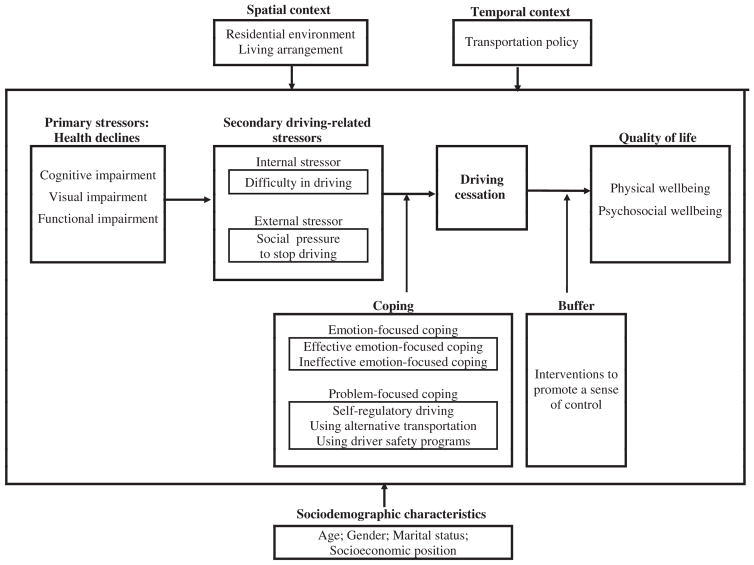
The aging process is marked by a series of transitions that influence multiple domains of well-being. One important transition for older adults is the process of driving cessation. Numerous studies have examined risk factors for driving cessation among older adults to identify at-risk older drivers for road safety. Recent research has focused on the consequences of driving cessation in later life for health and well-being. However, these reports have been largely empirical and are not drawn from a defined conceptual framework. Establishing a theoretical model of 'how driving cessation interacts with other processes and domains of aging' will promote synthesis of seemingly disparate findings and also link the empirical research on cessation to the broader field of gerontology. This article describes a conceptual model for articulating and examining the components of the driving cessation process based on the stress-coping paradigm. This model situates driving cessation within the context of exogenous stressors, individual vulnerabilities and coping strategies, and environmental hazards and buffers over the lifespan. This model could assist in guiding intervention strategies aimed at reducing premature driving cessation in older drivers with ameliorable impairments while assisting at-risk older drivers to reduce or stop driving in a less stressful way.
Figures
References
-
- Adler G, Rottunda S. Older adults’ perspectives on driving cessation. Journal of Aging Studies. 2006;20:227–235.
-
- Adler G, Rottunda S, Dysken M. The older driver with dementia: An updated literature review. Journal of Safety Research. 2005;36:399–407. - PubMed
-
- Anstey KJ, Windsor TD, Luszcz MA, Andrews GR. Predicting driving cessation over 5 years in older adults: Psychological well-being and cognitive competence are stronger predictors than physical health. Journal of the American Geriatric Society. 2006;54:121–126. - PubMed
-
- Ball K, Owsley C, Stalvey BT, Roenker DL, Sloane ME, Graves M. Driving avoidance and functional impairment in older drivers. Accident Analysis and Prevention. 1998;30:313–322. - PubMed
Publication types
MeSH terms
Grants and funding
LinkOut - more resources
Full Text Sources
Medical
