


Deficits in default mode network activity preceding error in cocaine dependent individuals
- PMID: 21703783
- PMCID: PMC3188675
- DOI: 10.1016/j.drugalcdep.2011.05.026
Deficits in default mode network activity preceding error in cocaine dependent individuals
Abstract
Background: Cocaine dependence is associated with cognitive deficits and altered task-related cerebral activation in cognitive performance (see Li and Sinha, 2008, for a review). Relatively little is known whether these individuals are also impaired in regional brain activation of the default mode network (DMN). We demonstrated previously that greater activation of the default brain regions precedes errors in a stop signal task performed by healthy controls (SST, Li et al., 2007). We seek to determine whether individuals with cocaine dependence are impaired in DMN activity, specifically activity preceding error, as compared to the healthy people. We also examine the relation to years of cocaine use.
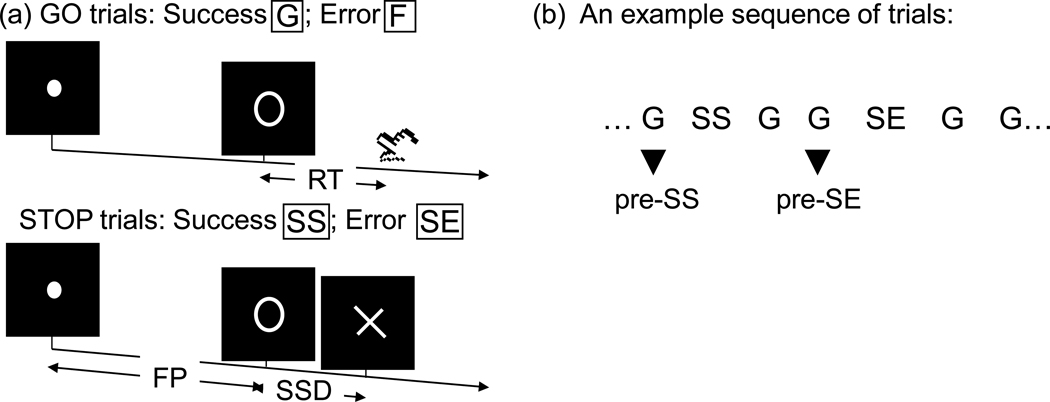
Methods: Individuals with cocaine dependence (CD, n=23) and demographics-matched healthy controls (HC, n=27) performed a SST that employed a tracking procedure to adjust the difficulty of stop trials and elicit errors approximately half of the time. Blood oxygenation level dependent (BOLD) signals of go trials preceding stop error as compared to those preceding stop success trials were extracted with generalized linear models using statistical parametric mapping.
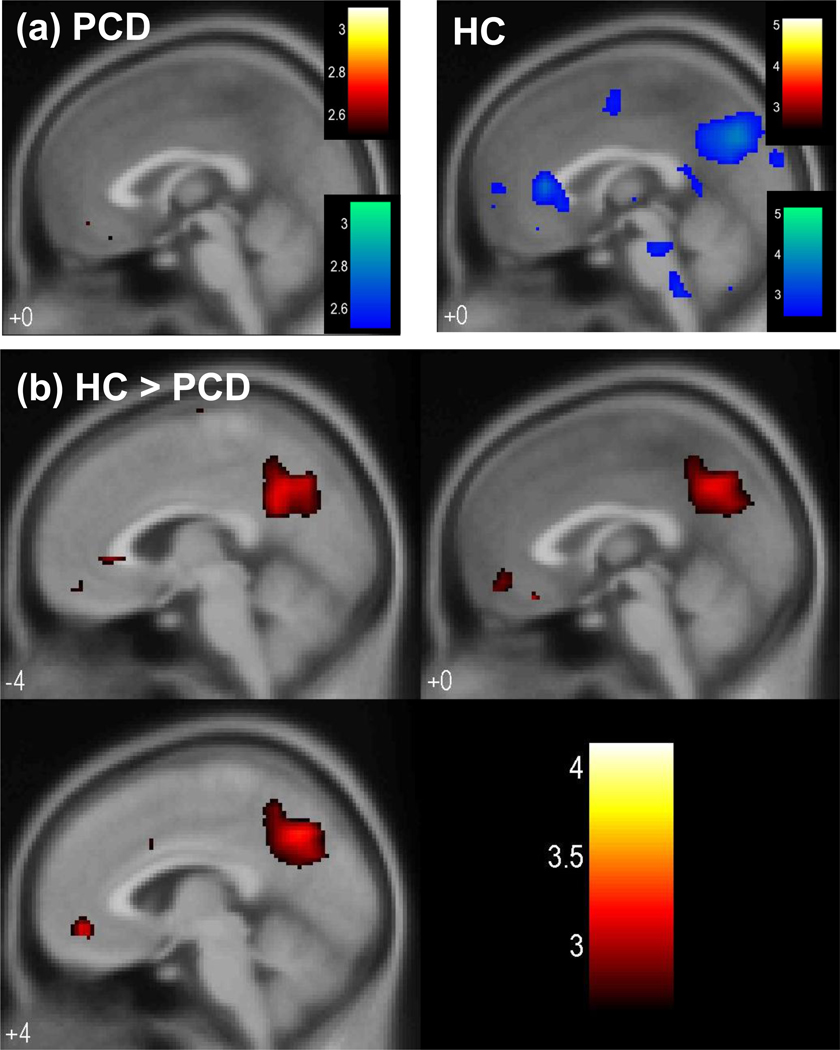
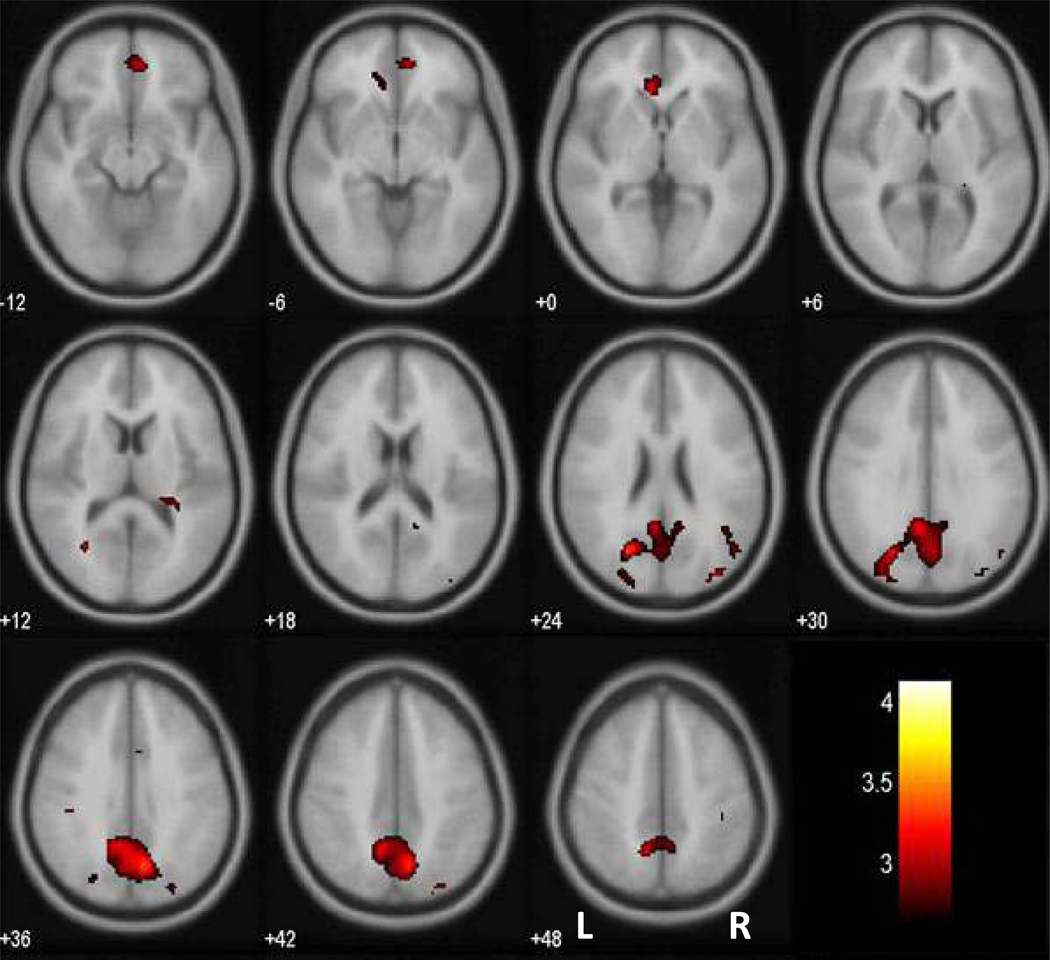
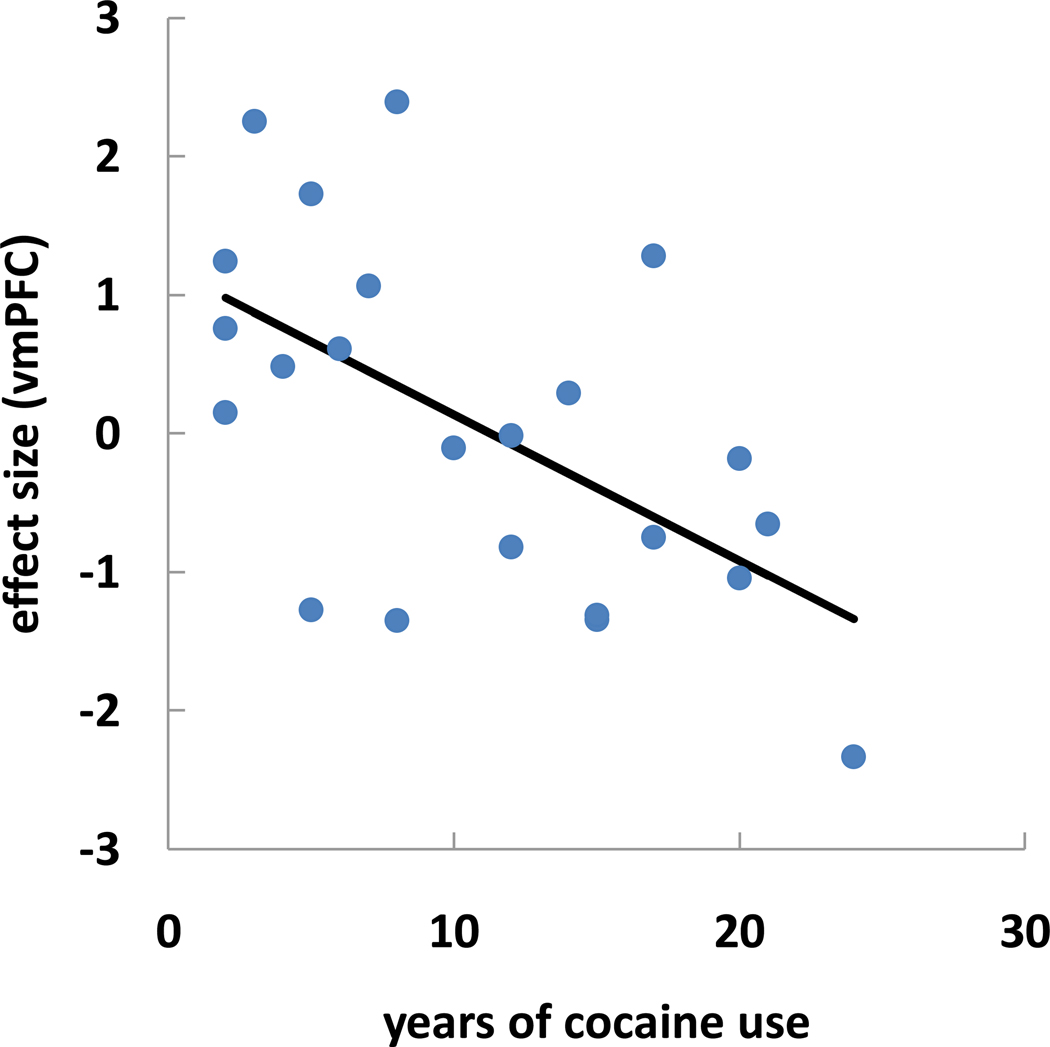
Results: HC showed activation of bilateral precuneus and posterior cingulate cortices and ventromedial prefrontal cortex (vmPFC) preceding errors during the SST. In contrast, despite indistinguishable stop signal performance, CD did not show these error predicting activations. Furthermore, the effect size of error-preceding vmPFC activation was inversely correlated with years of cocaine use.
Conclusions: These findings indicate DMN deficits and could potentially add to our understanding of the effects of chronic cocaine use on cerebral functions in cocaine dependence. Work to further clarify potential changes in functional connectivity and gray matter volume is warranted to understand the relevance of DMN to the pathology of cocaine misuse.
Copyright © 2011 Elsevier Ireland Ltd. All rights reserved.
Conflict of interest statement
All authors declare that they have no conflicts of interest.
Figures
References
-
- Aron JL, Paulus MP. Location, location: using functional magnetic resonance imaging to pinpoint brain differences relevant to stimulant use. Addiction. 2007;102 Suppl. 1:33–43. - PubMed
-
- Brett M, Anton J-L, Valabregue R, Poline J-P. Region of interest analysis using an SPM toolbox. Abstract presented at the 8th International Conference on Functional Mapping of the Human Brain; June 2–6; Sendai, Japan. 2002.
Publication types
MeSH terms
Grants and funding
LinkOut - more resources
Full Text Sources
Medical
