


The nature and consequences of coinfection in humans
- PMID: 21704071
- PMCID: PMC3430964
- DOI: 10.1016/j.jinf.2011.06.005
The nature and consequences of coinfection in humans
Abstract
Objective: Many fundamental patterns of coinfection (multi-species infections) are undescribed, including the relative frequency of coinfection by various pathogens, differences between single-species infections and coinfection, and the burden of coinfection on human health. We aimed to address the paucity of general knowledge on coinfection by systematically collating and analysing data from recent publications to understand the types of coinfection and their effects.
Methods: From an electronic search to find all publications from 2009 on coinfection and its synonyms in humans we recorded data on i) coinfecting pathogens and their effect on ii) host health and iii) intensity of infection.
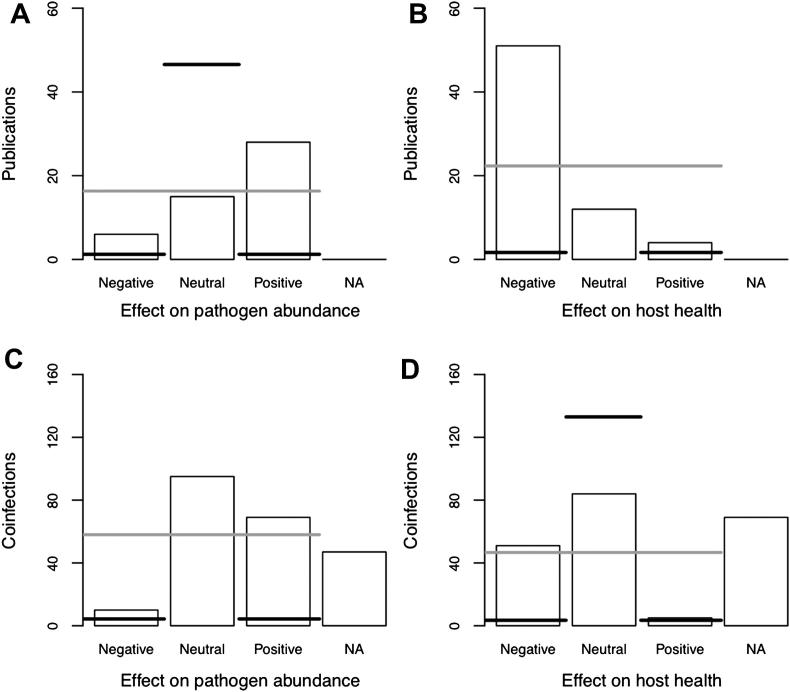
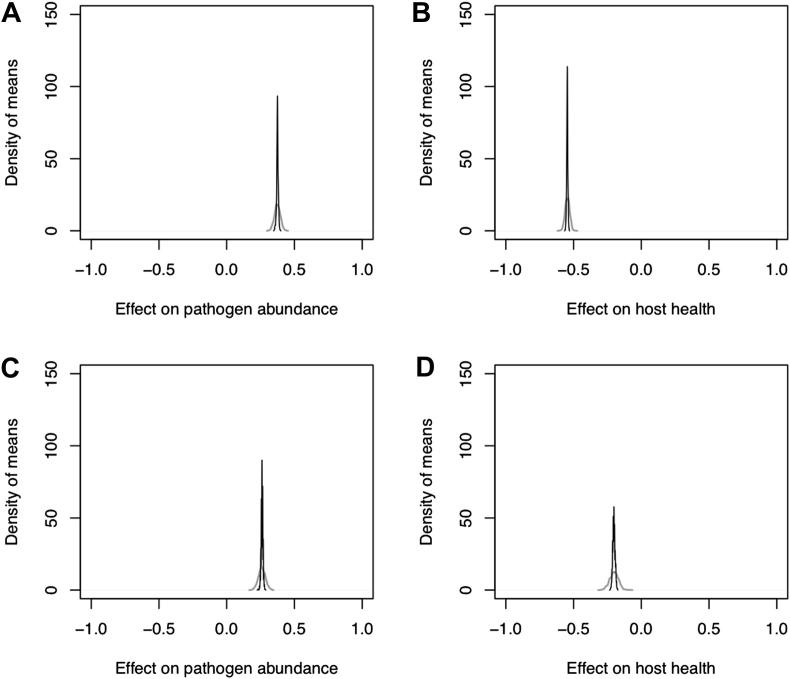
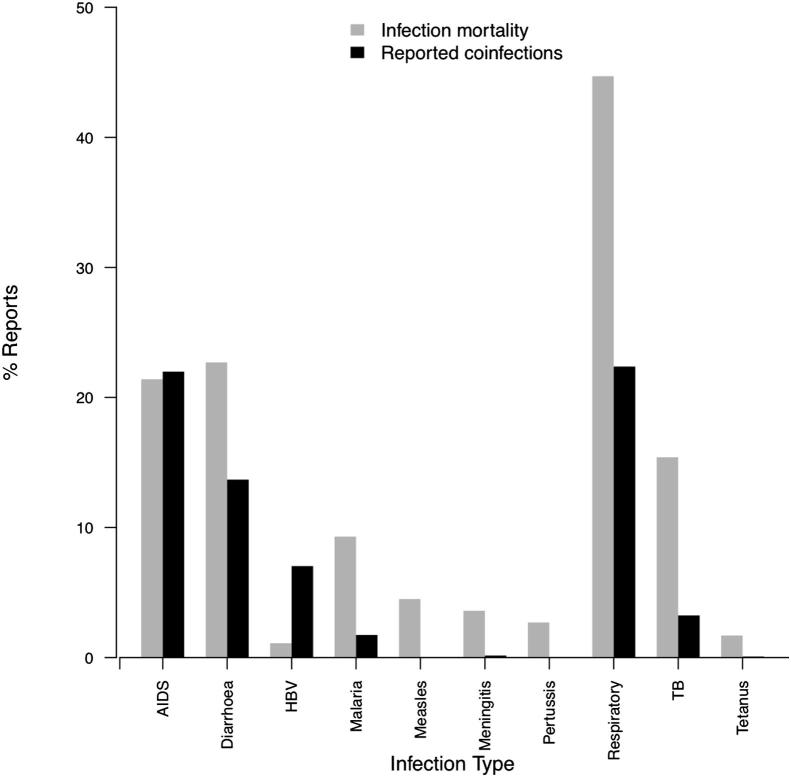
Results: The most commonly reported coinfections differ from infections causing highest global mortality, with a notable lack of serious childhood infections in reported coinfections. We found that coinfection is generally reported to worsen human health (76% publications) and exacerbate infections (57% publications). Reported coinfections included all kinds of pathogens, but were most likely to contain bacteria.
Conclusions: These results suggest differences between coinfected patients and those with single infections, with coinfection having serious health effects. There is a pressing need to quantify the tendency towards negative effects and to evaluate any sampling biases in the coverage of coinfection research.
Copyright © 2011 The British Infection Association. Published by Elsevier Ltd. All rights reserved.
Figures
Comment in
-
High incidence of viral co-infections and atypical bacterial detection in acute respiratory infections among hospitalized children in the Central Department of Paraguay, 2010-2011.J Infect. 2013 Feb;66(2):196-8. doi: 10.1016/j.jinf.2012.10.014. Epub 2012 Oct 17. J Infect. 2013. PMID: 23085246 Free PMC article. No abstract available.
References
-
- Esch G.W., Shostak A., Marcogliese D.J., Goater T.M. London: Chapman& Hall; 1990. Patterns and processes in helminth parasite communities: an overview.
-
- Petney T.N., Andrews R.H. Multiparasite communities in animals and humans: frequency, structure and pathogenic significance. International Journal for Parasitology. 1998;28(3):377–393. - PubMed
-
- Cox F.E.G. Concomitant infections, parasites and immune responses. Parasitology. 2001;122:S23–S38. - PubMed
Publication types
MeSH terms
Grants and funding
LinkOut - more resources
Full Text Sources
Medical
