


Antimicrobial susceptibility of bacterial isolates from community acquired infections in Sub-Saharan Africa and Asian low and middle income countries
- PMID: 21707879
- PMCID: PMC3469739
- DOI: 10.1111/j.1365-3156.2011.02822.x
Antimicrobial susceptibility of bacterial isolates from community acquired infections in Sub-Saharan Africa and Asian low and middle income countries
Abstract
Objective: Antimicrobial resistance has arisen across the globe in both nosocomial and community settings as a consequence of widespread antibiotic consumption. Poor availability of laboratory diagnosis means that resistance frequently goes unrecognised and may only be detected as clinical treatment failure. In this review, we provide an overview of the reported susceptibility of common community acquired bacterial pathogens in Sub-Saharan Africa and Asia to the antibiotics that are most widely used in these areas.
Methods: We reviewed the literature for reports of the susceptibility of prevalent pathogens in the community in SSA and Asia to a range of commonly prescribed antibiotics. Inclusion criteria required that isolates were collected since 2004 and that they were obtained from either normally sterile sites or urine. The data were aggregated by region and by age group.
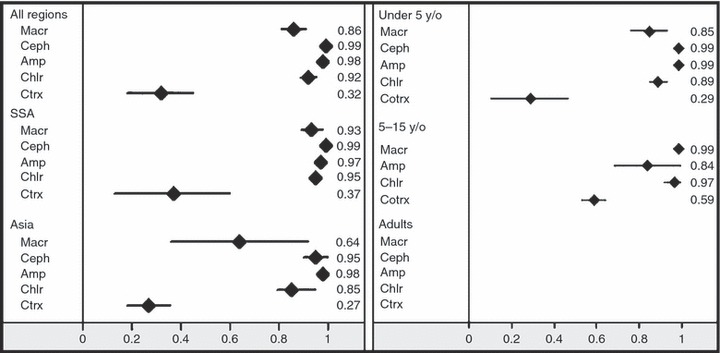
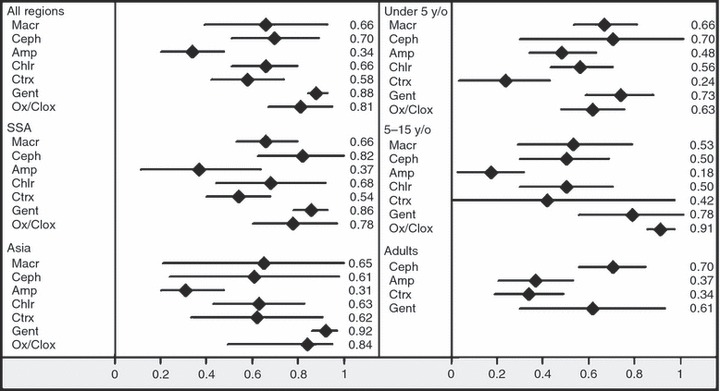
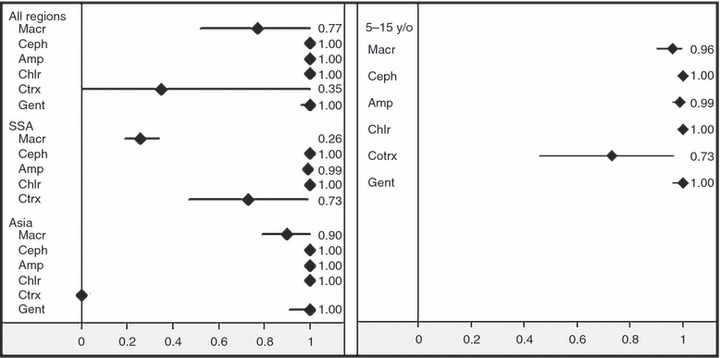
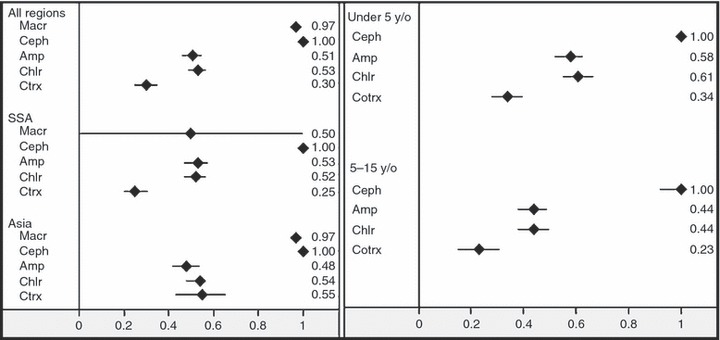
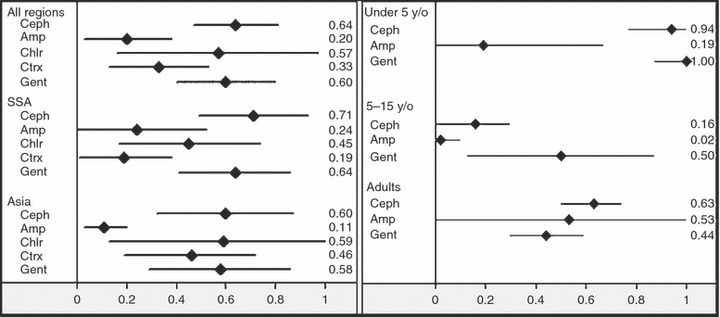
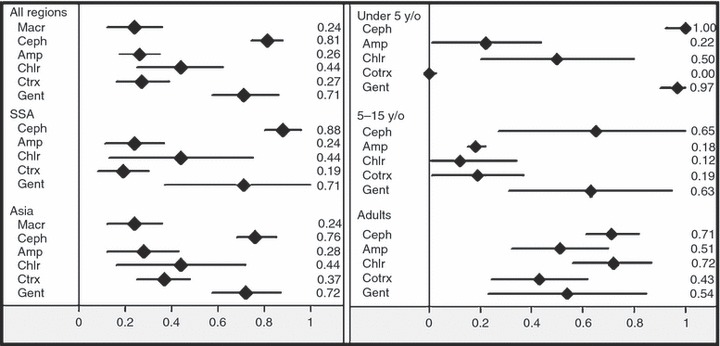
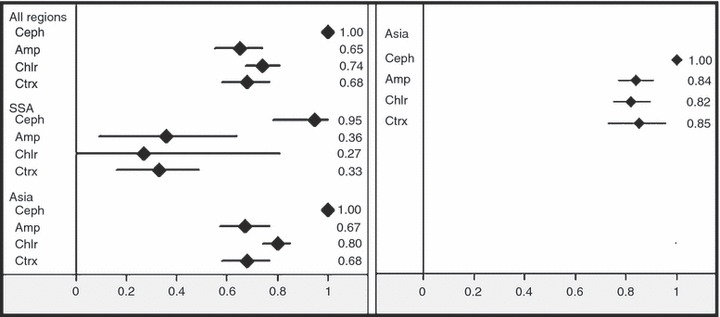
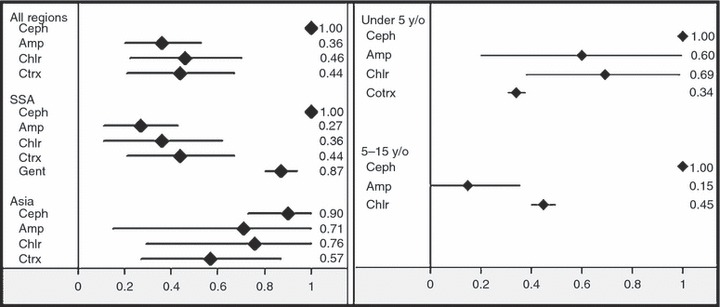
Results: Eighty-three studies were identified since 2004 which reported the antimicrobial susceptibilities of common bacterial pathogens. Different methods were used to assess in-vitro susceptibility in the different studies. The quality of testing (evidenced by resistance profiles) also varied considerably. For Streptococcus pneumoniae and Neisseria meningitidis most drugs maintained relatively high efficacy, apart from co-trimoxazole to which there were high levels of resistance in most of the pathogens surveyed.
Conclusions: Compared with the enormous infectious disease burden and widespread use of antibiotics there are relatively few reliable data on antimicrobial susceptibility from tropical Asia and Africa upon which to draw firm conclusions, although it is evident that many commonly used antibiotics face considerable resistance in prevalent bacterial pathogens. This is likely to exacerbate morbidity and mortality. Investment in improved antimicrobial susceptibility testing and surveillance systems is likely to be a highly cost-effective strategy and should be complemented by centralized and readily accessible information resources.
© 2011 Blackwell Publishing Ltd.
Figures
References
-
- Akinloye O, Ogbolu DO, Akinloye OM, Terry Alli OA. Asymptomatic bacteriuria of pregnancy in Ibadan, Nigeria: a re-assessment. British Journal of Biomedical Science. 2006;63:109–112. - PubMed
-
- Andrews J. BSAC standardized disc susceptibility testing method (version 8) Journal of Antimicrobial Chemotherapy. 2009;64:454–489. - PubMed
-
- Brink A, Moolman J, Da Silva MC, Botha M. Antimicrobial susceptibility profile of selected bacteraemic pathogens from private institutions in South Africa. South African Medical Journal. 2007;97:273–279. - PubMed
Publication types
MeSH terms
Substances
Grants and funding
LinkOut - more resources
Full Text Sources
Medical
Research Materials
