


Bacterial infection profiles in lung cancer patients with febrile neutropenia
- PMID: 21707992
- PMCID: PMC3147018
- DOI: 10.1186/1471-2334-11-183
Bacterial infection profiles in lung cancer patients with febrile neutropenia
Abstract
Background: The chemotherapy used to treat lung cancer causes febrile neutropenia in 10 to 40% of patients. Although most episodes are of undetermined origin, an infectious etiology can be suspected in 30% of cases. In view of the scarcity of data on lung cancer patients with febrile neutropenia, we performed a retrospective study of the microbiological characteristics of cases recorded in three medical centers in the Picardy region of northern France.
Methods: We analyzed the medical records of lung cancer patients with neutropenia (neutrophil count < 500/mm(3)) and fever (temperature > 38.3°C).
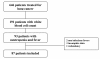
Results: The study included 87 lung cancer patients with febrile neutropenia (mean age: 64.2). Two thirds of the patients had metastases and half had poor performance status. Thirty-three of the 87 cases were microbiologically documented. Gram-negative bacteria (mainly enterobacteriaceae from the urinary and digestive tracts) were identified in 59% of these cases. Staphylococcus species (mainly S. aureus) accounted for a high proportion of the identified Gram-positive bacteria. Bacteremia accounted for 60% of the microbiologically documented cases of fever. 23% of the blood cultures were positive. 14% of the infections were probably hospital-acquired and 14% were caused by multidrug-resistant strains. The overall mortality rate at day 30 was 33% and the infection-related mortality rate was 16.1%. Treatment with antibiotics was successful in 82.8% of cases. In a multivariate analysis, predictive factors for treatment failure were age >60 and thrombocytopenia < 20000/mm(3).
Conclusion: Gram-negative species were the most frequently identified bacteria in lung cancer patients with febrile neutropenia. Despite the success of antibiotic treatment and a low-risk neutropenic patient group, mortality is high in this particular population.
References
-
- Remontet L. Estimations nationales: tendances de l'incidence et de la mortalité par cancer en France entre 1978 et 2000. pp. 190–193. BEH 41-42/2003.
-
- Institut national de prévention et éducation pour la santé. Actualités Tabac. N° 2 juin/juillet. 1999. http://www.inpes.sante.fr/ta/pdf/tabactu2.pdf
-
- Aapro MS, Cameron DA, Pettengell R, Bohlius J, Crawford J, Ellis M, Kearney N, Lyman GH, Tjan-Heijnen VC, Walewski J, Weber DC, Zielinski C. European Organisation for Research and Treatment of Cancer (EORTC) Granulocyte Colony-Stimulating Factor (G-CSF) Guidelines Working Party. EORTC guidelines for the use of granulocyte-colony stimulating factor to reduce the incidence of chemotherapy-induced febrile neutropenia in adult patients with lymphomas and solid tumours. Eur J Cancer. 2006;42(15):2433–53. doi: 10.1016/j.ejca.2006.05.002. - DOI - PubMed
-
- Tjan-Heijnen VC, Postmus PE, Ardizzoni A, Manegold Ch, Burghouts J. Reduction of chemotherapy-induced febrile leucopenia by prophylactic use of ciprofloxacin and roxithromycin in small-cell lung cancer patients: An EORTC double-blind placebo controlled phase III study. Ann Oncol. 2001;12:1359–1368. doi: 10.1023/A:1012545507920. - DOI - PubMed
MeSH terms
LinkOut - more resources
Full Text Sources
Medical
