


Strong viremia control in vaccinated macaques does not prevent gradual Th17 cell loss from central memory
- PMID: 21708207
- PMCID: PMC3148322
- DOI: 10.1016/j.vaccine.2011.06.032
Strong viremia control in vaccinated macaques does not prevent gradual Th17 cell loss from central memory
Abstract
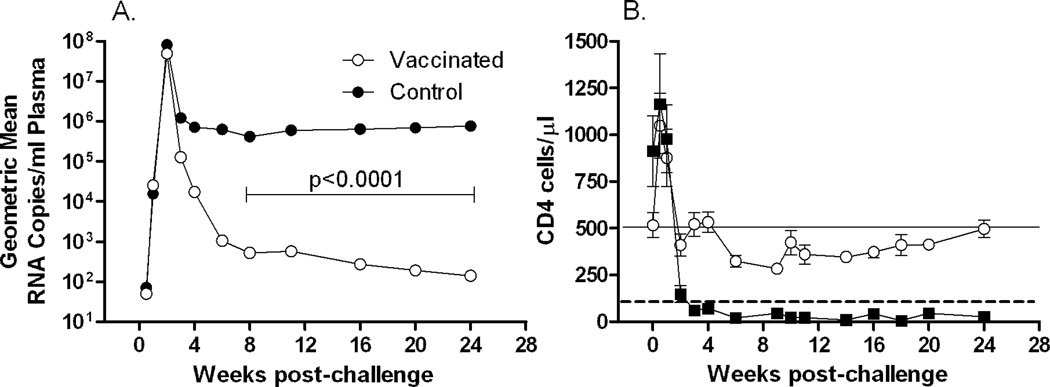
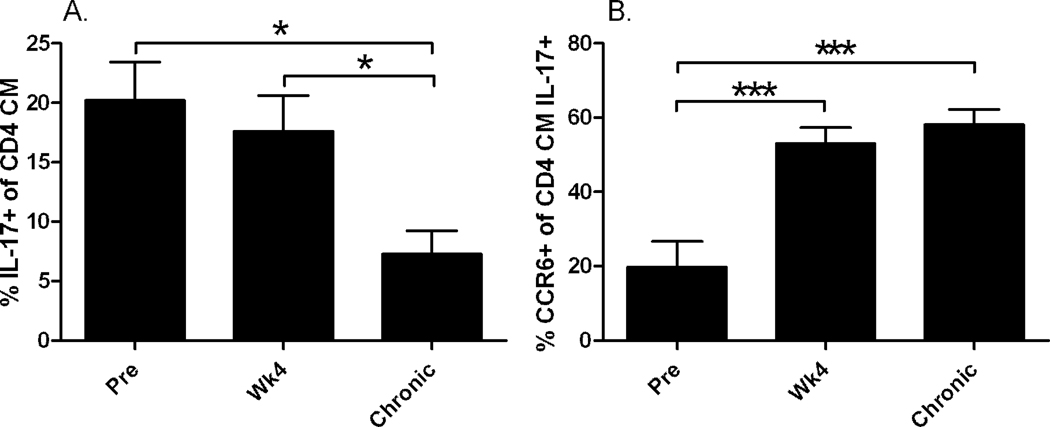
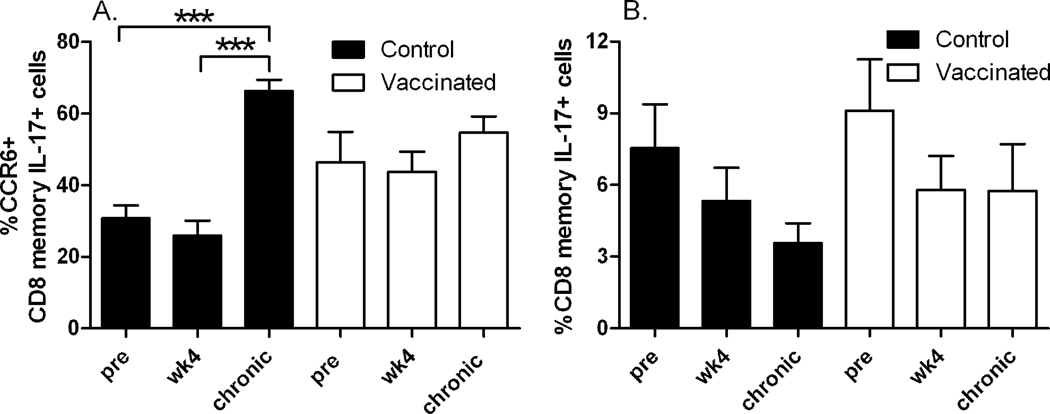
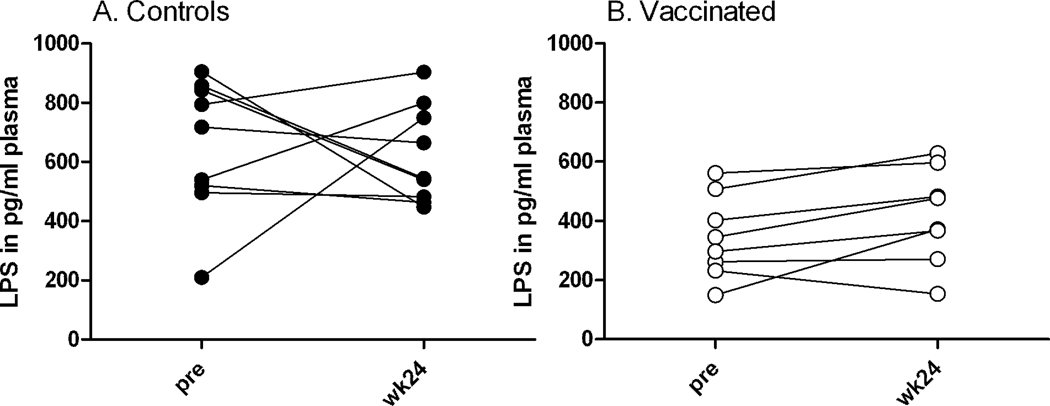
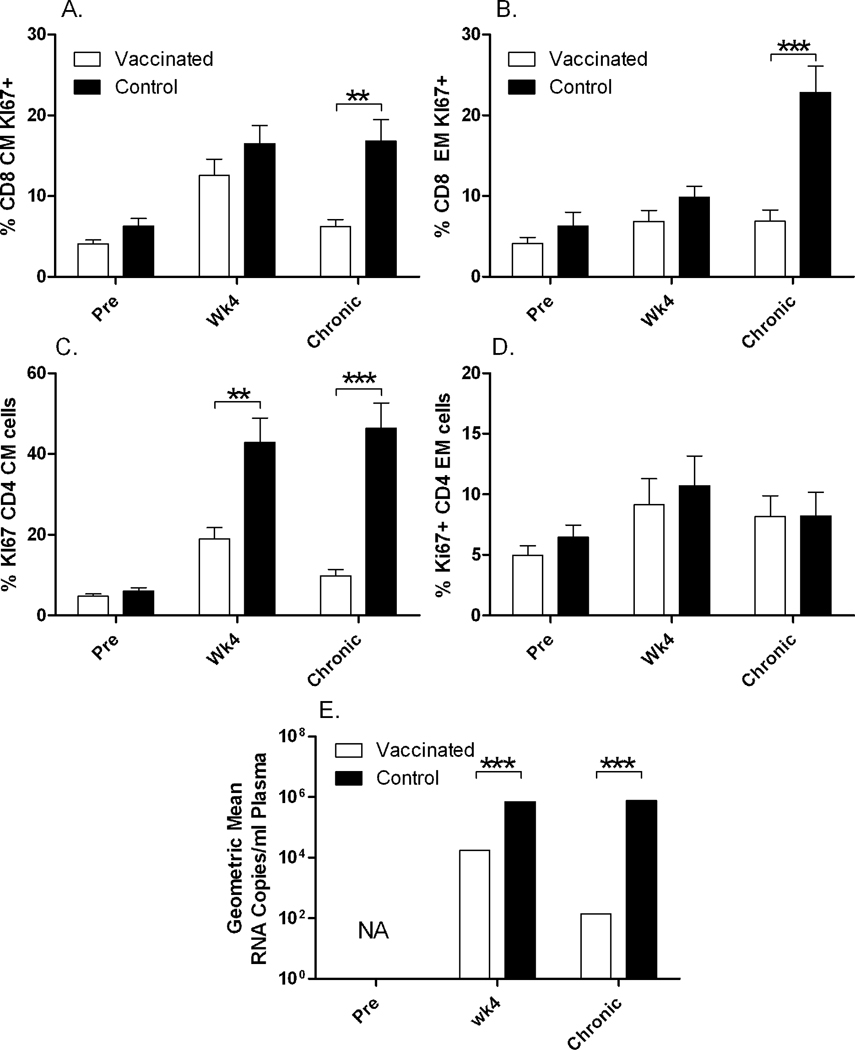
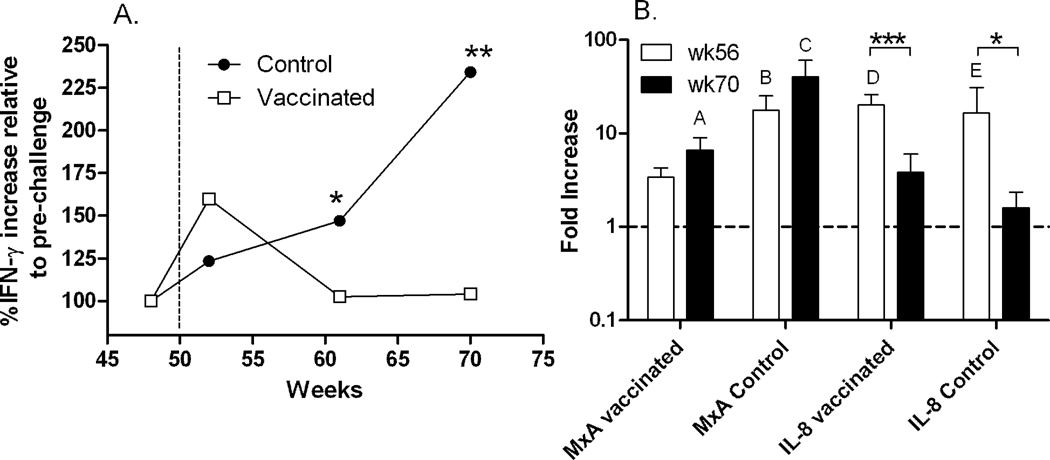
It has been proposed that microbial translocation might play a role in chronic immune activation during HIV/SIV infection. Key roles in fighting bacterial and fungal infections have been attributed to Th17 and Tc17 cells. Th17 cells can be infected with HIV/SIV, however whether effective vaccination leads to their maintenance following viral challenge has not been addressed. Here we retrospectively investigated if a vaccine regimen that potently reduced viremia post-challenge preserved Th17 and Tc17 cells, thus adding benefit in the absence of sterilizing protection. Rhesus macaques were previously vaccinated with replication-competent Adenovirus recombinants expressing HIVtat and HIVenv followed by Tat and gp140 protein boosting. Upon SHIV(89.6P) challenge, the vaccines exhibited a significant 4 log reduction in chronic viremia compared to sham vaccinated controls which rapidly progressed to AIDS [39]. Plasma and cryopreserved PBMC samples were examined pre-challenge and during acute and chronic infection. Control macaques exhibited a rapid loss of CD4(+) cells, including Th17 cells. Tc17 cells tended to decline over the course of infection although significance was not reached. Immune activation, assessed by Ki-67 expression, was associated with elevated chronic viremia of the controls. Significantly increased plasma IFN-γ levels were also observed. No increase in plasma LPS levels were observed suggesting a lack of microbial translocation. In contrast, vaccinated macaques had no evidence of immune activation within the chronic phase and preserved both CD4(+) T-cells and Tc17 cells in PBMC. Nevertheless, they exhibited a gradual, significant loss of Th17 cells which concomitantly displayed significantly higher CCR6 expression over time. The gradual Th17 cell decline may reflect mucosal homing to inflammatory sites and/or slow depletion due to ongoing low levels of SHIV replication. Our results suggest that potent viremia reduction during chronic SHIV infection will delay but not prevent the loss of Th17 cells.
Published by Elsevier Ltd.
Figures
References
-
- Annunziato F, Cosmi L, Liotta F, Maggi E, Romagnani S. The phenotype of human Th17 cells and their precursors, the cytokines that mediate their differentiation and the role of Th17 cells in inflammation. Int Immunol. 2008;20(11):1361–1368. - PubMed
-
- Bello G, Velasco-de-Castro CA, Bongertz V, Rodrigues CA, Giacoia-Gripp CB, Pilotto JH, Grinsztejn B, Veloso VG, Morgado MG. Immune activation and antibody responses in non-progressing elite controller individuals infected with HIV-1. J Med Virol. 2009;81(10):1681–1690. - PubMed
-
- Bennett-Guerrero E, Barclay GR, Weng PL, Bodian CA, Feierman DE, Vela-Cantos F, Mythen MG. Endotoxin-neutralizing capacity of serum from cardiac surgical patients. J Cardiothorac Vasc Anesth. 2001;15(4):451–454. - PubMed
Publication types
MeSH terms
Substances
Grants and funding
LinkOut - more resources
Full Text Sources
Research Materials
