. 2011 Apr;51(3-4):359-377.
doi: 10.1002/ijch.201100003.

Maitotoxin: An Inspiration for Synthesis

Affiliations

Maitotoxin: An Inspiration for Synthesis

K C Nicolaou et al. Isr J Chem. 2011 Apr.

Abstract

Maitotoxin holds a special place in the annals of natural products chemistry as the largest and most toxic secondary metabolite known to date. Its fascinating, ladder-like, polyether molecular structure and diverse spectrum of biological activities elicited keen interest from chemists and biologists who recognized its uniqueness and potential as a probe and inspiration for research in chemistry and biology. Synthetic studies in the area benefited from methodologies and strategies that were developed as part of chemical synthesis programs directed toward the total synthesis of some of the less complex members of the polyether marine biotoxin class, of which maitotoxin is the flagship. This account focuses on progress made in the authors' laboratories in the synthesis of large maitotoxin domains with emphasis on methodology development, strategy design, and structural comparisons of the synthesized molecules with the corresponding regions of the natural product. The article concludes with an overview of maitotoxin's biological profile and future perspectives.


Figures
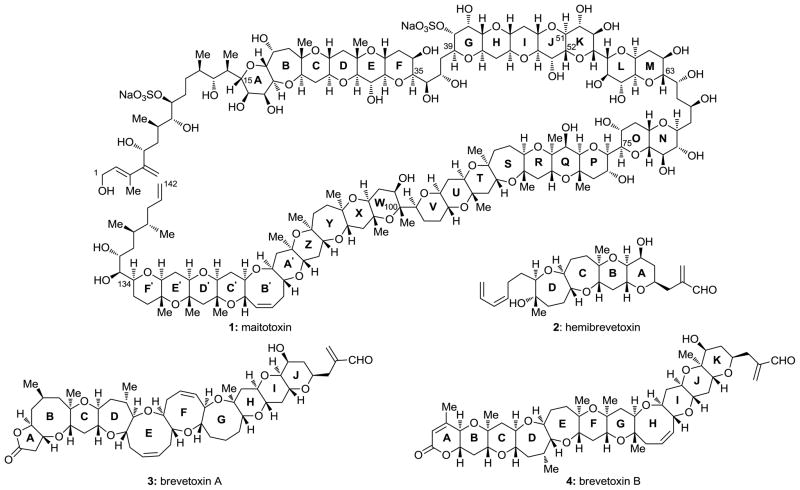
Figure 1
Figure 1
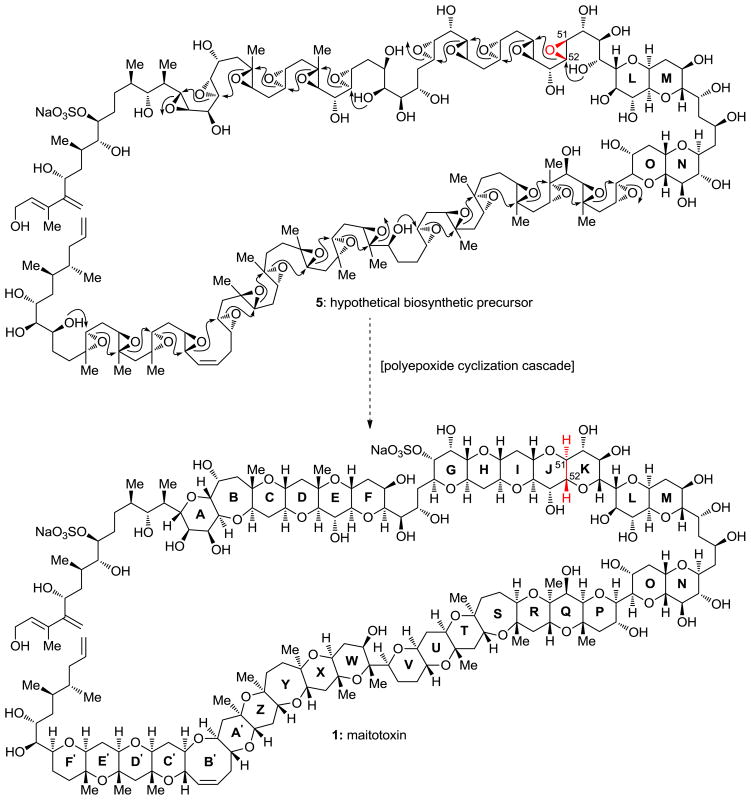
Structures of maitotoxin (1), hemibrevetoxin (2), brevetoxin A (3), and brevetoxin B (4).
Figure 2
Figure 2
Postulated biosynthetic precursor (5) of maitotoxin (1) that brought into question the stereochemistry of the JK ring junction (C51 and C52) (Gallimore and Spencer, 2006).[9]
Figure 3
Figure 3
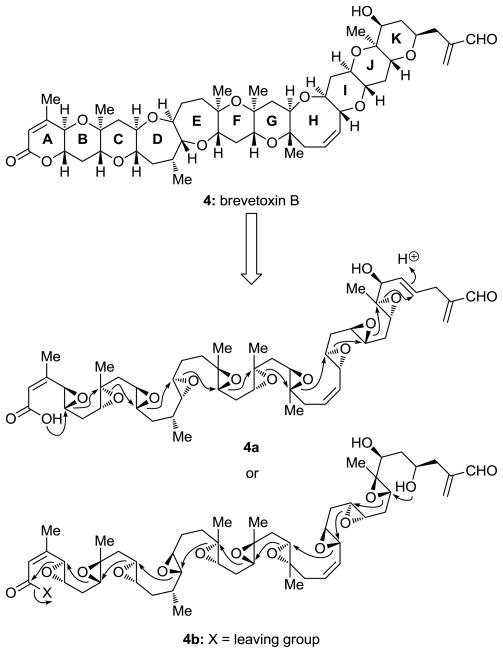
Brevetoxin B biosynthetic hypothesis (Nakanishi et al., 1985, 1989).[10]
Figure 4
Figure 4
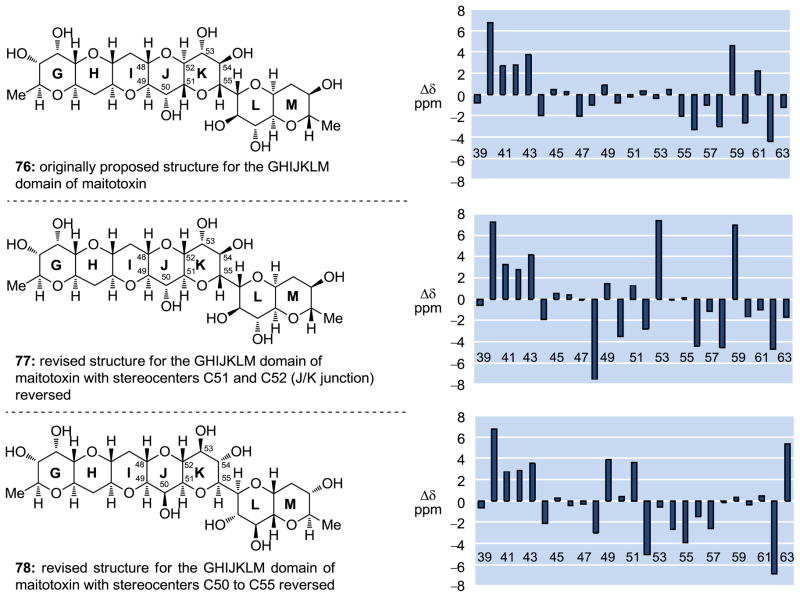
Differences between the calculated 13C chemical shifts for compounds 76, 77, and 78 and those corresponding to the same region of maitotoxin (1).[45]
Figure 5
Figure 5
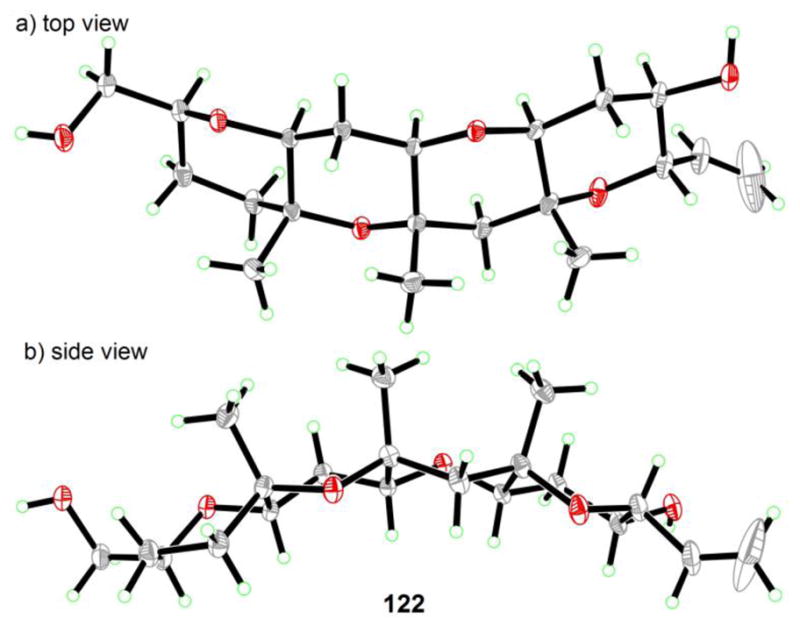
Concavity of the C′D′E′F′ domain 122 as revealed by X-ray crystallographic analysis (Nicolaou et al., 2011).[43]
Figure 6
Figure 6
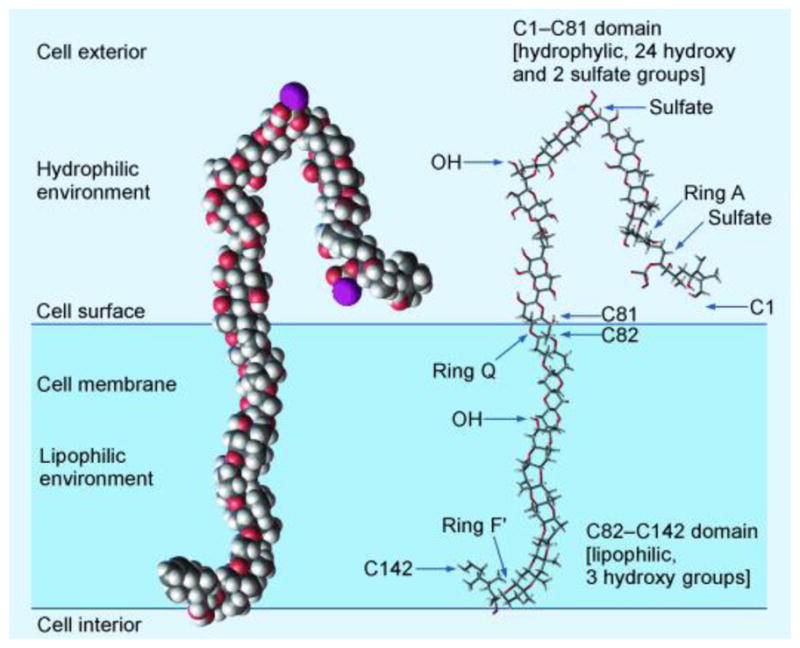
The Murata–Yasumoto hypothetical model of the mode of action of maitotoxin.[62]
Figure 7
Figure 7
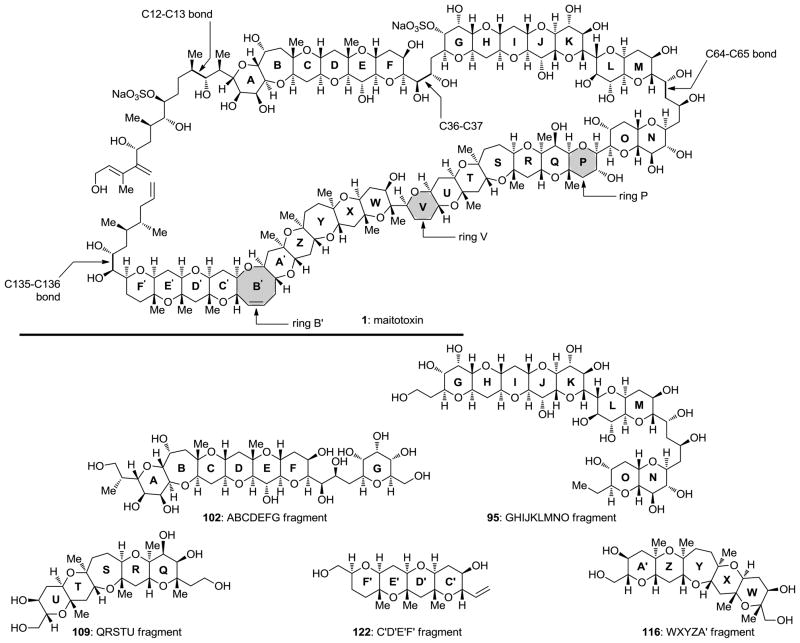
Stuctures of maitotoxin (1) and synthesized domains ABCDEFG (102), GHIJKLMNO (95), QRSTU (109), WXYZA′ (116), and C′D′E′F′ (122).
Scheme 1
Scheme 1
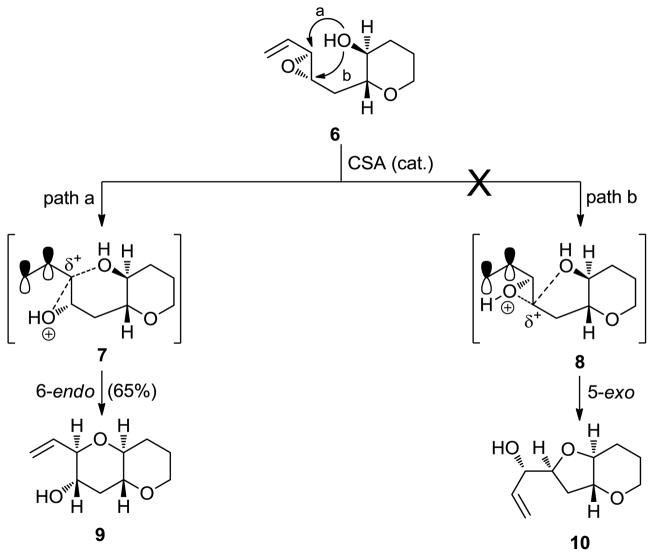
The regio- and stereoselective 6-endo epoxide opening method for cyclic ether formation (Nicolaou et al., 1985).[12]
Scheme 2
Scheme 2
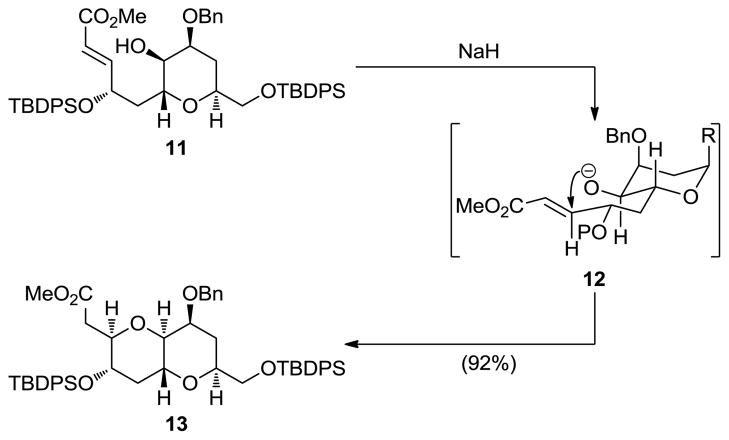
Intramolecular 1,4-addition of a hydroxyl group to an α,β-unsaturated ester as a means to form tetrahydropyran systems (Nicolaou et al., 1989).[13]
Scheme 3
Scheme 3
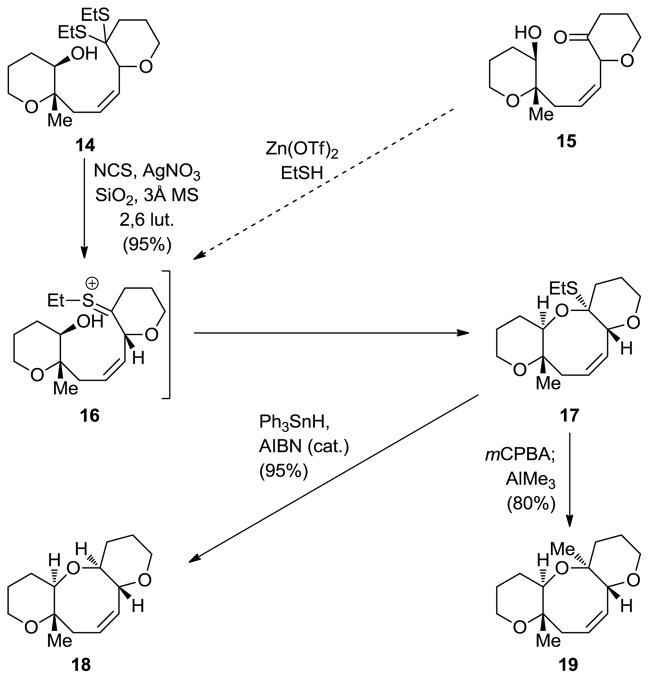
Cyclic ether formation reactions proceeding through cyclic O,S-acetals (Nicolaou et al., 1986).[15]
Scheme 4
Scheme 4
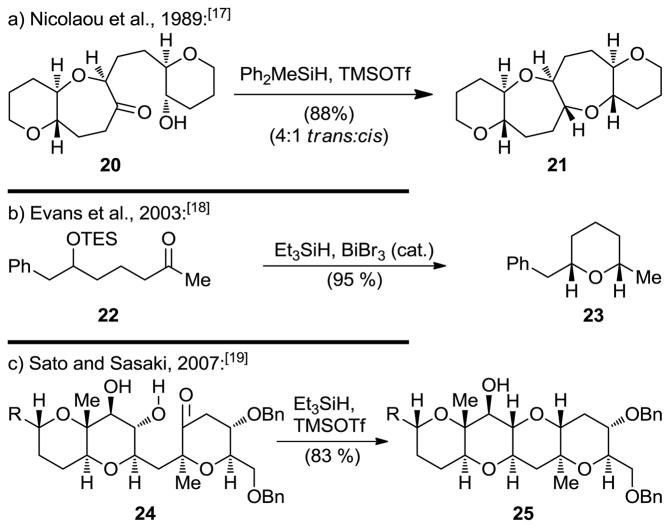
Cyclic ether formation through direct hydroxy ketone reductive cyclization.
Scheme 5
Scheme 5
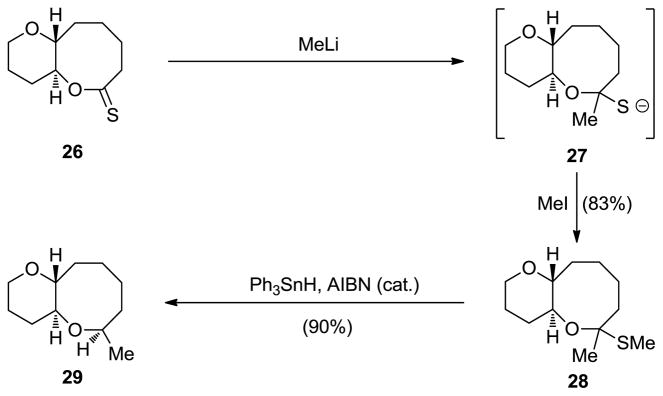
Thionolactones as precursors to cyclic ethers (Nicolaou et al., 1987).[20]
Scheme 6
Scheme 6
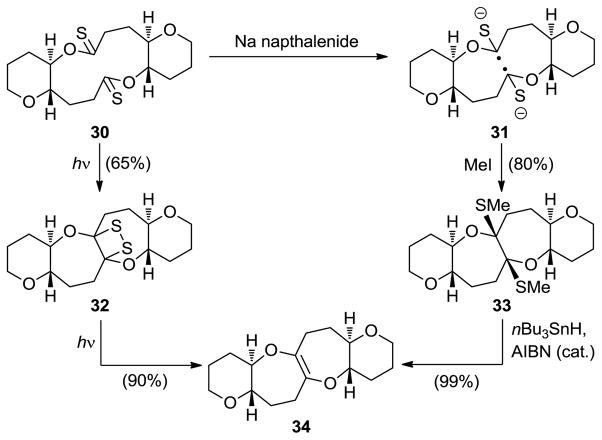
The bis(thionolactone) bridging method for cyclic ether construction (Nicolaou et al., 1986).[22]
Scheme 7
Scheme 7
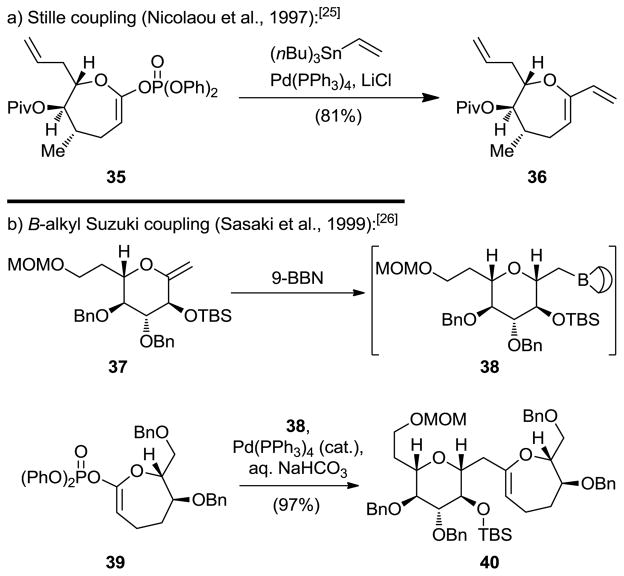
Ketene acetal phosphates as substrates for palladium-catalyzed cross-couplings for the synthesis of cyclic ethers.
Scheme 8
Scheme 8
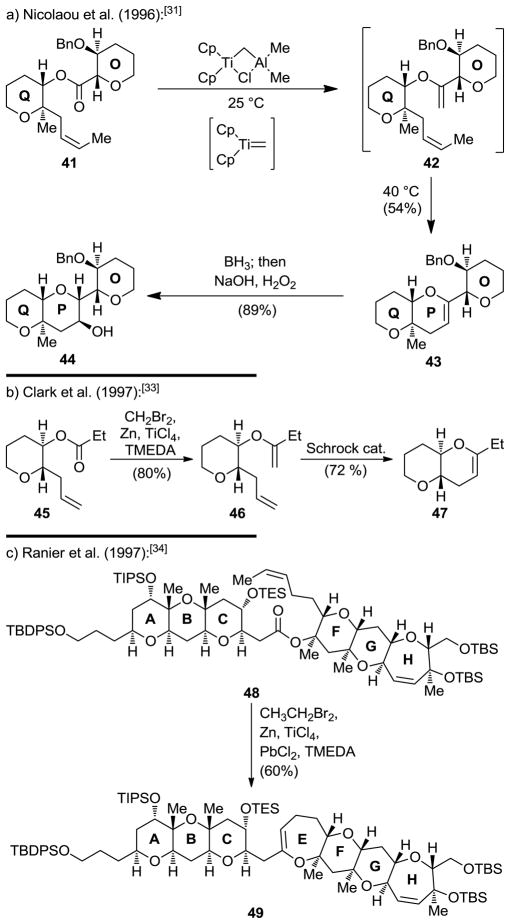
Ester–olefin ring closures to form cyclic ethers.
Scheme 9
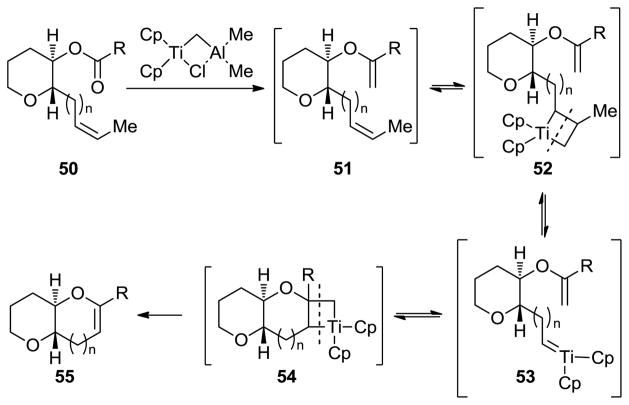
Scheme 9
Postulated mechanism for the Tebbe-promoted ester–olefin ring closure to form cyclic ethers (see Scheme 8a).
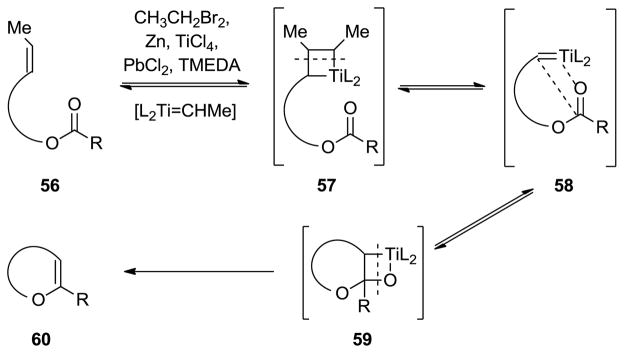
Scheme 10
Scheme 10
Postulated mechanism of the Takai–Utimoto based ester–olefin ring closure to form cyclic ethers (Scheme 8c).
Scheme 11
Scheme 11
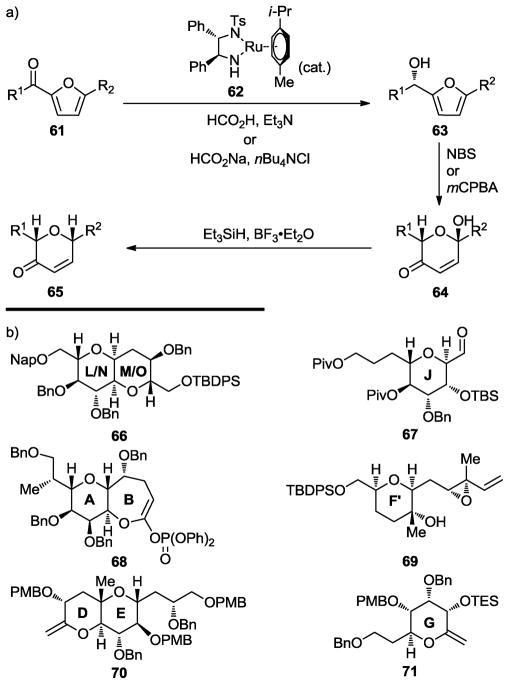
General furan-based strategy for the construction of cyclic ethers (a) and maitotoxin building blocks prepared using this strategy (b) (Nicolaou et al., 2007, 2008, 2010, and 2011).[–43]
Scheme 12
Scheme 12
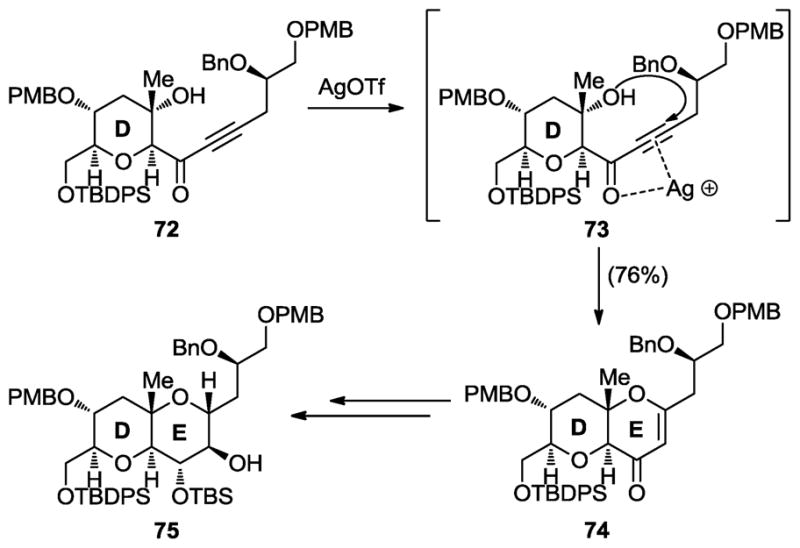
Silver-promoted, intramolecular, hydroxy ynone cyclization method for cyclic ether formation (Nicolaou et al., 2007, 2008, and 2010).[–42]
Scheme 13
Scheme 13
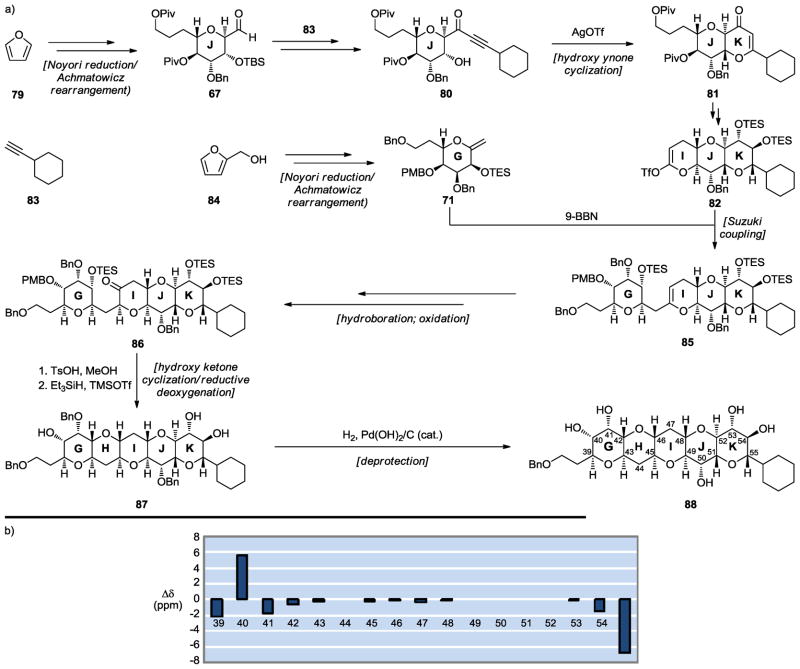
Synthesis of the GHIJK maitotoxin domain 88 (a) and 13C chemical shift differences between 88 and maitotoxin (1) (b) (Nicolaou et al., 2007).[40]
Scheme 14
Scheme 14
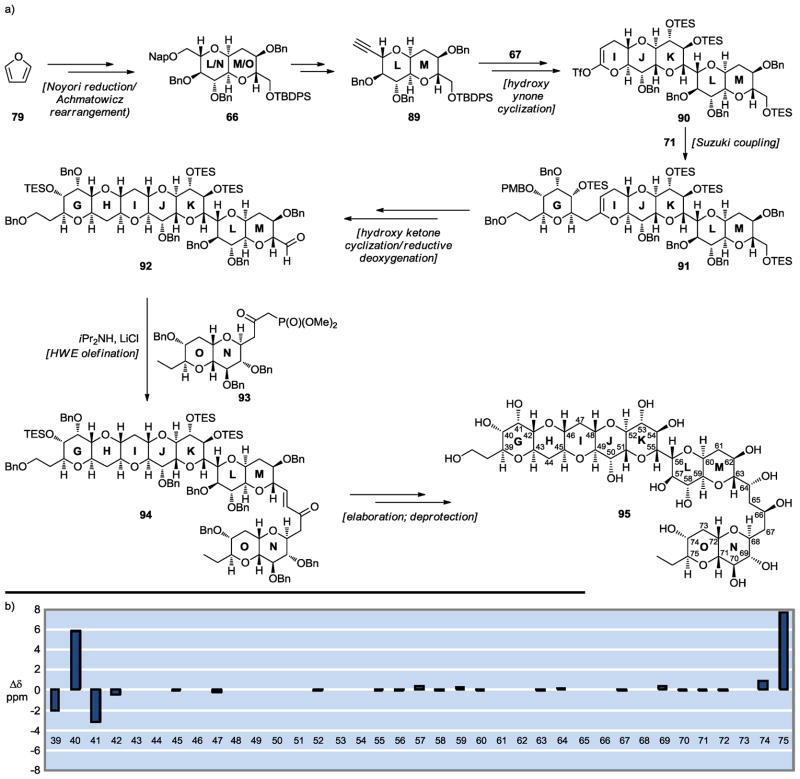
Synthesis of the GHIJKLMNO maitotoxin domain 95 (a) and 13C chemical shift differences between 95 and maitotoxin (1) (b) (Nicolaou et al., 2008).[41]
Scheme 15
Scheme 15
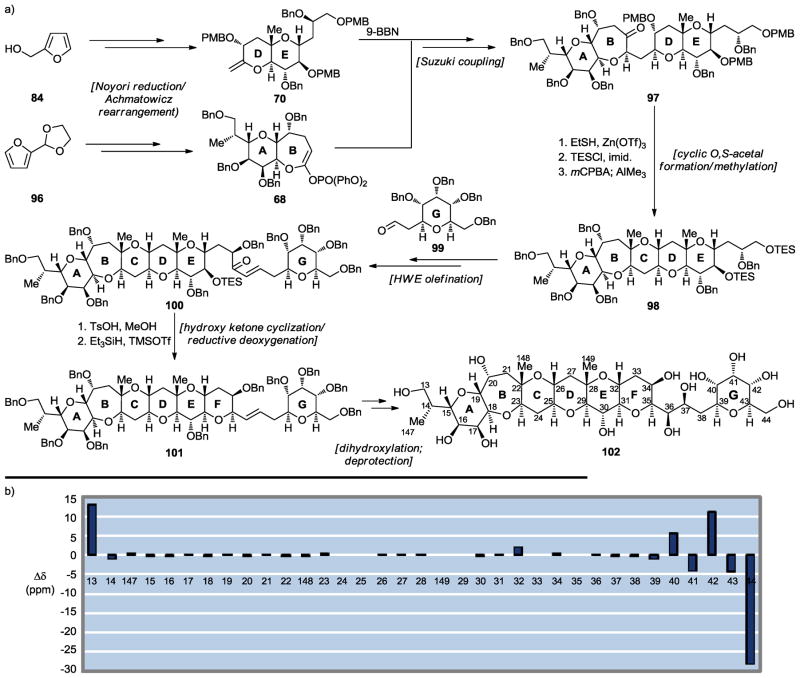
Synthesis of the ABCDEFG maitotoxin domain 102 (a) and 13C chemical shift differences between 102 and maitotoxin (1) (b) (Nicolaou et al., 2010).[42]
Scheme 16
Scheme 16
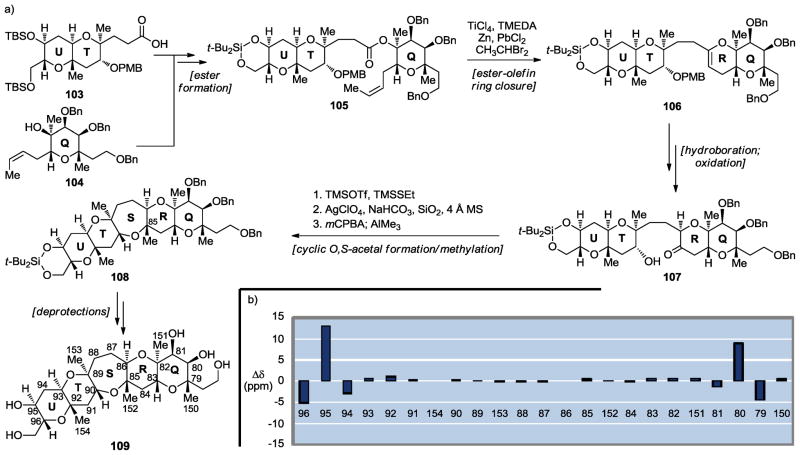
Synthesis of the QRSTU maitotoxin domain 109 (a) and 13C chemical shift differences between 109 and maitotoxin (1) (b) (Nicolaou et al., 2010).[46]
Scheme 17
Scheme 17
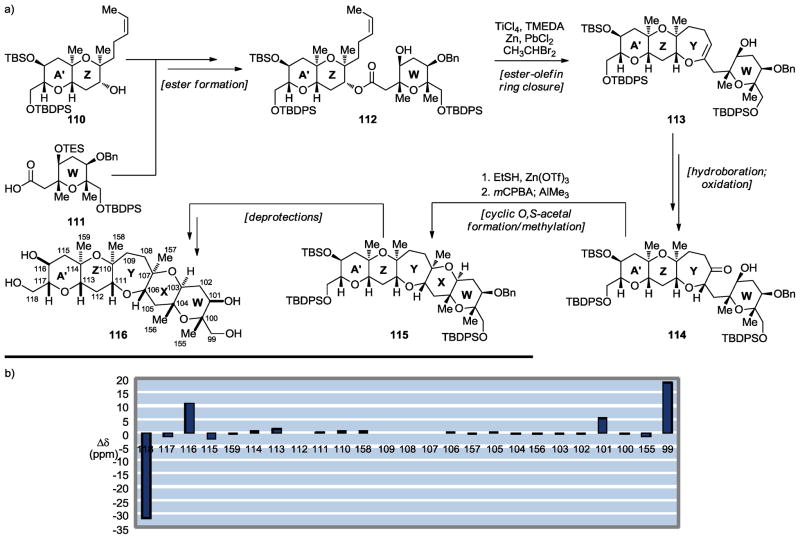
Synthesis of the WXYZA′ maitotoxin domain 116 (a) and 13C chemical shift differences between 116 and maitotoxin (1) (b) (Nicolaou et al., 2011).[47]
Scheme 18
Scheme 18
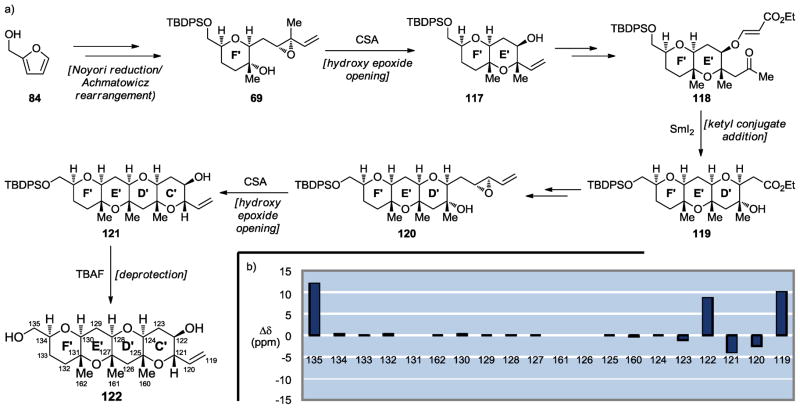
Synthesis of the C′D′E′F′ maitotoxin domain 122 (a) and 13C chemical shift differences between 122 and maitotoxin (1) (b) (Nicolaou et al., 2010).[43]

References

    1. Wöhler F. Annalen der Physik. 1828;88:253–256.
    1. Murata M, Yasumoto Y. Nat Prod Rep. 2000;17:293–314. - PubMed
    1. Takahashi M, Ohizumi Y, Yasumoto T. J Biol Chem. 1982;257:7287–7289. - PubMed
    1. Yasumoto T, Bagnis R, Randal JE, Banner AH. Nippon Suisan Gakkaishi. 1971;37:724–734.
    2. Yasumoto T, Bagnis R, Vernoux JP. Nippon Suisan Gakkaishi. 1976;42:359–365.
    1. Yasumoto T, Nakajima I, Bagnis R, Adachi R. Nippon Suisan Gakkaishi. 1977;43:1021–1026.
    2. Yokoyama A, Murata M, Oshima Y, Iwashita T, Yasumoto T. J Biochem. 1988;104:184–187. - PubMed

LinkOut - more resources