


Fetal programming of adipose tissue: effects of intrauterine growth restriction and maternal obesity/high-fat diet
- PMID: 21710399
- PMCID: PMC4010300
- DOI: 10.1055/s-0031-1275517
Fetal programming of adipose tissue: effects of intrauterine growth restriction and maternal obesity/high-fat diet
Abstract
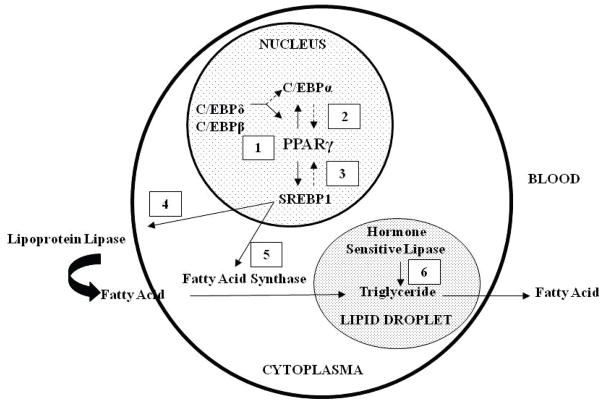
A newly recognized primary cause of obesity epidemic is the developmental programming effects of (1) intrauterine growth-restricted (IUGR) newborns exposed in utero to undernutrition, and (2) normal or excessive weight newborns exposed to maternal obesity and high-fat (HF) diets. The mechanisms contributing to offspring obesity have been extensively studied in animal models with adipose tissue identified as one of the principal targets of programming. IUGR and HF offspring exhibit programmed adipocytes, such that an intrinsic enhanced lipogenesis and adipocyte proliferation contribute to the development of obesity. This is attributed to early induction of adipogenic transcription factor peroxisome proliferator-activated receptor (PPAR)γ, whose activity is enhanced under limited or excess nutrient availability. Nonetheless, this occurs via different mechanisms involving PPARγ coregulators: In IUGR, it is upregulation of coactivators, whereas in HF newborns, it is downregulation of corepressors. Thus preventive therapeutic interventions will require target-specific modalities that depend on the primary etiology.
© Thieme Medical Publishers.
Figures
References
-
- James PT, Leach R, Kalamara E, Shayeghi M. The worldwide obesity epidemic. Obes Res. 2001;9 (Suppl 4):228S–233S. - PubMed
-
- Ogden CL, Yanovski SZ, Carroll MD, Flegal KM. The epidemiology of obesity. Gastroenterology. 2007;132:2087–2102. - PubMed
-
- Ehrenberg HM, Mercer BM, Catalano PM. The influence of obesity and diabetes on the prevalence of macrosomia. Am J Obstet Gynecol. 2004;191:964–968. - PubMed
-
- ACOG Committee Opinion number 315. September 2005 Obesity in pregnancy. Obstet Gynecol. 2005;106:671–675. - PubMed
-
- Guo SS, Wu W, Chumlea WC, Roche AF. Predicting overweight and obesity in adulthood from body mass index values in childhood and adolescence. Am J Clin Nutr. 2002;76:653–658. - PubMed
Publication types
MeSH terms
Substances
Grants and funding
LinkOut - more resources
Full Text Sources
Medical
Research Materials
Miscellaneous
