


Specialized proresolving mediator targets for RvE1 and RvD1 in peripheral blood and mechanisms of resolution
- PMID: 21711247
- PMCID: PMC3133883
- DOI: 10.1042/BJ20110327
Specialized proresolving mediator targets for RvE1 and RvD1 in peripheral blood and mechanisms of resolution
Abstract
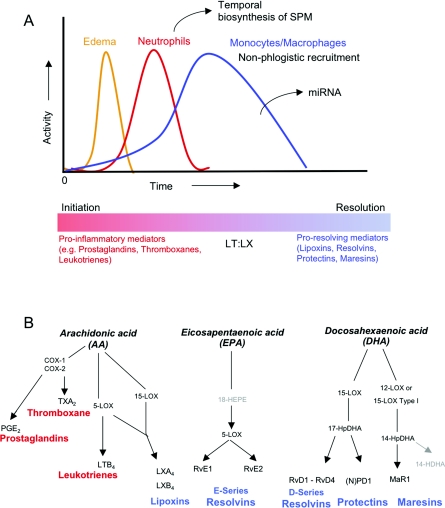
Inflammation when unchecked is associated with many prevalent disorders such as the classic inflammatory diseases arthritis and periodontal disease, as well as the more recent additions that include diabetes and cardiovascular maladies. Hence mechanisms to curtail the inflammatory response and promote catabasis are of immense interest. In recent years, evidence has prompted a paradigm shift whereby the resolution of acute inflammation is a biochemically active process regulated in part by endogenous PUFA (polyunsaturated fatty acid)-derived autacoids. Among these are a novel genus of SPMs (specialized proresolving mediators) that comprise novel families of mediators including lipoxins, resolvins, protectins and maresins. SPMs have distinct structures and act via specific G-protein seven transmembrane receptors that signal intracellular events on selective cellular targets activating proresolving programmes while countering pro-inflammatory signals. An appreciation of these endogenous pathways and mediators that control timely resolution opened a new terrain for therapeutic approaches targeted at stimulating resolution of local inflammation. In the present review, we provide an overview of the biosynthesis and actions of resolvin E1, underscoring its protective role in vascular systems and regulating platelet responses. We also give an overview of newly described resolution circuitry whereby resolvins govern miRNAs (microRNAs), and transcription factors that counter-regulate pro-inflammatory chemokines, cytokines and lipid mediators.
Figures
References
-
- Kumar V., Abbas A. K., Fausto N., Robbins S. L., Cotran R. S. Robbins and Cotran Pathologic Basis of Disease. Philadelphia: Elsevier/Saunders; 2005.
-
- de Pablo P., Chapple I. L., Buckley C. D., Dietrich T. Periodontitis in systemic rheumatic diseases. Nat. Rev. Rheumatol. 2009;5:218–224. - PubMed
-
- Bannenberg G. L., Chiang N., Ariel A., Arita M., Tjonahen E., Gotlinger K. H., Hong S., Serhan C. N. Molecular circuits of resolution: formation and actions of resolvins and protectins. J. Immunol. 2005;174:4345–4355. - PubMed
-
- Marcus A. J. Platelets: their role in hemostasis, thrombosis, and inflammation. In: Gallin J. I., Snyderman R., editors. Inflammation: Basic Principles and Clinical Correlates. Philadelphia: Lippincott, Williams & Wilkins; 1999. pp. 77–95.
-
- Willoughby D. A., Moore A. R., Colville-Nash P. R., Gilroy D. Resolution of inflammation. Int. J. Immunopharmacol. 2000;22:1131–1135. - PubMed
Publication types
MeSH terms
Substances
Grants and funding
LinkOut - more resources
Full Text Sources
Other Literature Sources
