


Excess mortality associated with influenza epidemics in Portugal, 1980 to 2004
- PMID: 21713040
- PMCID: PMC3119666
- DOI: 10.1371/journal.pone.0020661
Excess mortality associated with influenza epidemics in Portugal, 1980 to 2004
Abstract
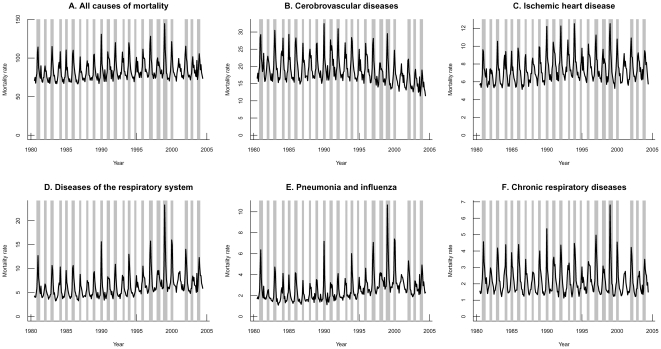
Background: Influenza epidemics have a substantial impact on human health, by increasing the mortality from pneumonia and influenza, respiratory and circulatory diseases, and all causes. This paper provides estimates of excess mortality rates associated with influenza virus circulation for 7 causes of death and 8 age groups in Portugal during the period of 1980-2004.
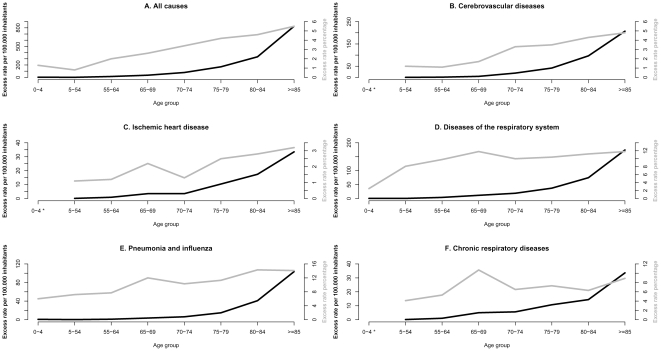
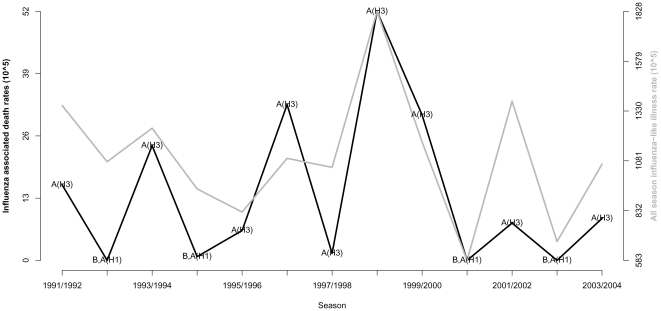
Methodology/principal findings: We compiled monthly mortality time series data by age for all-cause mortality, cerebrovascular diseases, ischemic heart diseases, diseases of the respiratory system, chronic respiratory diseases, pneumonia and influenza. We also used a control outcome, deaths from injuries. Age- and cause-specific baseline mortality was modelled by the ARIMA approach; excess deaths attributable to influenza were calculated by subtracting expected deaths from observed deaths during influenza epidemic periods. Influenza was associated with a seasonal average of 24.7 all-cause excess deaths per 100,000 inhabitants, approximately 90% of which were among seniors over 65 yrs. Excess mortality was 3-6 fold higher during seasons dominated by the A(H3N2) subtype than seasons dominated by A(H1N1)/B. High excess mortality impact was also seen in children under the age of four years. Seasonal excess mortality rates from all the studied causes of death were highly correlated with each other (Pearson correlation range, 0.65 to 0.95, P<0.001) and with seasonal rates of influenza-like-illness (ILI) among seniors over 65 years (Pearson correlation rho>0.64, P<0.05). By contrast, there was no correlation with excess mortality from injuries.
Conclusions/significance: Our excess mortality approach is specific to influenza virus activity and produces influenza-related mortality rates for Portugal that are similar to those published for other countries. Our results indicate that all-cause excess mortality is a robust indicator of influenza burden in Portugal, and could be used to monitor the impact of influenza epidemics in this country. Additional studies are warranted to confirm these findings in other settings.
Conflict of interest statement
Figures
References
-
- Reichert TA, Simonsen L, Sharma A, Pardo SA, Fedson DS, et al. Influenza and the winter increase in mortality in the United States, 1959–1999. American Journal of Epidemiology. 2004;160:492–502. - PubMed
-
- Simonsen L, Fukuda K, Schonberger LB, Cox NJ. The impact of influenza epidemics on hospitalizations. Journal of Infectious Diseases. 2000;181:831–837. - PubMed
-
- Francisco P, Donalisio MRD, Lattore MDD. Impact of influenza vaccination on mortality by respiratory diseases among Brazilian elderly persons. Revista De Saude Publica. 2005;39:75–81. - PubMed
-
- Oropesa S, Acosta B, Pinon A, Andreus H, Hernandez B, et al. The impact of influenza vaccination in the reduction of morbidity and in the exacerbation in asthmatic patients. Options for the Control of Influenza V. 2004;1263:355–359.
Publication types
MeSH terms
LinkOut - more resources
Full Text Sources
Medical
