


Surgery of the primary tumor does not improve survival in stage IV breast cancer
- PMID: 21713372
- PMCID: PMC3382105
- DOI: 10.1007/s10549-011-1648-2
Surgery of the primary tumor does not improve survival in stage IV breast cancer
Abstract
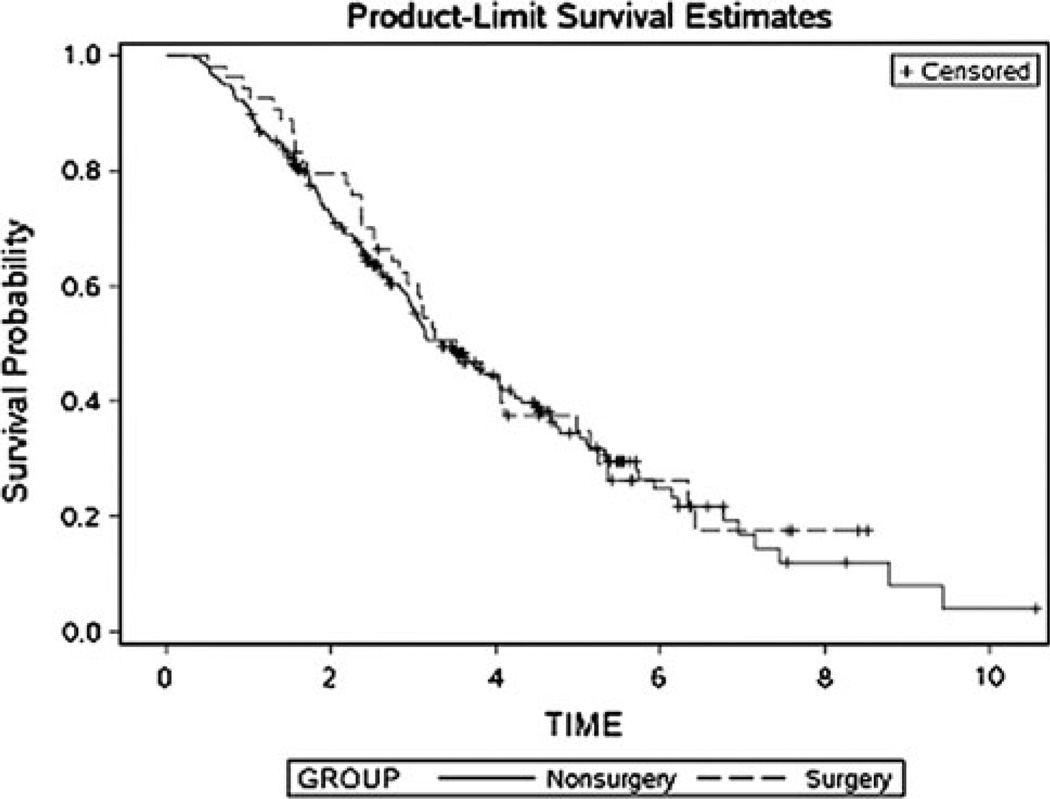
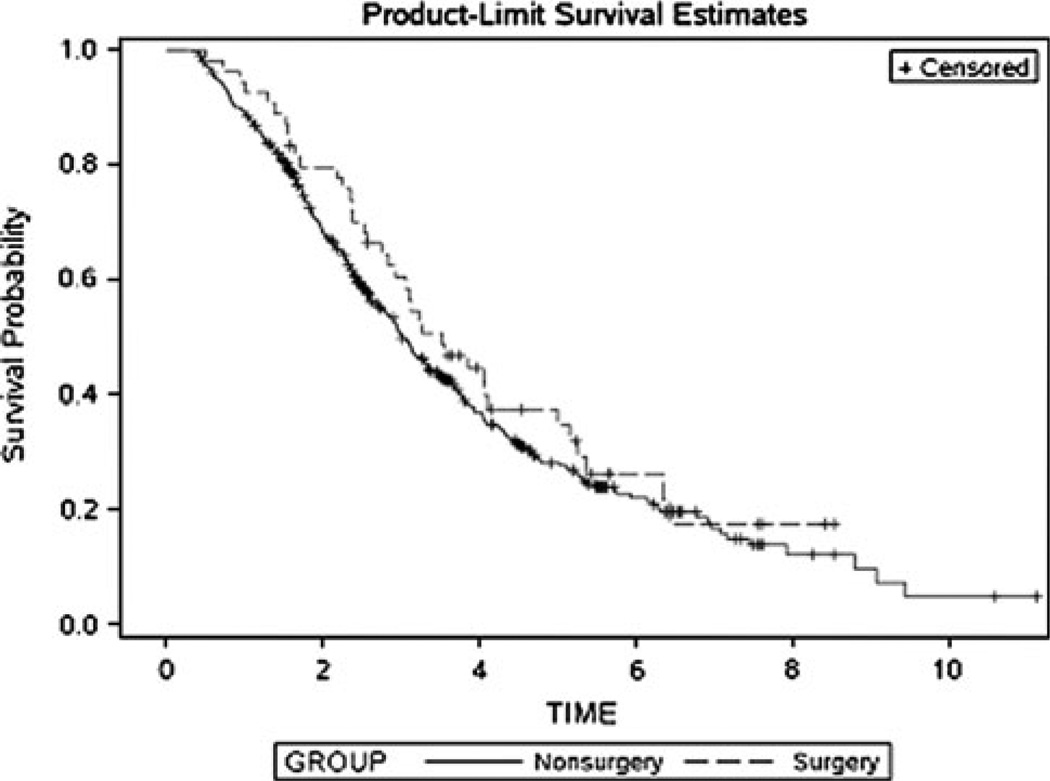
We sought to evaluate the survival of patients who received breast surgery prior to any other breast cancer therapy following a metastatic diagnosis. Standard treatment for stage IV breast cancer is systemic therapy without resection of the primary tumor. Registry-based studies suggest that resection of the primary tumor may improve survival in stage IV cancer. We performed a retrospective analysis using data from the National Comprehensive Cancer Network (NCCN) Breast Cancer Outcomes Database. Patients were eligible if they had a metastatic breast cancer diagnosis at presentation with disease at a distant site and either received surgery prior to any systemic therapy or received systemic therapy only. Eligible patients who did not receive surgery were matched to those who received surgery based on age at diagnosis, ER, HER2, and number of metastatic sites. To determine whether estimates from the matched analysis were consistent with estimates that could be obtained without matching univariate and multivariable analyses of the unmatched sample were also conducted. There were 1,048 patients in the NCCN database diagnosed with stage IV breast cancer from 1997 to 2007. 609 metastatic breast cancer patients were identified as eligible for the study. Among the 551 patients who had data available for matching, 236 patients who did not receive surgery were matched to 54 patients who received surgery. Survival was similar between the groups with a median of 3.4 years in the nonsurgery group and 3.5 years in the surgery group. The groups were similar after adjusting for the presence of lung metastases and use of trastuzumab therapy (HR=0.94, CI 0.83-1.08, P=0.38). When matching for the variables associated with a survival benefit in previous studies, surgery was not shown to improve survival in the stage IV setting for this subset.
Conflict of interest statement
Figures
References
-
- Ries LAG, Melbert D, Krapcho M, et al. Bethesda, MD: National Cancer Institute; 2007. SEER cancer statistics review, 1975–2004. http://seer.cancer.gov/csr/1975_2004/, based on November 2006 SEER data submission, posted to the SEER web site.
-
- Hortobagyi GN. Treatment of breast cancer. N Engl J Med. 1998;339:974–984. - PubMed
-
- Khan SA, Stewart AK, Morrow M. Does aggressive local therapy improve survival in metastatic breast cancer? Surgery. 2002;132:620–626. - PubMed
-
- Rapiti E, Verkooijen HM, Vlastos G, et al. Complete excision of primary breast tumor improves survival of patients with metastatic breast cancer at diagnosis. J Clin Oncol. 2006;24:2743–2749. - PubMed
-
- Babiera GV, Rao R, Feng L, et al. Effect of primary tumor extirpation in breast cancer patients who present with stage IV disease and an intact primary tumor. Ann Surg Oncol. 2006;13:776–782. - PubMed
Publication types
MeSH terms
Substances
Grants and funding
LinkOut - more resources
Full Text Sources
Medical
Research Materials
Miscellaneous
