


Monitoring of health and demographic outcomes in poor urban settlements: evidence from the Nairobi Urban Health and Demographic Surveillance System
- PMID: 21713553
- PMCID: PMC3132229
- DOI: 10.1007/s11524-011-9594-1
Monitoring of health and demographic outcomes in poor urban settlements: evidence from the Nairobi Urban Health and Demographic Surveillance System
Abstract
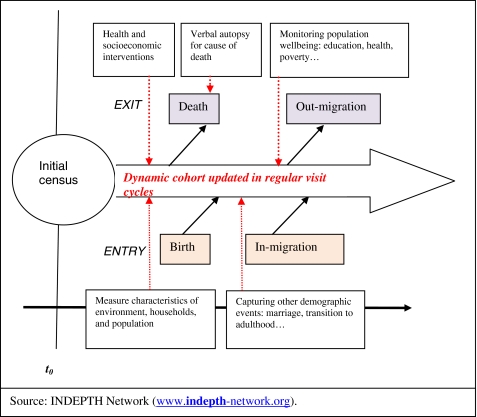
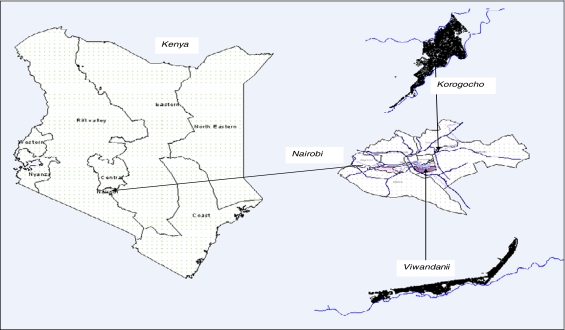
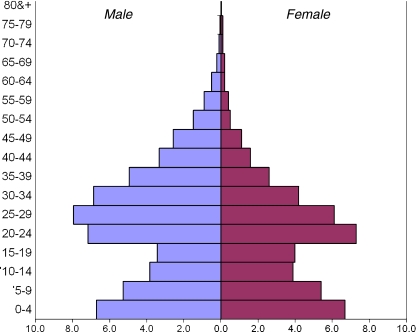
The Nairobi Urban Health and Demographic Surveillance System (NUHDSS) was set up in Korogocho and Viwandani slum settlements to provide a platform for investigating linkages between urban poverty, health, and demographic and other socioeconomic outcomes, and to facilitate the evaluation of interventions to improve the wellbeing of the urban poor. Data from the NUHDSS confirm the high level of population mobility in slum settlements, and also demonstrate that slum settlements are long-term homes for many people. Research and intervention programs should take account of the duality of slum residency. Consistent with the trends observed countrywide, the data show substantial improvements in measures of child mortality, while there has been limited decline in fertility in slum settlements. The NUHDSS experience has shown that it is feasible to set up and implement long-term health and demographic surveillance system in urban slum settlements and to generate vital data for guiding policy and actions aimed at improving the wellbeing of the urban poor.
Figures
References
-
- INDEPTH Network . Population and Health in Developing Countries. Population, health and Survival at INDEPTH Sites. Ottawa, Canada: IDRC; 2002.
-
- Tollman S, Kark SK, Kark E. The Pholela Health Centre: understanding health and disease in South Africa through community-oriented primary care (COPC) In: Gupta MD, Aaby P, Garenne M, Pison G, editors. Prospective Community Studies in Developing Countries. Oxford, England: Clarendon; 1997. pp. 213–232.
-
- Kark SL, Chesler J. Survival in infancy: a comparative study of stillbirths and infant mortality in certain Zulu and Hindu communities in Natal. S Aft J Lab Clin Med. 1956; 2(2): 134–159. - PubMed
-
- Garenne M, Cantrelle P. Three decades of research on population and health: the ORSTOM experience in rural Senegal, 1962–1991. In: Gupta MD, Aaby P, Garenne M, Pison G, editors. Prospective Community Studies in Developing Countries. Oxford, England: Clarendon; 1997. pp. 233–252.
Publication types
MeSH terms
Grants and funding
LinkOut - more resources
Full Text Sources
