


The inflammasomes: molecular effectors of host resistance against bacterial, viral, parasitic, and fungal infections
- PMID: 21716947
- PMCID: PMC3109312
- DOI: 10.3389/fmicb.2011.00015
The inflammasomes: molecular effectors of host resistance against bacterial, viral, parasitic, and fungal infections
Abstract
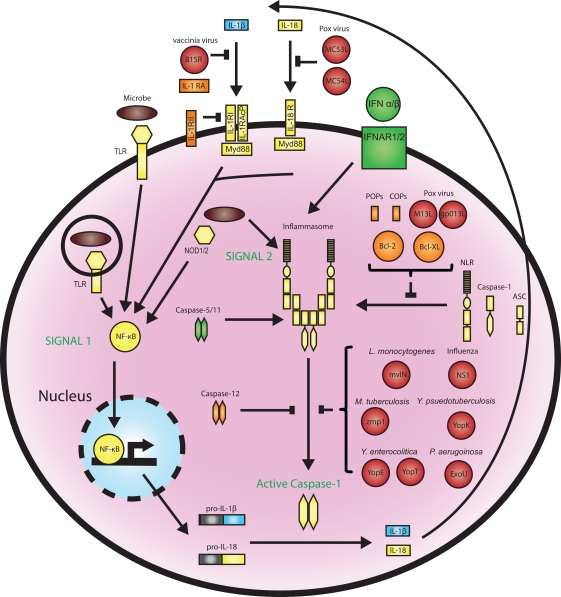
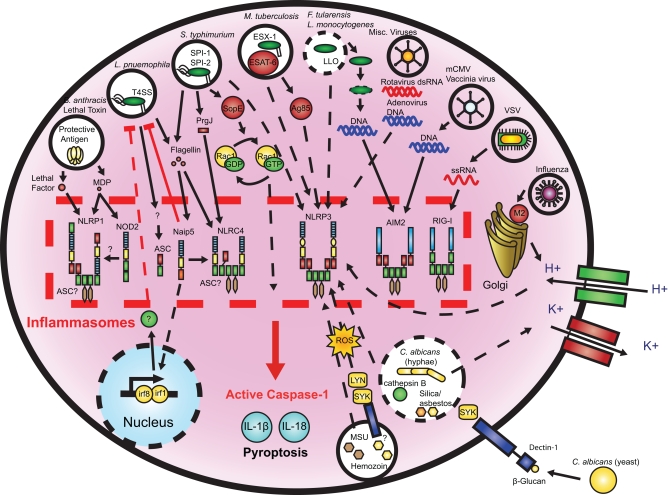
The inflammasomes are large multi-protein complexes scaffolded by cytosolic pattern recognition receptors (PRRs) that form an important part of the innate immune system. They are activated following the recognition of microbial-associated molecular patterns or host-derived danger signals (danger-associated molecular patterns) by PRRs. This recognition results in the recruitment and activation of the pro-inflammatory protease caspase-1, which cleaves its preferred substrates pro-interleukin-1β (IL-1β) and pro-IL-18 into their mature biologically active cytokine forms. Through processing of a number of other cellular substrates, caspase-1 is also required for the release of "alarmins" and the induction and execution of an inflammatory form of cell death termed pyroptosis. A growing spectrum of inflammasomes have been identified in the host defense against a variety of pathogens. Reciprocally, pathogens have evolved effector strategies to antagonize the inflammasome pathway. In this review we discuss recent developments in the understanding of inflammasome-mediated recognition of bacterial, viral, parasitic, and fungal infections and the beneficial or detrimental effects of inflammasome signaling in host resistance.
Keywords: Nod-like receptors; caspases; infection; inflammasome; inflammation; innate immunity.
Figures
References
-
- Akhter A., Gavrilin M. A., Frantz L., Washington S., Ditty C., Limoli D., Day C., Sarkar A., Newland C., Butchar J., Marsh C. B., Wewers M. D., Tridandapani S., Kanneganti T. D., Amer A. O. (2009). Caspase-7 activation by the Nlrc4/Ipaf inflammasome restricts Legionella pneumophila infection. PLoS Pathog. 5, e1000361. 10.1371/journal.ppat.1000361 - DOI - PMC - PubMed
-
- Allen I. C., Scull M. A., Moore C. B., Holl E. K., Mcelvania-Tekippe E., Taxman D. J., Guthrie E. H., Pickles R. J., Ting J. P. (2009). The NLRP3 inflammasome mediates in vivo innate immunity to influenza A virus through recognition of viral RNA. Immunity 30, 556–565 10.1016/j.immuni.2009.02.005 - DOI - PMC - PubMed
-
- Amer A., Franchi L., Kanneganti T. D., Body-Malapel M., Ozoren N., Brady G., Meshinchi S., Jagirdar R., Gewirtz A., Akira S., Nunez G. (2006). Regulation of Legionella phagosome maturation and infection through flagellin and host Ipaf. J. Biol. Chem. 281, 35217–35223 - PubMed
LinkOut - more resources
Full Text Sources
