Associations of ionizing radiation and breast cancer-related serum hormone and growth factor levels in cancer-free female A-bomb survivors
- PMID: 21718103
- PMCID: PMC3925891
- DOI: 10.1667/rr2631.1
Associations of ionizing radiation and breast cancer-related serum hormone and growth factor levels in cancer-free female A-bomb survivors
Abstract
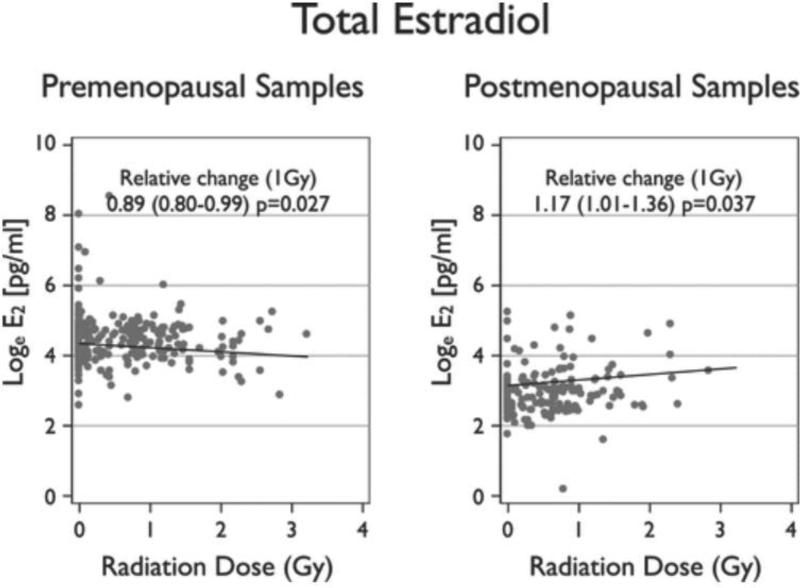
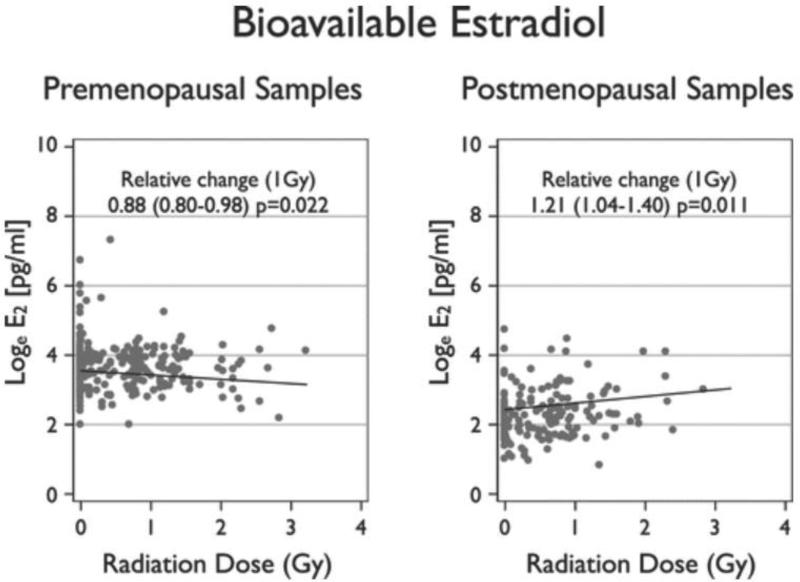
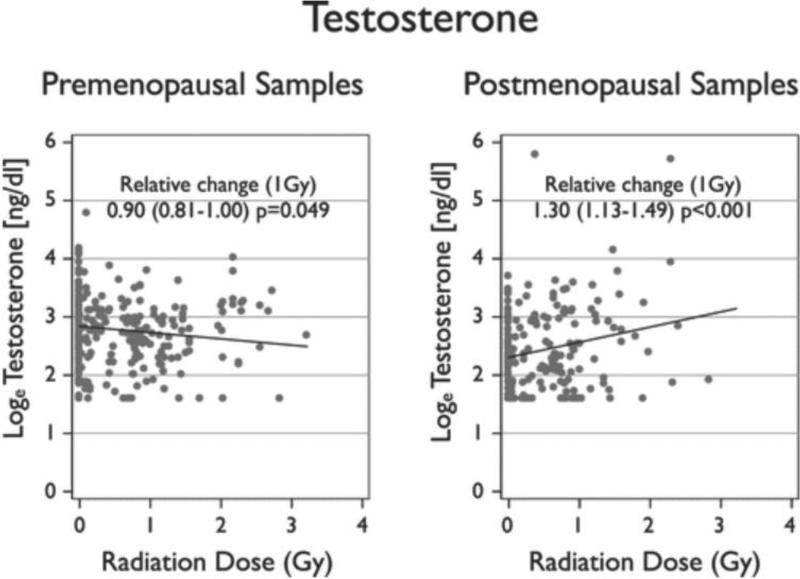
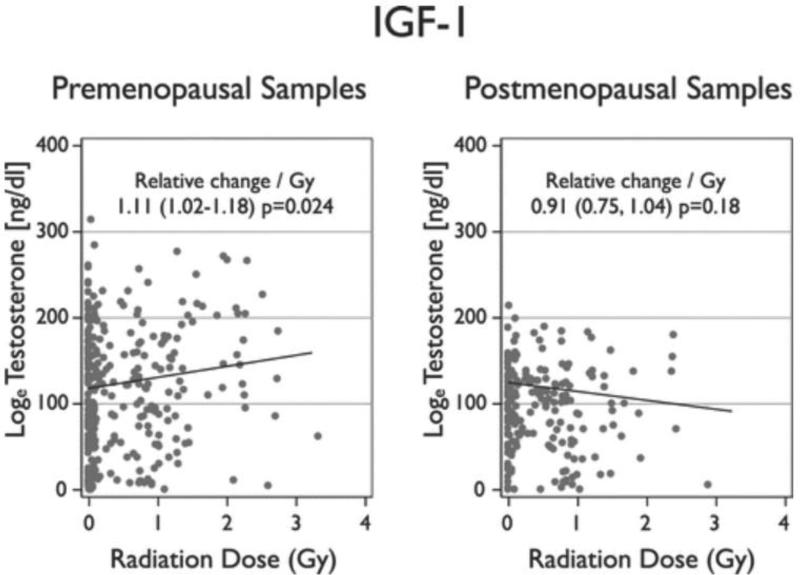
Levels of exposure to ionizing radiation are increasing for women worldwide due to the widespread use of CT and other radiologic diagnostic modalities. Exposure to ionizing radiation as well as increased levels of estradiol and other sex hormones are acknowledged breast cancer risk factors, but the effects of whole-body radiation on serum hormone levels in cancer-free women are unknown. This study examined whether ionizing radiation exposure is associated with levels of serum hormones and other markers that may mediate radiation-associated breast cancer risk. Serum samples were measured from cancer-free women who attended biennial health examinations with a wide range of past radiation exposure levels (N = 412, ages 26-79). The women were selected as controls for separate case-control studies from a cohort of A-bomb survivors. Outcome measures included serum levels of total estradiol, bioavailable estradiol, testosterone, progesterone, prolactin, insulin-like growth factor-1 (IGF1), insulin-like growth factor-binding protein 3 (IGFBP-3), and ferritin. Relationships were assessed using repeated-measures regression models fitted with generalized estimating equations. Geometric mean serum levels of total estradiol and bioavailable estradiol increased with 1 Gy of radiation dose among samples collected from postmenopausal women (17%(1Gy), 95% CI: 1%-36% and 21%(1Gy), 95% CI: 4%-40%, respectively), while they decreased in samples collected from premenopausal women (-11%(1Gy), 95% CI: -20%-1% and -12%(1Gy), 95% CI: -20%- -2%, respectively). Interactions by menopausal status were significant (P = 0.003 and P < 0.001, respectively). Testosterone levels increased with radiation dose in postmenopausal samples (30.0%(1Gy), 95% CI: 13%-49%) while they marginally decreased in premenopausal samples (-10%(1Gy), 95% CI: -19%-0%) and the interaction by menopausal status was significant (P < 0.001). Serum levels of IGF1 increased linearly with radiation dose (11%(1Gy), 95% CI: 2%-18%) and there was a significant interaction by menopausal status (P = 0.014). Radiation-associated changes in serum levels of estradiol, bioavailable estradiol, testosterone and IGF1 were modified by menopausal status at the time of collection. No associations with radiation were observed in serum levels of progesterone, prolactin, IGFBP-3 or ferritin.
Figures
References
-
- Brenner DJ, Hall EJ. Computed tomography – an increasing source of radiation exposure. N Engl J Med. 2007;357:2277–84. CrossRef, PubMed. - PubMed
-
- Preston DL, Mattsson A, Holmberg E, Shore R, Hildreth NG, Boice JD. Radiation effects on breast cancer risk: a pooled analysis of eight cohorts. Radiat Res. 2002;158:220–35. BioOne, PubMed. - PubMed
-
- Preston DL, Ron E, Tokuoka S, Funamoto S, Nishi N, Soda M, et al. Solid cancer incidence in atomic bomb survivors: 1958–1998. Radiat Res 2007. 168:1–64. BioOne, PubMed. - PubMed
-
- UNSCEAR Sources and effects of ionizing radiation. United Nations Scientific Committee on the Effects of Atomic Radiation: UNSCEAR 2000 Report to the General Assembly, with scientific annexes. 2000.
-
- Hankinson SE, Willett WC, Manson JE, Colditz GA, Hunter DJ, Spiegelman D, et al. Plasma sex steroid hormone levels and risk of breast cancer in postmenopausal women. J Natl Cancer Inst. 1998;90:1292–9. CrossRef, PubMed. - PubMed
Publication types
MeSH terms
Substances
Grants and funding
LinkOut - more resources
Full Text Sources
Medical
Miscellaneous