


Dual manganese-enhanced and delayed gadolinium-enhanced MRI detects myocardial border zone injury in a pig ischemia-reperfusion model
- PMID: 21719779
- PMCID: PMC3178667
- DOI: 10.1161/CIRCIMAGING.110.960591
Dual manganese-enhanced and delayed gadolinium-enhanced MRI detects myocardial border zone injury in a pig ischemia-reperfusion model
Abstract
Background: Gadolinium (Gd)-based delayed-enhancement MRI (DEMRI) identifies nonviable myocardium but is nonspecific and may overestimate nonviable territory. Manganese (Mn(2+))-enhanced MRI (MEMRI) denotes specific Mn(2+) uptake into viable cardiomyocytes. We performed a dual-contrast myocardial assessment in a porcine ischemia-reperfusion (IR) model to test the hypothesis that combined DEMRI and MEMRI identifies viable infarct border zone (BZ) myocardium in vivo.
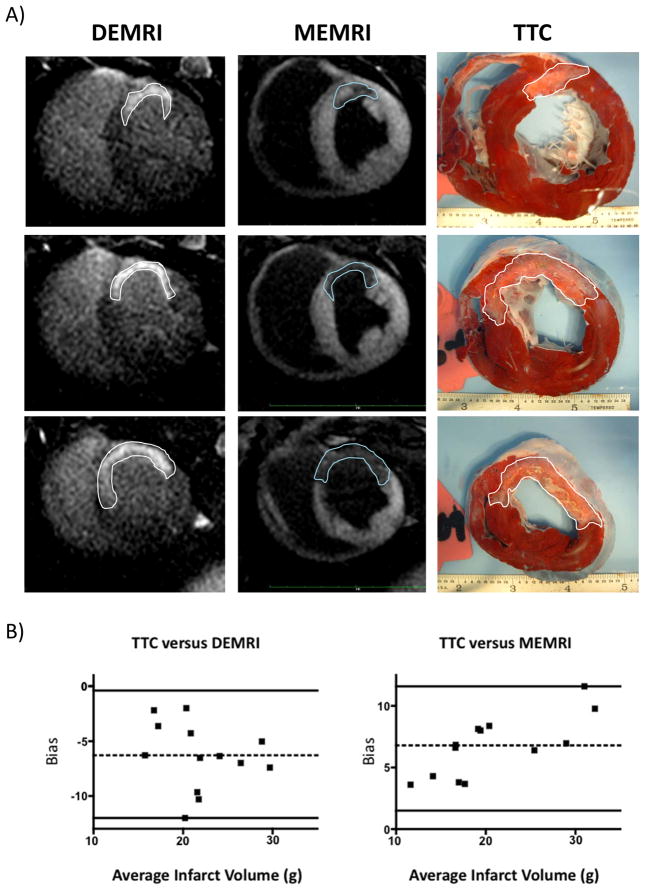
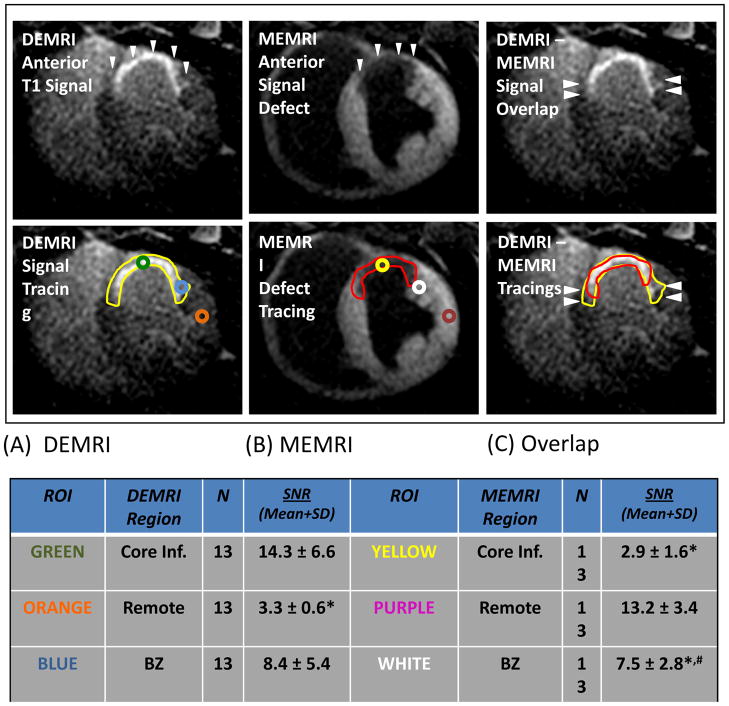
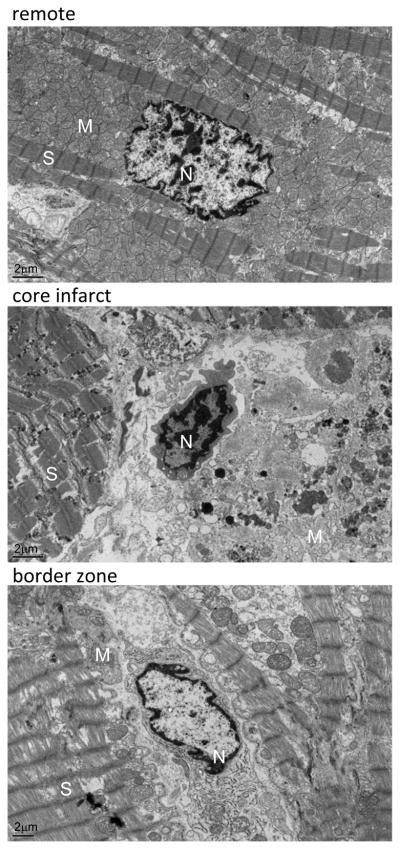
Methods and results: Sixty-minute left anterior descending coronary artery IR injury was induced in 13 adult swine. Twenty-one days post-IR, 3-T cardiac MRI was performed. MEMRI was obtained after injection of 0.7 mL/kg Mn(2+) contrast agent. DEMRI was then acquired after injection of 0.2 mmol/kg Gd. Left ventricular (LV) mass, infarct, and function were analyzed. Subtraction of MEMRI defect from DEMRI signal identified injured BZ myocardium. Explanted hearts were analyzed by 2,3,5-triphenyltetrazolium chloride stain and tissue electron microscopy to compare infarct, BZ, and remote myocardium. Average LV ejection fraction was reduced (30±7%). MEMRI and DEMRI infarct volumes correlated with 2,3,5-triphenyltetrazolium chloride stain analysis (MEMRI, r=0.78; DEMRI, r=0.75; P<0.004). MEMRI infarct volume percentage was significantly lower than that of DEMRI (14±4% versus 23±4%; P<0.05). BZ MEMRI signal-to-noise ratio (SNR) was intermediate to remote and core infarct SNR (7.5±2.8 versus 13.2±3.4 and 2.9±1.6; P<0.0001), and DEMRI BZ SNR tended to be intermediate to remote and core infarct SNR (8.4±5.4 versus 3.3±0.6 and 14.3±6.6; P>0.05). Tissue electron microscopy analysis exhibited preserved cell structure in BZ cardiomyocytes despite transmural DEMRI enhancement.
Conclusions: The dual-contrast MEMRI-DEMRI detects BZ viability within DEMRI infarct zones. This approach may identify injured, at-risk myocardium in ischemic cardiomyopathy.
Figures
References
-
- Cameron A, Davis KB, Green G, Schaff HV. Coronary bypass surgery with internal-thoracic-artery grafts--effects on survival over a 15-year period. N Engl J Med. 1996;334:216–219. - PubMed
-
- Cameron AA, Green GE, Brogno DA, Thornton J. Internal thoracic artery grafts: 20-year clinical follow-up. J Am Coll Cardiol. 1995;25:188–192. - PubMed
-
- Fitzgibbon GM, Kafka HP, Leach AJ, Keon WJ, Hooper GD, Burton JR. Coronary bypass graft fate and patient outcome: angiographic follow-up of 5,065 grafts related to survival and reoperation in 1,388 patients during 25 years. J Am Coll Cardiol. 1996;28:616–626. - PubMed
-
- Lytle BW, Cosgrove DM, Loop FD, Borsh J, Goormastic M, Taylor PC. Perioperative risk of bilateral internal mammary artery grafting: analysis of 500 cases from 1971 to 1984. Circulation. 1986;74:III37–41. - PubMed
-
- Kanderian AS, Renapurkar R, Flamm SD. Myocardial viability and revascularization. Heart Fail Clin. 2009;5:333–348. vi. - PubMed
Publication types
MeSH terms
Substances
Grants and funding
LinkOut - more resources
Full Text Sources
