


Visual attention and autistic behavior in infants with fragile X syndrome
- PMID: 21720726
- PMCID: PMC3743218
- DOI: 10.1007/s10803-011-1316-8
Visual attention and autistic behavior in infants with fragile X syndrome
Abstract
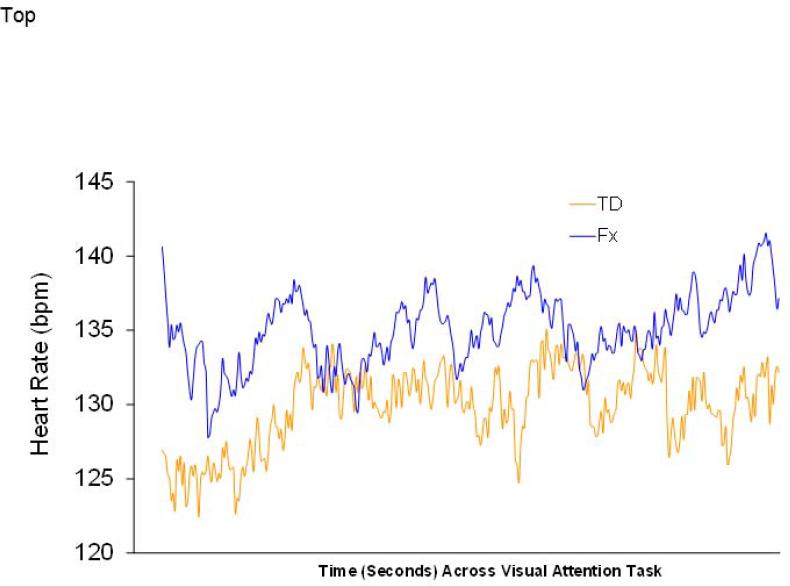
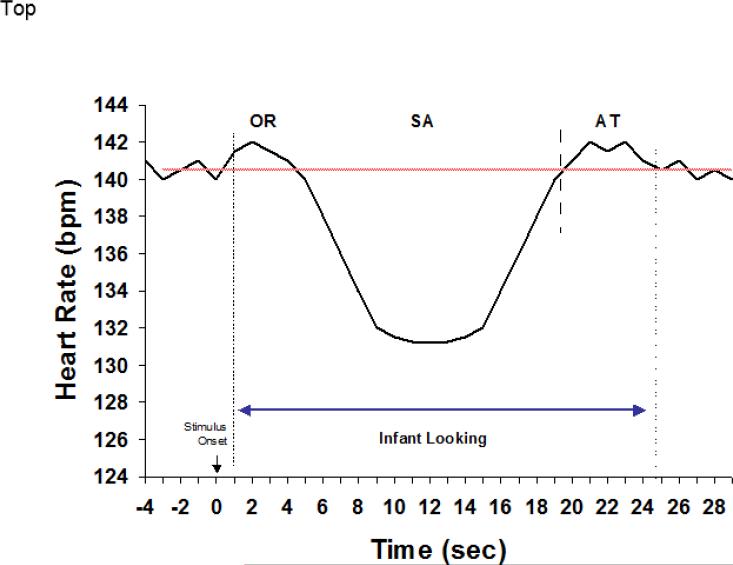
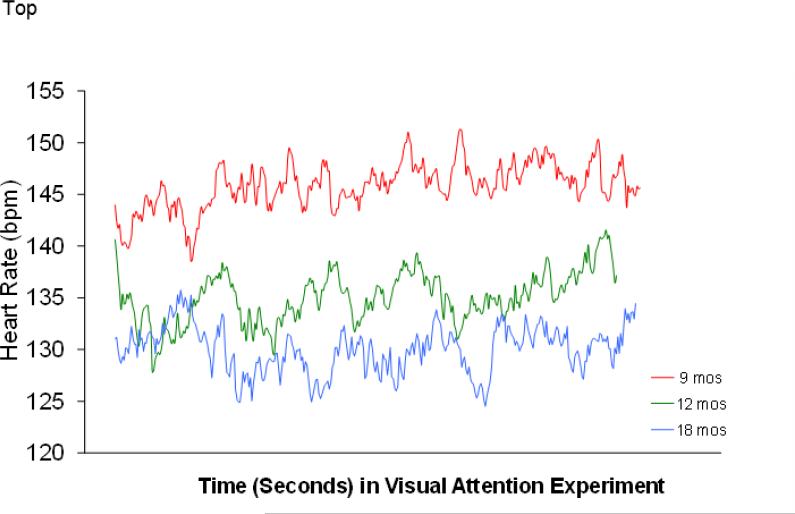
Aberrant attention is a core feature of fragile X syndrome (FXS), however, little is known regarding the developmental trajectory and underlying physiological processes of attention deficits in FXS. Atypical visual attention is an early emerging and robust indictor of autism in idiopathic (non-FXS) autism. Using a biobehavioral approach with gaze direction and heart activity, we examined visual attention in infants with FXS at 9, 12, and 18 months of age with a cross-sectional comparison to 12-month-old typically developing infants. Analyses revealed lower HR variability, shallower HR decelerations, and prolonged look durations in 12-month old infants with FXS compared to typical controls. Look duration and increased latency to disengage attention were correlated with severity of autistic behavior but not mental age.
Figures

References
-
- Bailey DB, Jr, Mesibov GB, Hatton DD, Clark RD, Roberts JE, Mayhew L. Autistic behavior in young boys with fragile X syndrome. Journal of Autism and Developmental Disorders. 1998;28:499–508. - PubMed
-
- Bailey DB, Jr., Raspa M, Holiday D, Bishop E, Olmsted M. Functional skills of individuals with fragile X syndrome: A lifespan cross-sectional analysis. American Journal on Intellectual and Developmental Disabilities. 2009;14:289–303. - PubMed
-
- Baranek GT, Danko CD, Skinner ML, Bailey DB, Hatton DD, Roberts JE, Mirrett PL. Video analysis of sensory-motor features in infants with fragile X syndrome at 9-12 months of age. Journal of Autism and Developmental Disorders. 2005;35:645–656. - PubMed
-
- Bornstein MH. Stability in mental development from early life: Methods, measures, models, meanings, and myths. In: Simion F, Butterworth G, editors. The development of sensory, motor and cognitive capacities in early infancy: From perception to cognition. Psychology Press/Erlbaum (UK) Taylor & Francis; Hove, England: 1998. pp. 301–332.
-
- Bryson SE, Czapinski P, Landry R, McDonnel B, Rombough V, Wainwright A. Autistic spectrum disorders: Causal mechanisms and recent findings on attention and emotion. Internaltional Journal of Special Education. 2004;19:14–22.
