


AKT signalling in the failing heart
- PMID: 21724622
- PMCID: PMC3143831
- DOI: 10.1093/eurjhf/hfr080
AKT signalling in the failing heart
Abstract
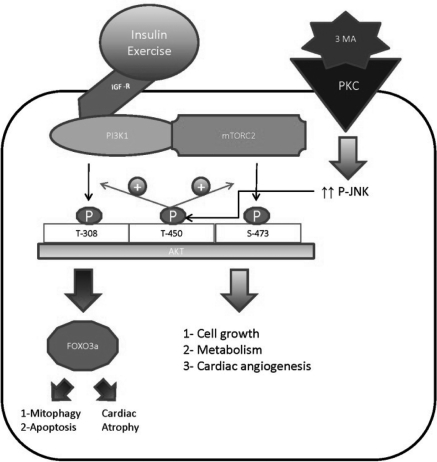
AKT is a serine/threonine protein kinase, also known as protein kinase B, which regulates cardiac growth, myocardial angiogenesis, glucose metabolism, and cell death in cardiac myocytes. AKT is activated by its phosphorylation at Thr 308 and ser 473 by PDK1 and mTORC2, respectively, in response to trophic stimuli such as insulin and insulin growth factor. c-Jun N-Terminal Kinases (JNKs) phosphorylate AKT at Thr 450 and potentiate its interaction with its downstream effectors. The short-term activation of AKT promotes physiological hypertrophy and protection from myocardial injury; whereas, its long-term activation causes pathological hypertrophy and heart failure. In this review we will discuss the role of AKT in regulating signalling pathways in the heart with special emphasis on the role of AKT in modulating stress induced autophagic cell death in cardiomyocytes in vitro.
Figures
References
-
- Shiojima I, Walsh K. Regulation of cardiac growth and coronary angiogenesis by the Akt/PKB signaling pathway. Genes Dev. 2006;20:3347–3365. - PubMed
-
- Cho H, Thorvaldsen JL, Chu Q, Feng F, Birnbaum MJ. Akt1/PKBalpha is required for normal growth but dispensable for maintenance of glucose homeostasis in mice. J Biol Chem. 2001;276:38349–38352. - PubMed
-
- Cho H, Mu J, Kim JK, Thorvaldsen JL, Chu Q, Crenshaw EB, 3rd, Kaestner KH, Bartolomei MS, Shulman GI, Birnbaum MJ. Insulin resistance and a diabetes mellitus-like syndrome in mice lacking the protein kinase Akt2 (PKB beta) Science. 2001;292:1728–1731. - PubMed
Publication types
MeSH terms
Substances
Grants and funding
LinkOut - more resources
Full Text Sources
Medical
Molecular Biology Databases
Miscellaneous
