


A comprehensive introduction to the genetic basis of non-syndromic hearing loss in the Saudi Arabian population
- PMID: 21726435
- PMCID: PMC3224387
- DOI: 10.1186/1471-2350-12-91
A comprehensive introduction to the genetic basis of non-syndromic hearing loss in the Saudi Arabian population
Abstract
Background: Hearing loss is a clinically and genetically heterogeneous disorder. Mutations in the DFNB1 locus have been reported to be the most common cause of autosomal recessive non-syndromic hearing loss worldwide. Apart from DFNB1, many other loci and their underlying genes have also been identified and the basis of our study was to provide a comprehensive introduction to the delineation of the molecular basis of non-syndromic hearing loss in the Saudi Arabian population. This was performed by screening DFNB1 and to initiate prioritized linkage analysis or homozygosity mapping for a pilot number of families in which DFNB1 has been excluded.
Methods: Individuals from 130 families of Saudi Arabian tribal origin diagnosed with an autosomal recessive non-syndromic sensorineural hearing loss were screened for mutations at the DFNB1 locus by direct sequencing. If negative, genome wide linkage analysis or homozygosity mapping were performed using Affymetrix GeneChip® Human Mapping 250K/6.0 Arrays to identify regions containing any known-deafness causing genes that were subsequently sequenced.
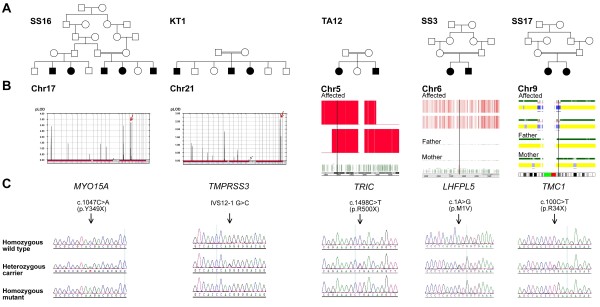
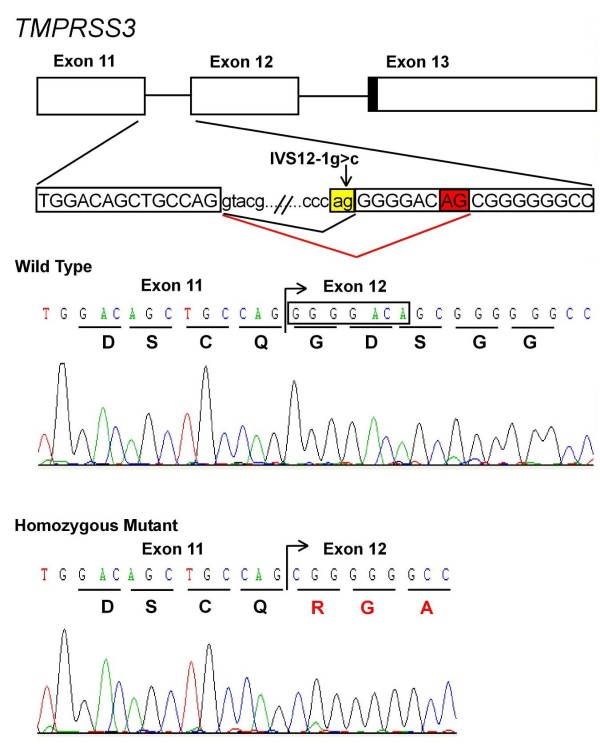
Results: Our results strongly indicate that DFNB1 only accounts for 3% of non-syndromic hearing loss in the Saudi Arabian population of ethnic ancestry. Prioritized linkage analysis or homozygosity mapping in five separate families established that their hearing loss was caused by five different known-deafness causing genes thus confirming the genetic heterogeneity of this disorder in the kingdom.
Conclusion: The overall results of this study are highly suggestive that underlying molecular basis of autosomal recessive non-syndromic deafness in Saudi Arabia is very genetically heterogeneous. In addition, we report that the preliminary results indicate that there does not seem to be any common or more prevalent loci, genes or mutations in patients with autosomal recessive non-syndromic hearing loss in patients of Saudi Arabian tribal origin.
Figures
References
-
- Friedman RA, Bykhovskaya Y, Sue CM, DiMauro S, Bradley R, Fallis-Cunningham R, Paradies N, Pensak ML, Smith RJ, Groden J, Li XC, Fischel-Ghodsian N. Maternally inherited nonsyndromic hearing loss. Am J Med Genet. 1999;84:369–372. doi: 10.1002/(SICI)1096-8628(19990604)84:4<369::AID-AJMG12>3.0.CO;2-V. - DOI - PubMed
Publication types
MeSH terms
Substances
LinkOut - more resources
Full Text Sources
