


An easy intervention to improve short-term adherence to medications in community-dwelling older outpatients. A pilot non-randomised controlled trial
- PMID: 21729274
- PMCID: PMC3146408
- DOI: 10.1186/1472-6963-11-158
An easy intervention to improve short-term adherence to medications in community-dwelling older outpatients. A pilot non-randomised controlled trial
Abstract
Background: Complex interventions to improve compliance to pharmacological treatment in older people have given mixed results and are not easily applicable in clinical practice. The aim of this study was to test the short-term efficacy on self-reported medication adherence of an easy intervention in which the patient or caregiver was asked to transcribe the pharmacological treatment while it was dictated to him/her by the doctor.
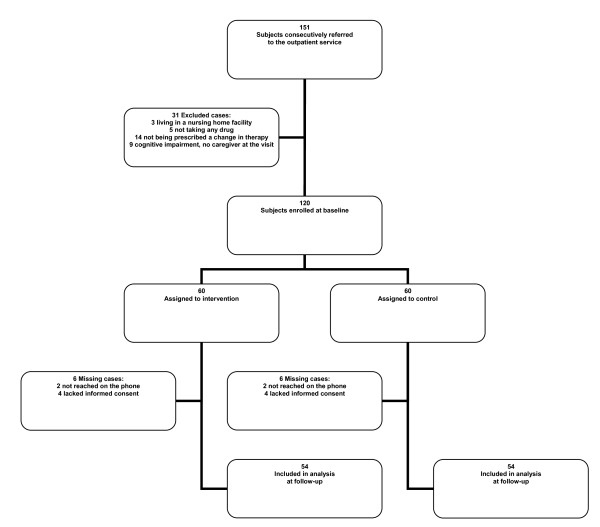
Methods: Pilot non-randomised controlled trial involving 108 community-dwelling outpatients aged 65+ (54 in the intervention arm, 54 controls) referred to a geriatric service from May to July 2009 and prescribed by the geriatrician a change in therapy. The intervention was applied at the end of the visit to the person managing the medications, be it the elder or his/her caregiver. Outcome of the study was the occurrence of any adherence error, assessed at a one-month follow-up by means of a semi-structured interview.
Results: The socio-demographic, functional and clinical characteristics of the two compared groups were similar at baseline. At a one-month follow-up 43 subjects (40%) had made at least one adherence error, whether unintentional or intentional. In the intervention group the prevalence of adherence errors was lower than in controls (20% vs 59%; adjusted odds ratio 0.16, 95% confidence interval 0.07 - 0.39; p < 0.001) after adjusting for the person managing the medications, the adherence errors at baseline and for the number of prescribed drugs.
Conclusions: In an older outpatient population the intervention considered was effective in reducing the prevalence of adherence errors in the month following the visit.
Trial registration: Australian and New Zealand Clinical Trials Register (ANZCTR): ACTRN12611000347965.
Figures
References
-
- Vik SA, Maxwell CJ, Hogan DB. Measurement, correlates, and health outcomes of medication adherence among seniors. Ann Pharmacother. 2004;38:303–12. - PubMed
