


Phase II trial of saracatinib (AZD0530), an oral SRC-inhibitor for the treatment of patients with hormone receptor-negative metastatic breast cancer
- PMID: 21729667
- PMCID: PMC3222913
- DOI: 10.1016/j.clbc.2011.03.021
Phase II trial of saracatinib (AZD0530), an oral SRC-inhibitor for the treatment of patients with hormone receptor-negative metastatic breast cancer
Abstract
Background: SRC activation is associated with cell migration, proliferation, and metastasis. Saracatinib is an oral tyrosine kinase inhibitor (TKI) selective for SRC. We performed this trial to evaluate the efficacy and safety of saracatinib monotherapy in patients with estrogen receptor (ER)(-) and progesterone receptor (PR)(-) metastatic breast cancer (MBC).
Patients and methods: Patients who had undergone ≤ 1 previous chemotherapy regimen for measurable ER(-) and PR(-) MBC received saracatinib 175 mg orally daily. The primary endpoint was disease control defined as complete response (CR) + partial response (PR) + stable disease (SD) > 6 months. Secondary endpoints included toxicity and progression-free survival (PFS). Levels of circulating tumor cells (CTCs) in response to therapy were measured over time.
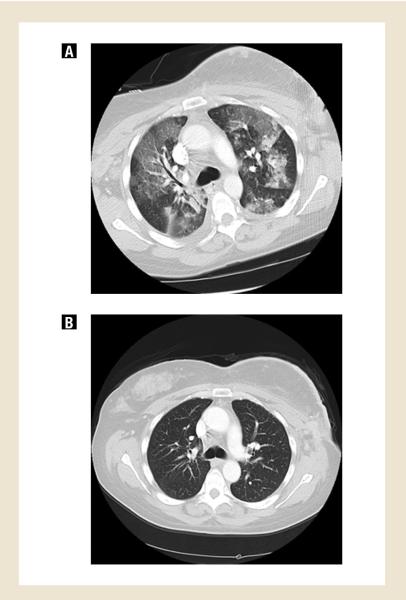
Results: Nine patients were treated on study. After a median of 2 cycles (range 1-3), no patient had achieved CR, PR, or SD >6 months. The median time to treatment failure was 82 days (12-109 days).The majority (89%) of patients discontinued saracatinib because of disease progression. One patient acquired potentially treatment-related grade 4 hypoxia with interstitial infiltrates and was removed from the study. Common adverse events included fatigue, elevated liver enzymes, nausea, hyponatremia, dyspnea, cough, and adrenal insufficiency.
Conclusions: These efficacy results were not sufficiently promising to justify continued accrual to this study. Based on this series, saracatinib does not appear to have significant single-agent activity for the treatment of patients with ER(-)/PR(-) MBC.
Copyright © 2011. Published by Elsevier Inc.
Figures
References
-
- Aligayer H, Boyd DD, Heiss MM, Abdalla EK, Curley SA, Gallick GE. Activation of Src kinase in primary colorectal carcinoma: an indicator of poor clinical prognosis. Cancer. 2002;94:344–51. - PubMed
-
- Ito Y, Kawakatsu H, Takeda T, Tani N, Kawaguchi N, Noguchi S, et al. Activation of c-Src is inversely correlated with biological aggressiveness of breast carcinoma. Breast Cancer Res Treat. 2002;76:261–7. - PubMed
-
- Masaki T, Igarashi K, Tokuda M, Yukimasa S, Han F, Jin YJ, et al. pp60c-src activation in lung adenocarcinoma. Eur J Cancer. 2003;39:1447–55. - PubMed
-
- Summy JM, Gallick GE. Src family kinases in tumor progression and metastasis. Cancer Metastasis Rev. 2003;22:337–58. - PubMed
-
- Wiener JR, Windham TC, Estrella VC, Parikh NU, Thall PF, Deavers MT, et al. Activated SRC protein tyrosine kinase is overexpressed in late-stage human ovarian cancers. Gynecol Oncol. 2003;88:73–9. - PubMed
Publication types
MeSH terms
Substances
Grants and funding
LinkOut - more resources
Full Text Sources
Other Literature Sources
Medical
Research Materials
Miscellaneous
