Review
. 2011 Oct;22(8):816-24.
doi: 10.1016/j.semcdb.2011.06.004. Epub 2011 Jun 25.

Rapid tip growth: insights from pollen tubes

Affiliations
Review

Rapid tip growth: insights from pollen tubes

Yuan Qin et al. Semin Cell Dev Biol. 2011 Oct.

Abstract

Pollen tubes extend rapidly in an oscillatory manner by the extreme form of polarized growth, tip growth, and provide an exciting system for studying the spatiotemporal control of polarized cell growth. The Rho-family ROP GTPase is a key signaling molecule in this growth control and is periodically activated at the apical plasma membrane to spatially define the apical growth region and temporally precede the burst of growth. The spatiotemporal dynamics of ROP GTPase is interconnected with actin dynamics and polar exocytosis that is required for tip-targeted membrane and wall expansion. Recent advances in the study of the mechanistic interlinks between ROP-centered signaling and spatiotemporal dynamics of cell membrane and wall remodeling will be discussed.


Figures

Figure 1
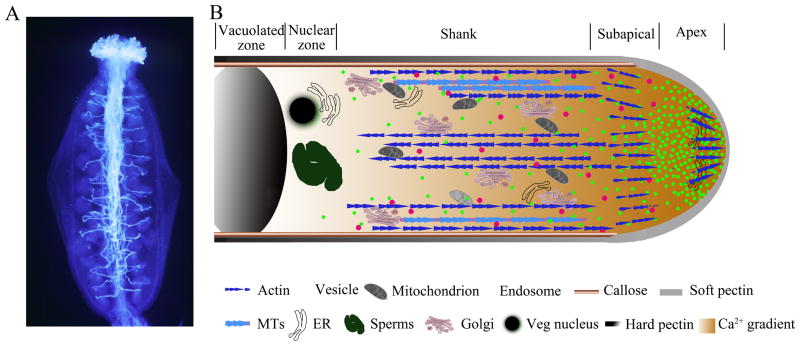
Figure 1. The pollen tube system: Directional and polarized cell growth
(A) Pollen tubes in the pistil, aniline blue staining of pollen tubes in the Arabidopsis pistil. (B) Schematic diagram of the internal zonation and structural elements of a growing pollen tube. The growing tube displays a tip-focused cytoplamic Ca2+ gradient and contains a single soft pectin apical wall and two layers shank wall, the inner sheath of callose and outer coating of hard pectin, which are non-plastic and able to resist turgor pressure. The apical clear zone is characterized by a V shaped accumulation of secretory vesicles that facilitate massive tip-targeted exocytosis. The subapical organelle-rich zone is followed by a nuclear and a vacuole zone. Microtubules (MTs) and long actin cables axially aligned in the shank and are excluded from the apical zone. A collar-like actin microfilaments (F-actin) structure is present in the subapical region and a population of fine and short F-actin is detected in the extreme apex.
Figure 2
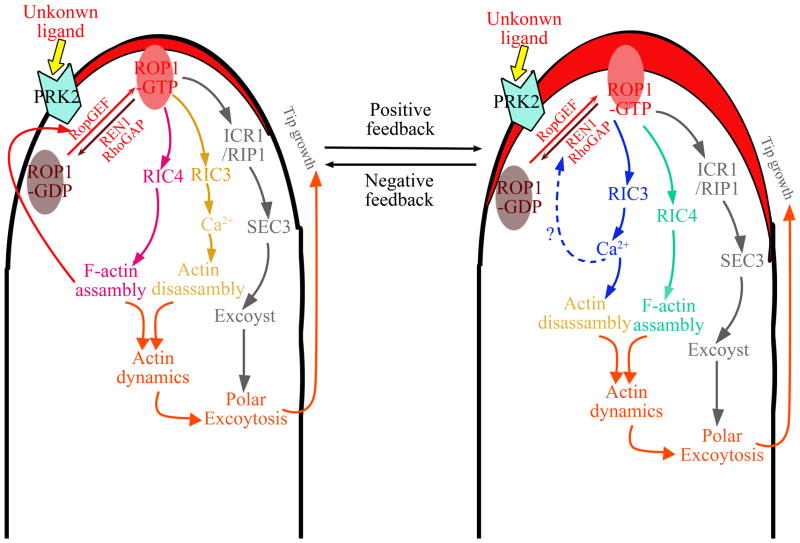
Figure 2. The ROP1 signaling network that control pollen tube tip growth
The network is composed of several pathways coordinately promoting tip-targeted exocytosis and positive and negative feedback loops, which may balance each other to maintain a certain size of the apical ROP1 cap that defines tip growth domain or may allow the oscillation of the ROP1 activity. ROP1 is locally activated in the PM to determine the site of exocytosis and activates multiple pathways leading to polar exocytosis. The RIC4 pathway promotes F-actin assembly and induces the accumulation of exocytic vesicles to the tip, and promotes positive feedback loops to increase the area of active ROP1 probably by targeting ROP1 upstream components such as RopGEFs and PRK2. Positive feedbacks coupled with diffusion rapidly generate the apical cap of active ROP1 that defines the tip growth domain. Meanwhile, ROP1 also activates the RIC3–calcium pathway. RIC3-dependent Ca2+ promotes tip F-actin disassembly and facilitates exocytosis. Polar exocytosis is also promoted by another likely ROP1 effector, RIP1/ICR1, which subsequently target recruits the SEC3 exocyst subunit that mediates the tethering of exocytic vesicles on the PM. Polarized exocytosis brings the REN1 RhoGAP to the apical PM, which deactivate PM-localized active ROP1. Thus the REN1-based negative-feedback globally inhibits ROP1, prevents excess ROP1 activation in the apical PM, and restricts the enlargement of the apical cap to the tip growth domain.
Figure 3
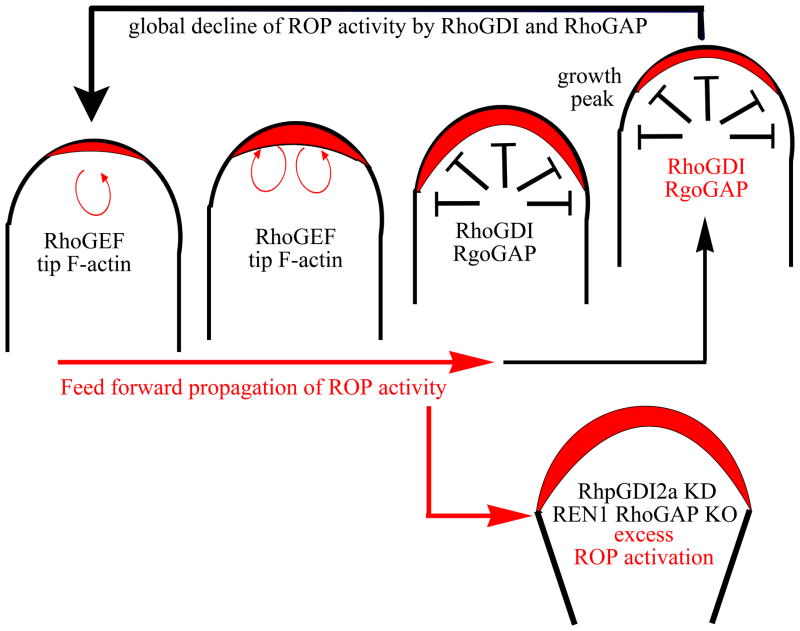
Figure 3. A model for the generation and maintenance of the apical cap of active ROP1 in growing pollen tubes
The localized ROP1 activity in the center of tube apical PM is amplified through a positive-feedback loop of ROP1 activation, such as recruitment of RhoGEF or other upstream ROP activator, which induces a rapid increase of local ROP1 activity and then its lateral propagation through the apex, generating the active ROP1 cap. The ROP1-mediated tip F-actin dynamic might also contribute to the rapid lateral propagation of ROP1 activity by facilitating the diffusion of ROP1 and its regulators in the PM through polarized exocytosis. RhoGAP and RhoGDI globally inhibit ROP1 in the apex, preventing excess lateral propagation and finally terminating one cycle of ROP1 activity increase. ROP1 activity starts to increase again, probably via positive feedback from the remnant of the previous active ROP1 cap. A tightly balanced interaction of ROP1 activation and inactivation might continuously generate the dynamic apical ROP1 activity for the continuous tip growth. When the balance is broken by loss of critical RhoGDI or RhoGAP activity (RhoGDI2a and REN1 RhoGAP in Arabidopsis pollen tube), ROP1 becomes activated, resulting in the depolarization of apical ROP1 cap and pollen-tube tip growth.

References

    1. Johnson MA, Preuss D. Plotting a course: multiple signals guide pollen tubes to their targets. Dev Cell. 2002;2(3):273–81. - PubMed
    1. Qin Y, et al. Penetration of the stigma and style elicits a novel transcriptome in pollen tubes, pointing to genes critical for growth in a pistil. PLoS Genet. 2009;5(8):e1000621. - PMC - PubMed
    1. Palanivelu R, Preuss D. Pollen tube targeting and axon guidance: parallels in tip growth mechanisms. Trends Cell Biol. 2000;10(12):517–24. - PubMed
    1. Hepler PK, Vidali L, Cheung AY. Polarized cell growth in higher plants. Annu Rev Cell Dev Biol. 2001;17:159–87. - PubMed
    1. Yang Z. Signaling tip growth in plants. Curr Opin Plant Biol. 1998;1(6):525–30. - PubMed

Publication types

MeSH terms

Substances

LinkOut - more resources