


Vitamin D and type 2 diabetes: a systematic review
- PMID: 21731035
- PMCID: PMC4066381
- DOI: 10.1038/ejcn.2011.118
Vitamin D and type 2 diabetes: a systematic review
Abstract
Background/objectives: Vitamin D may modify the risk of type 2 diabetes mellitus. The aim of this review was to examine the association between vitamin D status and incident type 2 diabetes, and the effect of vitamin D supplementation on glycemic outcomes.
Methods: We performed a systematic review of English-language studies using MEDLINE through February 2011. Longitudinal cohort studies reporting associations between vitamin D status and incident type 2 diabetes, and randomized controlled trials (RCTs) of vitamin D supplementation, were included. Study characteristics and results were extracted, and study quality was assessed.
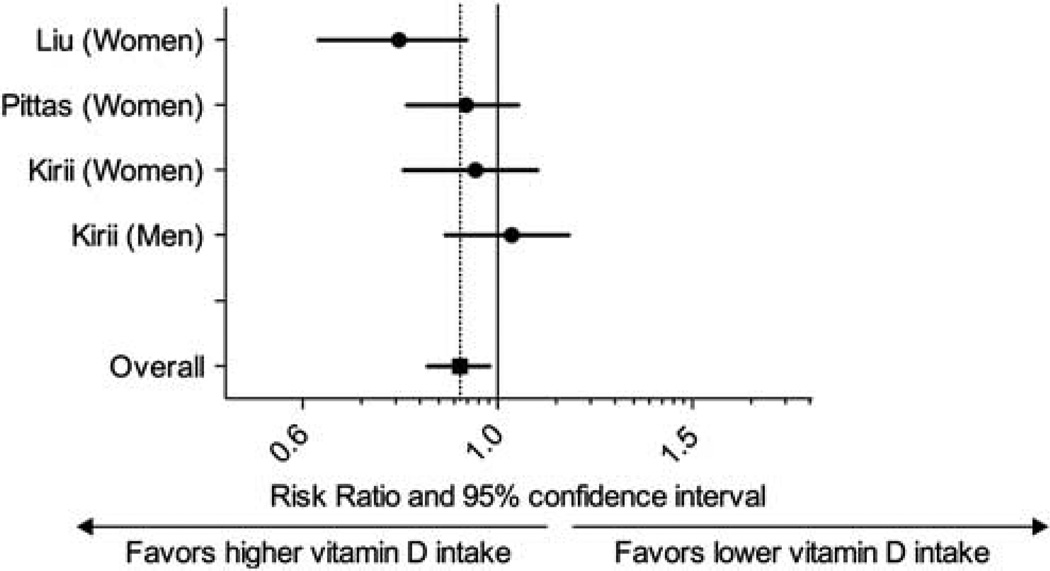
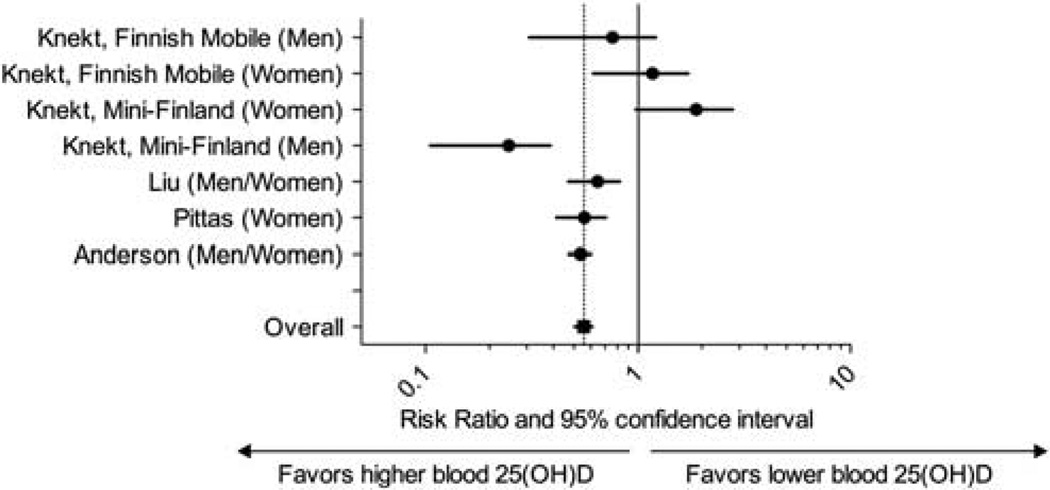
Results: A total of 8 observational cohort studies and 11 RCTs were included. In meta-analyses of observational studies, vitamin D intake>500 international units (IU)/day decreased the risk of type 2 diabetes by 13% compared with vitamin D intake<200 IU/day. Individuals with the highest vitamin D status (>25 ng/ml) had a 43% lower risk of developing type 2 diabetes (95% confidence interval 24, 57%) compared with those in the lowest group (<14 ng/ml). In post hoc analyses from eight trials among participants with normal glucose tolerance at baseline and in three small underpowered (n=32-62) trials of patients with established type 2 diabetes, there was no effect of vitamin D supplementation on glycemic outcomes. In two trials among patients with baseline glucose intolerance, vitamin D supplementation improved insulin resistance.
Conclusions: Vitamin D may play a role in type 2 diabetes; however, to better define the role of vitamin D in the development and progression of type 2 diabetes, high-quality observational studies and RCTs that measure blood 25-hydroxyvitamin D concentration and clinically relevant glycemic outcomes are needed.
Conflict of interest statement
The authors declare no conflict of interest.
Figures
References
-
- Anderson JL, May HT, Horne BD, Bair TL, Hall NL, Carlquist JF, et al. Relation of vitamin D deficiency to cardiovascular risk factors, disease status, and incident events in a general healthcare population. Am J Cardiol. 2010;106:963–968. - PubMed
-
- Avenell A, Cook JA, MacLennan GS, McPherson GC. Vitamin D supplementation and type 2 diabetes: a substudy of a randomised placebo-controlled trial in older people (RECORD trial, ISRCTN 51647438) Age Ageing. 2009;2009;38:606–609. - PubMed
-
- Campbell IT, Jarrett RJ, Keen H. Diurnal and seasonal variation in oral glucose tolerance: studies in the Antarctic. Diabetologia. 1975;1975;11:139–145. - PubMed
-
- Dawson-Hughes B, Harris SS. High-dose vitamin D supplementation: too much of a good thing? Jama. 2010;2010;303:1861–1862. - PubMed
Publication types
MeSH terms
Substances
Grants and funding
LinkOut - more resources
Full Text Sources
Medical
