


Prevalence and causes of blindness and visual impairment in sokoto state, Nigeria: baseline data for vision 2020: the right to sight eye care programme
- PMID: 21731322
- PMCID: PMC3119280
- DOI: 10.4103/0974-9233.80700
Prevalence and causes of blindness and visual impairment in sokoto state, Nigeria: baseline data for vision 2020: the right to sight eye care programme
Abstract
Purpose: To estimate the prevalence of low vision and blindness, identify the causes, and suggest policies for an effective eye care program based on 2005 data from Sokoto State, Nigeria.
Materials and methods: A stratified two-stage cluster sampling method was used to quantify the prevalence of blindness and the causes from 4 health zones in Sokoto State. Subjects were evaluated using a magnifying loupe, direct ophthalmoscope and torchlight. Data were collected based on the World Health Organization prevention of blindness coding for an eye examination. Prevalences with 95% confidence intervals (CI) were calculated and surgical coverage for causes of blindness was also analyzed.
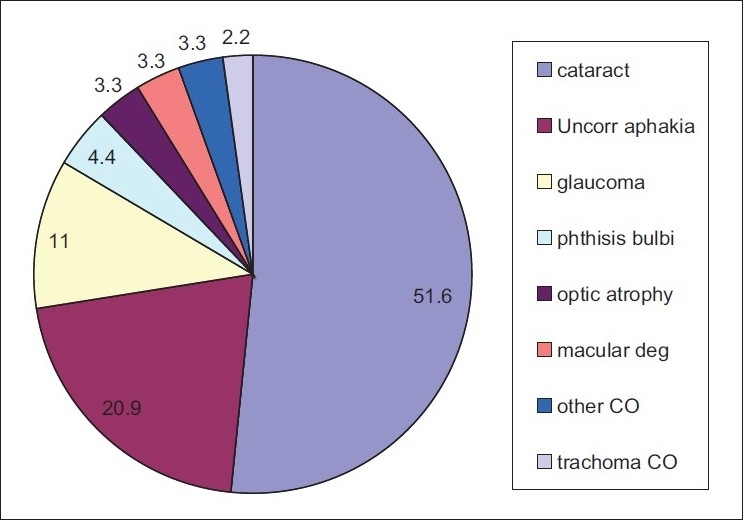
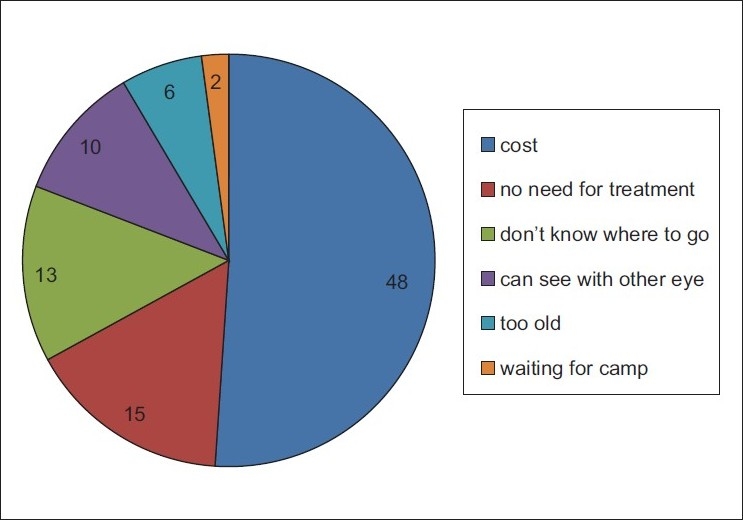
Results: The response rate was 91%. The prevalence of bilateral blindness was 1.9% (95% CI: 1.5-2.3%) ranging from 1.6% to 2.0% across the four health zones. The prevalence was 2.1% (95% CI: 1.6-2.6%) in males and 1.6% (95% CI: 1.1-2.1%) in females. The leading cause of bilateral blindness was cataract (51.6%), followed by uncorrected aphakia (20.9%) and glaucoma (11%). The prevalence of bilateral operable cataract was 1.9% (95% CI: 1.5-2.3%). The cataract surgical coverage (individuals with visual acuity <6/60) for the study was lower than the couching coverage (4.4% vs. 14.9%, respectively). Surgical coverage for trichiasis was 4.4%. The major barrier to cataract and glaucoma management was cost.
Conclusions: The prevalence of blindness in Sokoto State is high yet the main causes are largely avoidable. Barriers can be reduced by appropriate health education regarding the eye care program and the provision of integrated, sustainable, affordable and equitable services.
Keywords: Blindness; Eye Care Program; Nigeria; Vision 2020.
Conflict of interest statement
Figures
References
-
- World Health Organization. VISION 2020: THE RIGHT TO SIGHT. Director-General launches a global initiative to combat avoidable blindness. Press release WHO/12. Available from: http://www.vision2020.org/documents/WHO Publications/who_12.pdf [last accessed on 1999 Feb 17]
-
- World Health Organization. Global initiative for the elimination of avoidable blindness. 1997 WHO/PBL/97.61Rev.1:iii.
-
- World Health Organization. WHO/PBL eye examination record (version III). WHO /PBL/EER/1988. Available from: http://www.who.int/ncd/vision2020_actionplan/documents/pbl_88_1.pdf [last accessed on 2003 Oct 25]
-
- Rabiu MM, Muhammad N, Liman IR. Prevalence and magnitude of trachoma in a local government area of Sokoto state, north-western Nigeria. Niger J Med. 2007;16:348–53. - PubMed
-
- Rabiu MM, Muhammad N. Rapid assessment of cataract surgical services in Birnin Kebbi local government area of Kebbi state, Nigeria. Ophthalmic Epidemiol. 2008;15:359–65. - PubMed
LinkOut - more resources
Full Text Sources
