


Generation of colonies of induced trophoblast cells during standard reprogramming of porcine fibroblasts to induced pluripotent stem cells
- PMID: 21734265
- PMCID: PMC3184293
- DOI: 10.1095/biolreprod.111.092809
Generation of colonies of induced trophoblast cells during standard reprogramming of porcine fibroblasts to induced pluripotent stem cells
Abstract
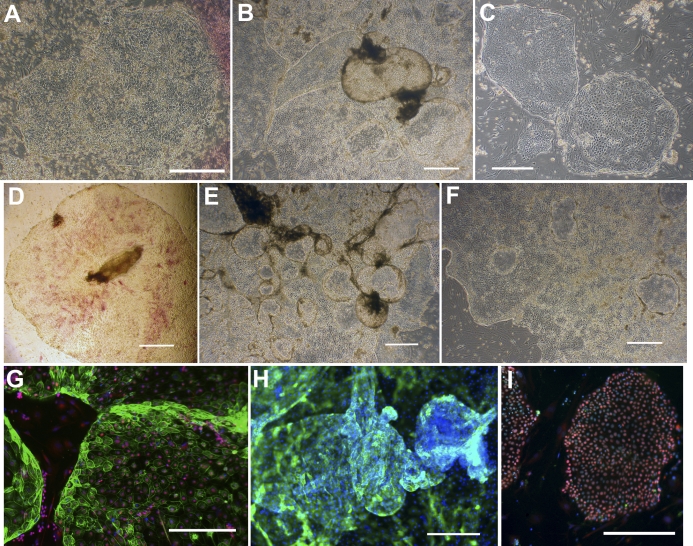
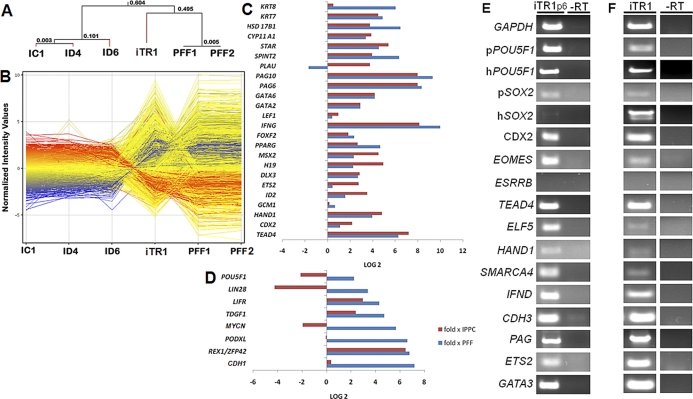
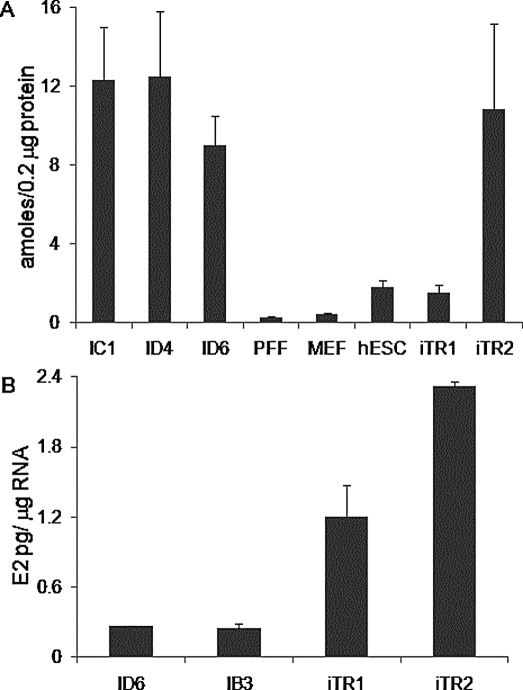
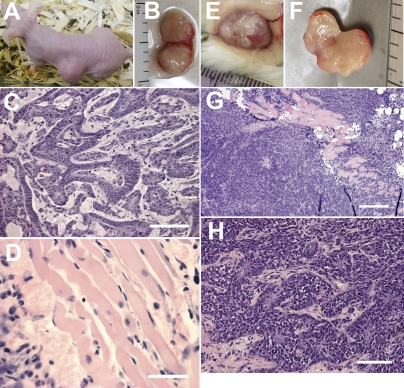
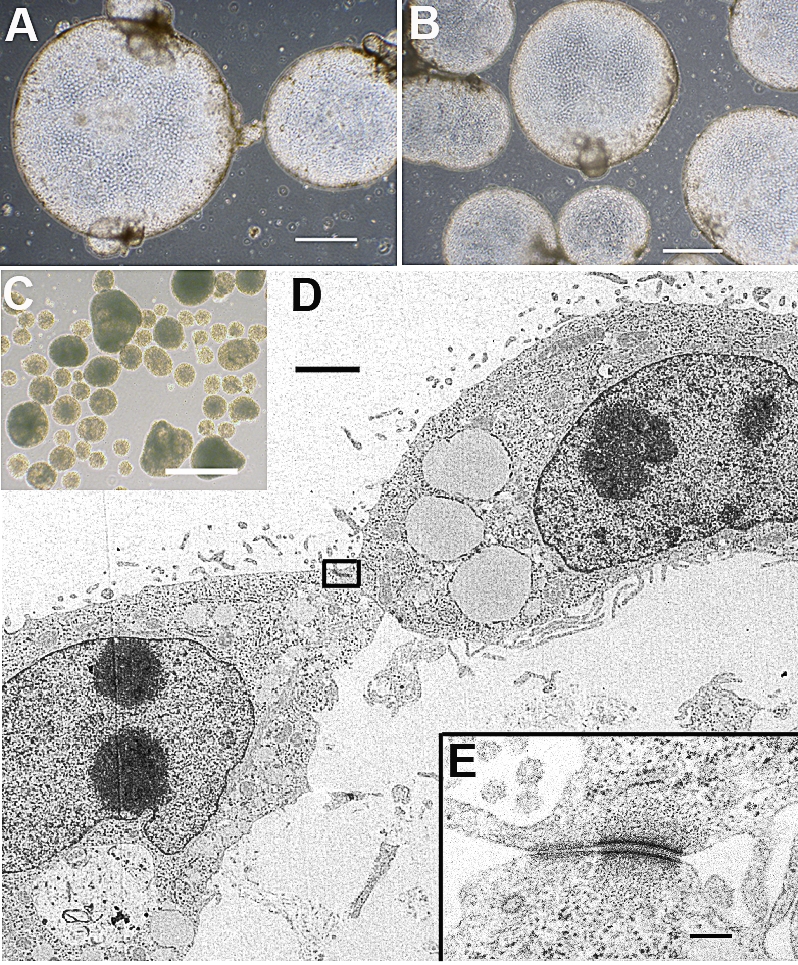
During reprogramming of porcine mesenchymal cells with a four-factor (POU5F1/SOX2/KLF4/MYC) mixture of vectors, a fraction of the colonies had an atypical phenotype and arose earlier than the recognizable porcine induced pluripotent stem (iPS) cell colonies. Within days after each passage, patches of cells with an epithelial phenotype formed raised domes, particularly under 20% O(2) conditions. Relative to gene expression of the iPS cells, there was up-regulation of genes for transcription factors associated with trophoblast (TR) lineage emergence, e.g., GATA2, PPARG, MSX2, DLX3, HAND1, GCM1, CDX2, ID2, ELF5, TCFAP2C, and TEAD4 and for genes required for synthesis of products more typical of differentiated TR, such as steroids (HSD17B1, CYP11A1, and STAR), pregnancy-associated glycoproteins (PAG6), and select cytokines (IFND, IFNG, and IL1B). Although POU5F1 was down-regulated relative to that in iPS cells, it was not silenced in the induced TR (iTR) cells over continued passage. Like iPS cells, iTR cells did not senesce on extended passage and displayed high telomerase activity. Upon xenografting into immunodeficient mice, iTR cells formed nonhemorrhagic teratomas composed largely of layers of epithelium expressing TR markers. When cultured under conditions that promoted embryoid body formation, iTR cells formed floating spheres consisting of a single epithelial sheet whose cells were tethered laterally by desmosome-like structures. In conclusion, reprogramming of porcine fibroblasts to iPS cells generates, as a by-product, colonies composed of self-renewing populations of TR cells, possibly containing TR stem cells.
Figures
References
-
- Tanaka S, Kunath T, Hadjantonakis AK, Nagy A, Rossant J. Promotion of trophoblast stem cell proliferation by FGF4. Science 1998; 282: 2072 2075 - PubMed
-
- Vandevoort CA, Thirkill TL, Douglas GC. Blastocyst-derived trophoblast stem cells from the rhesus monkey. Stem Cells Dev 2007; 16: 779 788 - PubMed
-
- Tanaka S. Derivation and culture of mouse trophoblast stem cells in vitro. Methods Mol Biol 2006; 329: 35 44 - PubMed
Publication types
MeSH terms
Substances
Grants and funding
LinkOut - more resources
Full Text Sources
Other Literature Sources
