


Interactions of diarrhea, pneumonia, and malnutrition in childhood: recent evidence from developing countries
- PMID: 21734569
- PMCID: PMC5454480
- DOI: 10.1097/QCO.0b013e328349287d
Interactions of diarrhea, pneumonia, and malnutrition in childhood: recent evidence from developing countries
Abstract
Purpose of review: This review highlights recent progress toward understanding complex interactions between diarrhea, pneumonia, and undernutrition among children in low-income and middle-income countries.
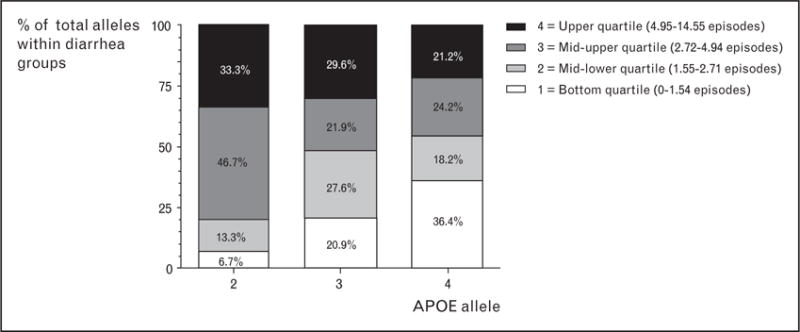
Recent findings: New studies parallel earlier reports that diarrhea and pneumonia impair children's growth and that underlying malnutrition is a major risk factor for these conditions. Episodes of diarrhea may predispose to pneumonia in undernourished children. Additional studies support breastfeeding and micronutrient supplementation for the prevention and control of diarrhea and pneumonia. Malnutrition may partially account for the reduced efficacy of oral rotavirus vaccines in low-income countries. Immunization of pregnant women against influenza also appears to reduce intrauterine growth retardation. Immunization of infants against Streptococcus pneumoniae may improve their growth. New genetic studies indicate that polymorphisms in apolipoprotein E or the leptin receptor modulate children's risk for diarrhea and Entamoeba histolytica infection, respectively, thereby linking two genes important for lipid metabolism to enteric infections.
Summary: Significant advances have been made in understanding the vicious cycle of malnutrition, diarrhea, and pneumonia in developing countries. Future challenges will be to translate this progress into effective and widely accessible public health measures.
Conflict of interest statement
There are no conflicts of interest.
Figures


References
-
- Black RE, Morris SS, Bryce J. Where and why are 10 million children dying every year? Lancet. 2003;361:2226–2234. - PubMed
-
- Mata LJ, Urrutia JJ, Lechtig A. Infection and nutrition of children of a low socioeconomic rural community. Am J Clin Nutr. 1971;24:249–259. - PubMed
-
- Mata LJ, Urrutia JJ, Albertazzi C, et al. Influence of recurrent infections on nutrition and growth of children in Guatemala. Am J Clin Nutr. 1972;25:1267–1275. - PubMed
-
- Rowland MG, Rowland SG, Cole TJ. Impact of infection on the growth of children from 0 to 2 years in an urban West African community. Am J Clin Nutr. 1988;47:134–138. - PubMed
Publication types
MeSH terms
Grants and funding
LinkOut - more resources
Full Text Sources
Medical
Research Materials
