


Implementation of an Anesthesia Information Management System (AIMS)
- PMID: 21734847
- PMCID: PMC3119212
Implementation of an Anesthesia Information Management System (AIMS)
Abstract
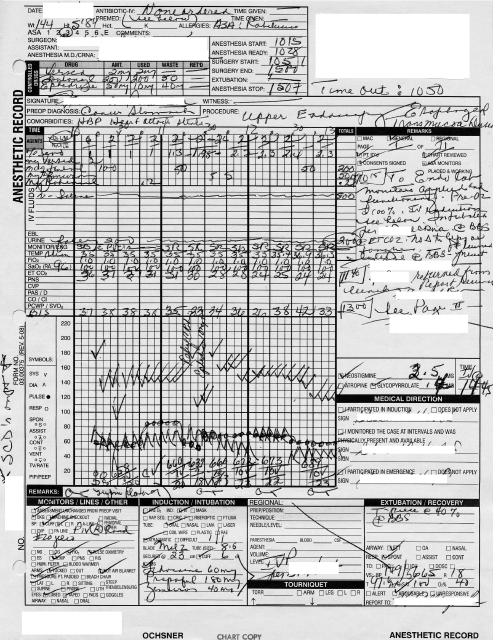
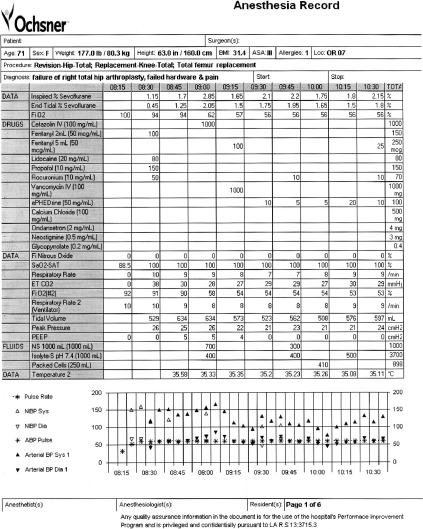
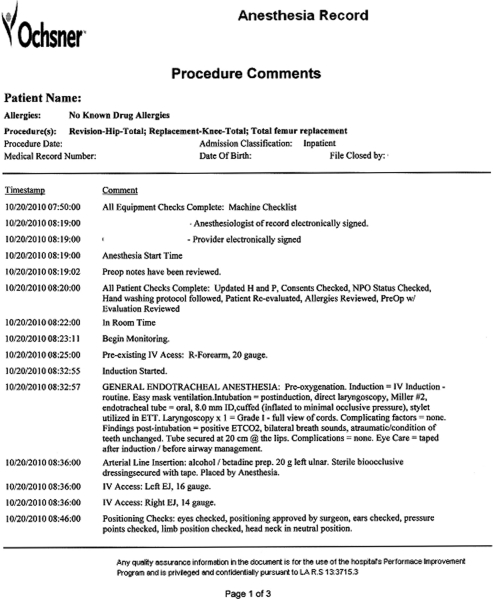
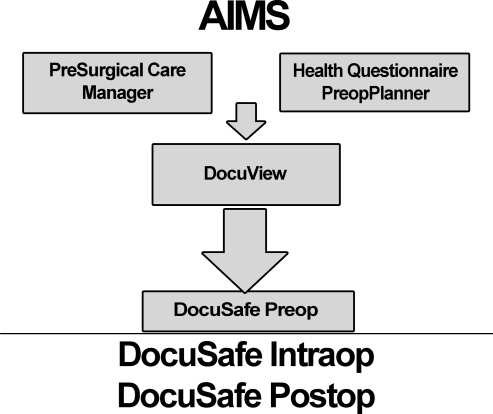
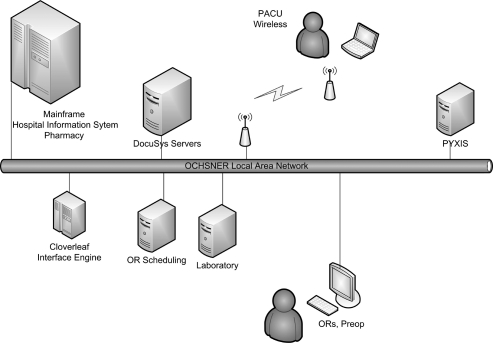
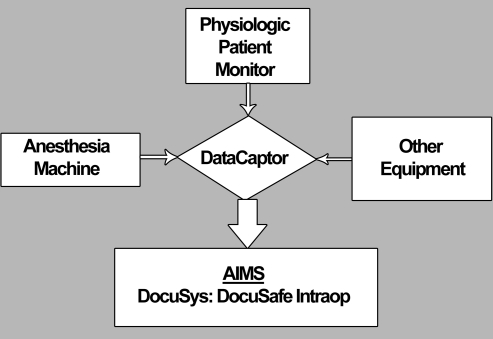
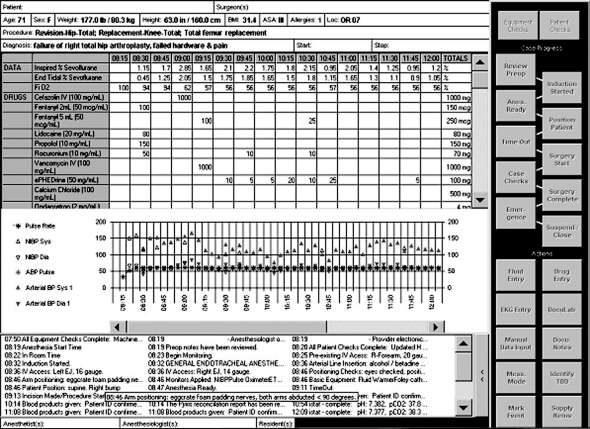
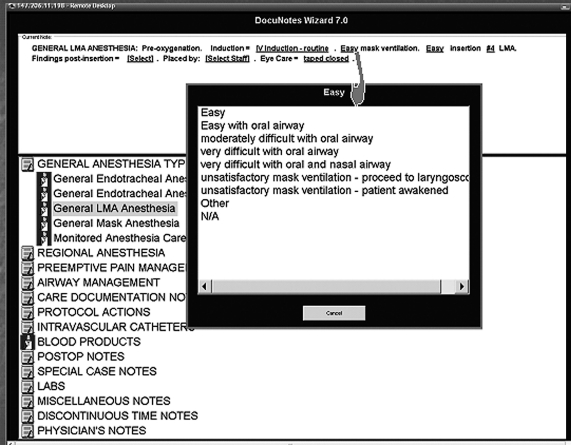
During the administration of anesthesia, the anesthesia provider has historically created a paper record, charted manually, that included extensive patient care-related data (vital signs, other parameters, etc) and commentaries. DocuSys, a proprietary anesthesia information management system (AIMS), creates an electronic version of the anesthesia record and provides additional information. It electronically captures data from clinical monitors and other sources, including scheduling applications and laboratory computers. The AIMS facilitates chart entries such as drug doses and case narratives. Benefits of an AIMS include improved legibility of the anesthesia record and greater efficiency in documentation efforts. Use of the AIMS assists the practitioner with decision support logic, such as the timing of antibiotic administration and the inclusion of legally required documentation. Upon case completion, the AIMS data are immediately available to other information systems, such as billing and medical records. Data can be made available from a single case or, more important, from thousands of cases to analyze variables such as efficiency of services, adherence to best practices, patient outcomes, and clinical research. The AIMS was deployed at the main campus of the Ochsner Health System on March 26, 2009. In this article, we discuss the issues involved in the AIMS implementation process: the successes, surprises, and continued challenges.
Keywords: Anesthesia; electronic medical record; informatics.
Figures

References
-
- Devitt J. H., Rapanos T., Kurrek M., Cohen M. M., Shaw M. The anesthetic record: accuracy and completeness. Can J Anaesth. 1999;46(2):122–128. - PubMed
-
- Egger Halbeis C. B., Epstein R. H., Macario A., Pearl R. G., Grunwald Z. Adoption of anesthesia information management systems by academic departments in the United States. Anesth Analg. 2008;107(4):1323–1329. - PubMed
-
- Muravchick S. Anesthesia information management systems. Curr Opin Anaesthesiol. 2009;22(6):764–768. - PubMed
-
- Muravchick S., Caldwell J. E., Epstein R. H., et al. Anesthesia information management system implementation: a practical guide. Anesth Analg. 2008;107(5):1598–1608. - PubMed
-
- Stonemetz J., Ruskin K. Anesthesia Informatics. London: Springer; 2010.
LinkOut - more resources
Full Text Sources