A Case of High-Grade Neuroendocrine Carcinoma That Improved with Bevacizumab plus Modified FOLFOX6 as the Fourth-Line Chemotherapy
- PMID: 21734880
- PMCID: PMC3124459
- DOI: 10.1159/000328802
A Case of High-Grade Neuroendocrine Carcinoma That Improved with Bevacizumab plus Modified FOLFOX6 as the Fourth-Line Chemotherapy
Abstract
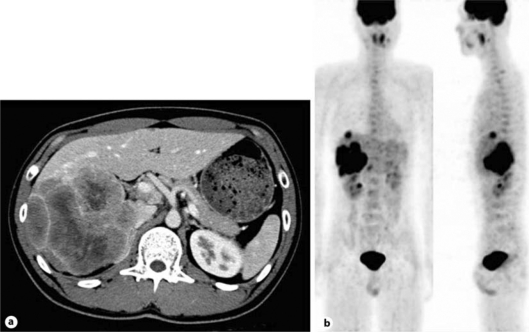
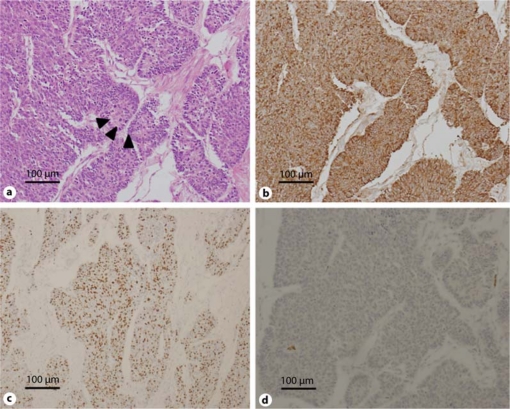
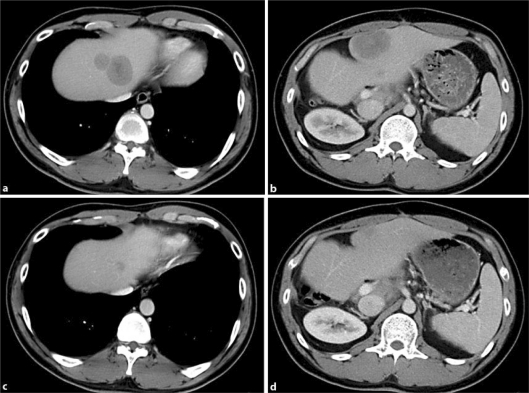
High-grade neuroendocrine carcinoma differs from usual neuroendocrine carcinoma, and its prognosis is dismal. In this case report, a case of high-grade neuroendocrine carcinoma that improved with bevacizumab plus modified FOLFOX6 as the fourth-line chemotherapy is presented. A 29-year-old male with a huge liver tumor was diagnosed with high-grade neuroendocrine carcinoma originating from the liver. Multiple liver and bone metastases were found one month after surgery. He was treated with three chemotherapy regimens used for the management of small-cell lung cancer with extensive disease. However, none of them could be maintained because of tumor progression. He was then treated with bevacizumab plus modified FOLFOX6 as the fourth-line regimen. Dramatic tumor shrinkage was obtained, and a partial response was achieved. This case suggests that high-grade neuroendocrine carcinoma can be treated with bevacizumab in combination with cytotoxic chemotherapy.
Keywords: Bevacizumab; High-grade neuroendocrine carcinoma; Liver origin; Small-cell lung cancer.
Figures
References
-
- NCCN Practice Guidelines in Oncology: Neuroendocrine Tumor. NCCN Practice Guidelines in Oncology, Version 2, 2010.
-
- Cho CS, Labow DM, Tang L, et al. Histologic grade is correlated with outcome after resection of hepatic neuroendocrine neoplasms. Cancer. 2008;113:126–134. - PubMed
-
- NCCN Practice Guidelines in Oncology: Small Cell Lung Cancer. NCCN Clinical Guidelines in Oncology, Version 1, 2011.
Publication types
LinkOut - more resources
Full Text Sources