


Central neural responses to restraint stress are altered in rats with an early life history of repeated brief maternal separation
- PMID: 21736922
- PMCID: PMC3166384
- DOI: 10.1016/j.neuroscience.2011.06.052
Central neural responses to restraint stress are altered in rats with an early life history of repeated brief maternal separation
Abstract
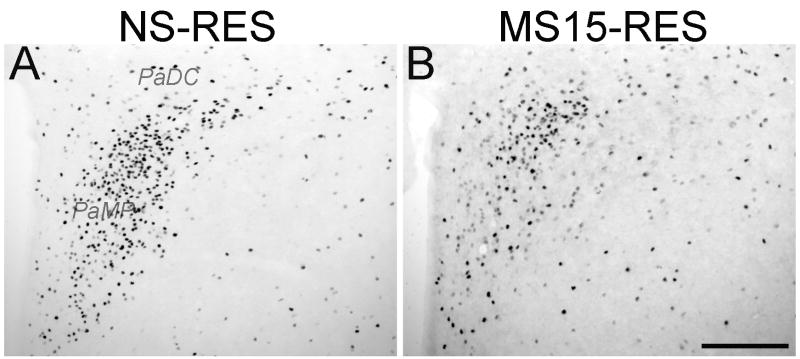
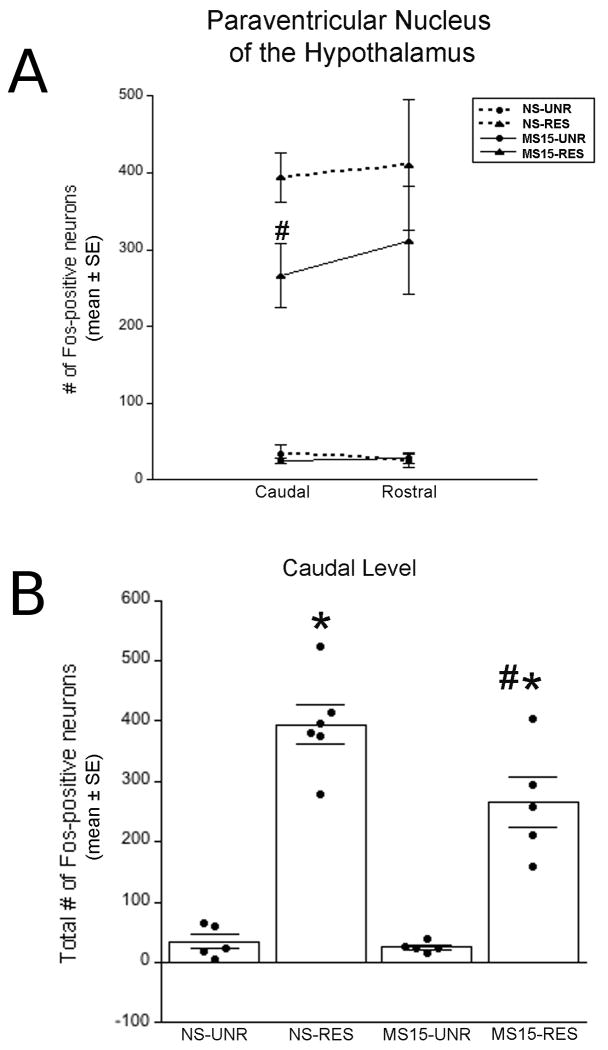
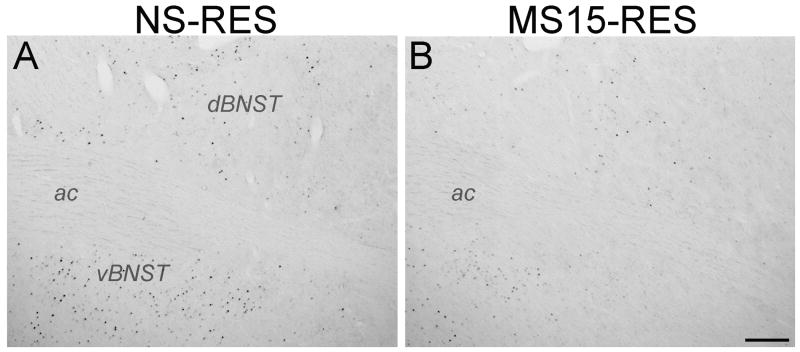
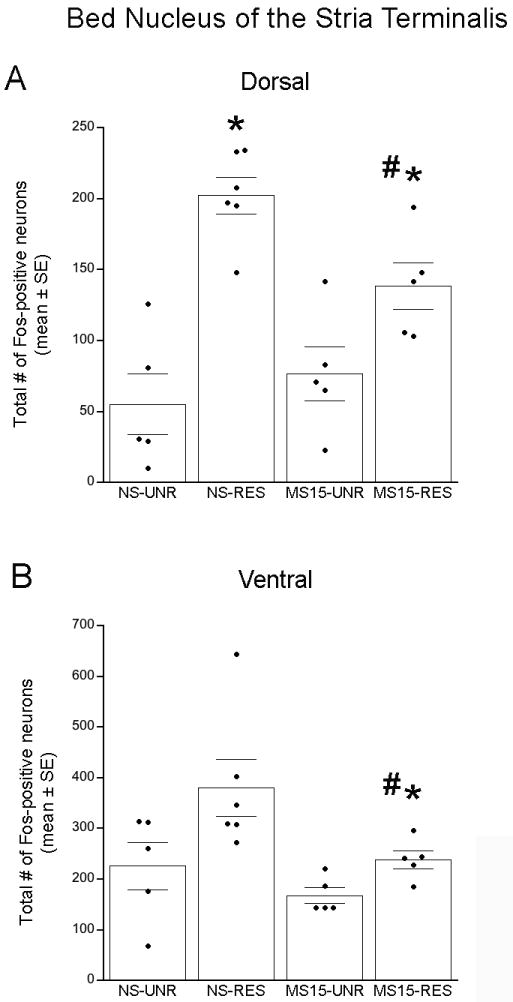
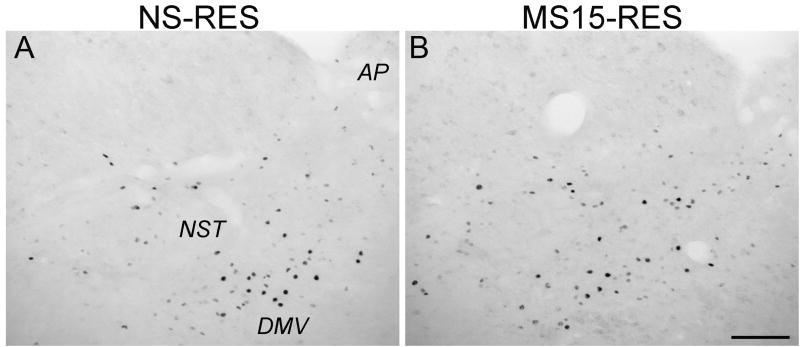
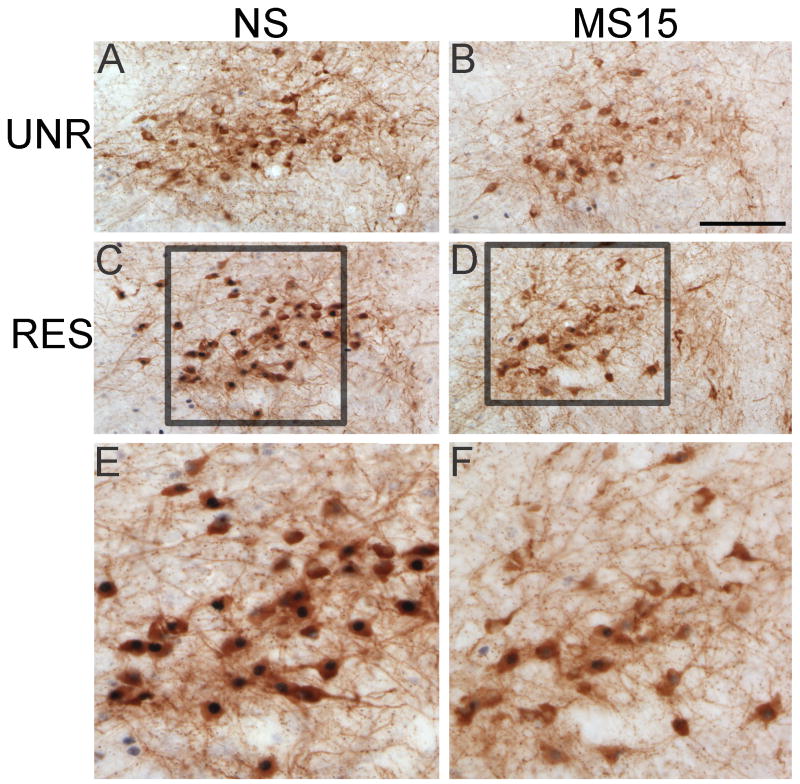
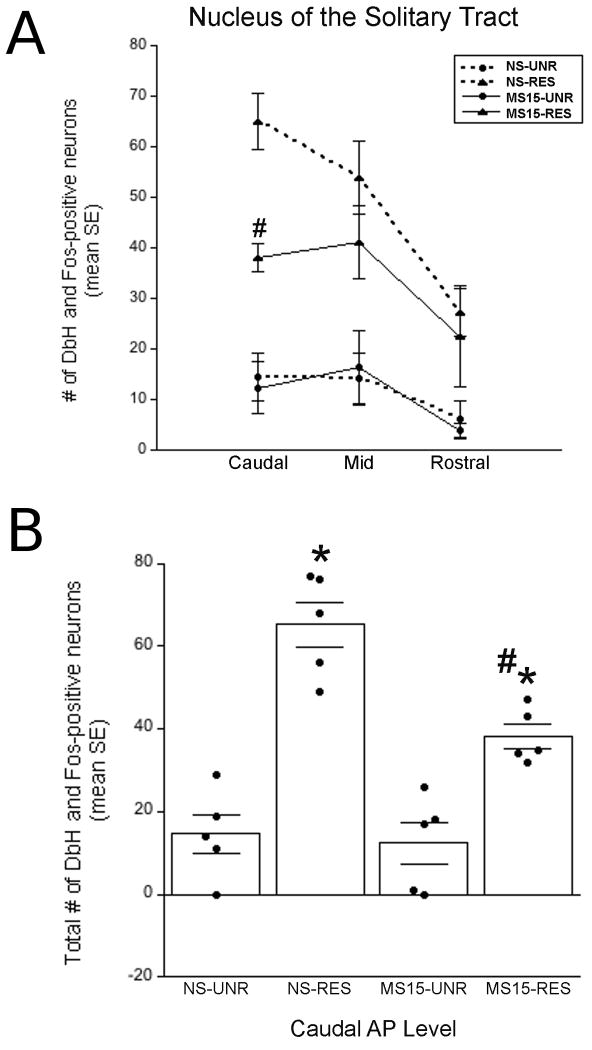
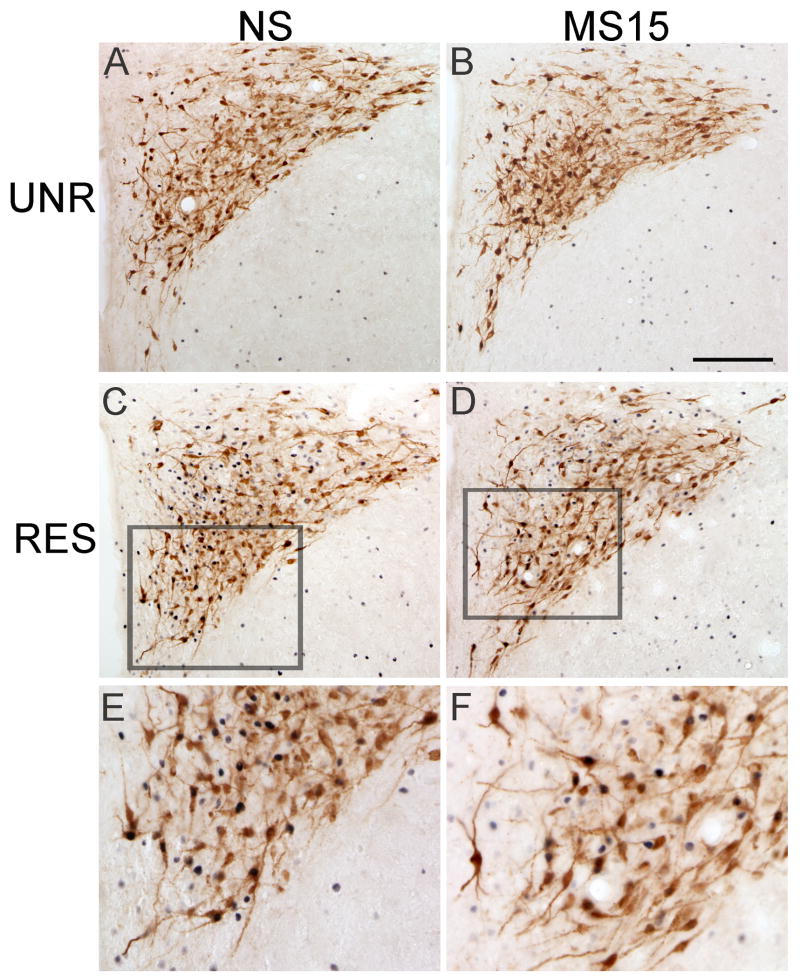
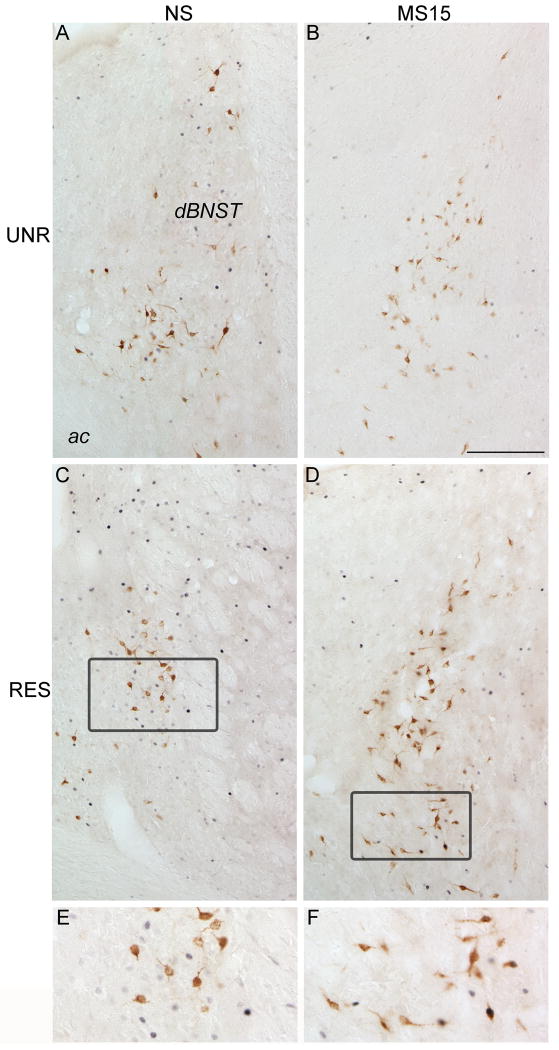
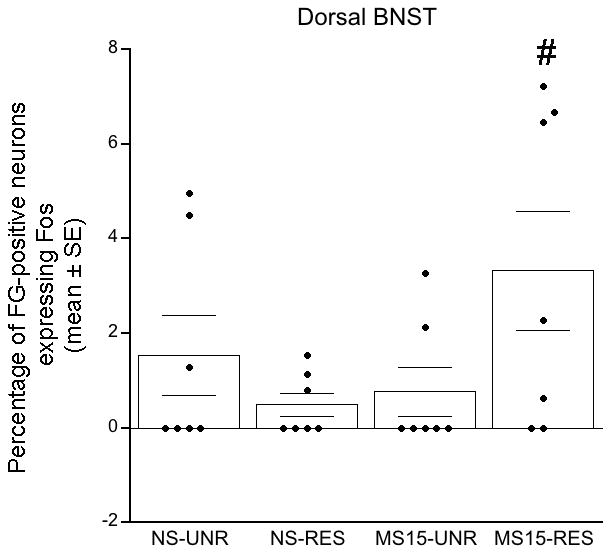
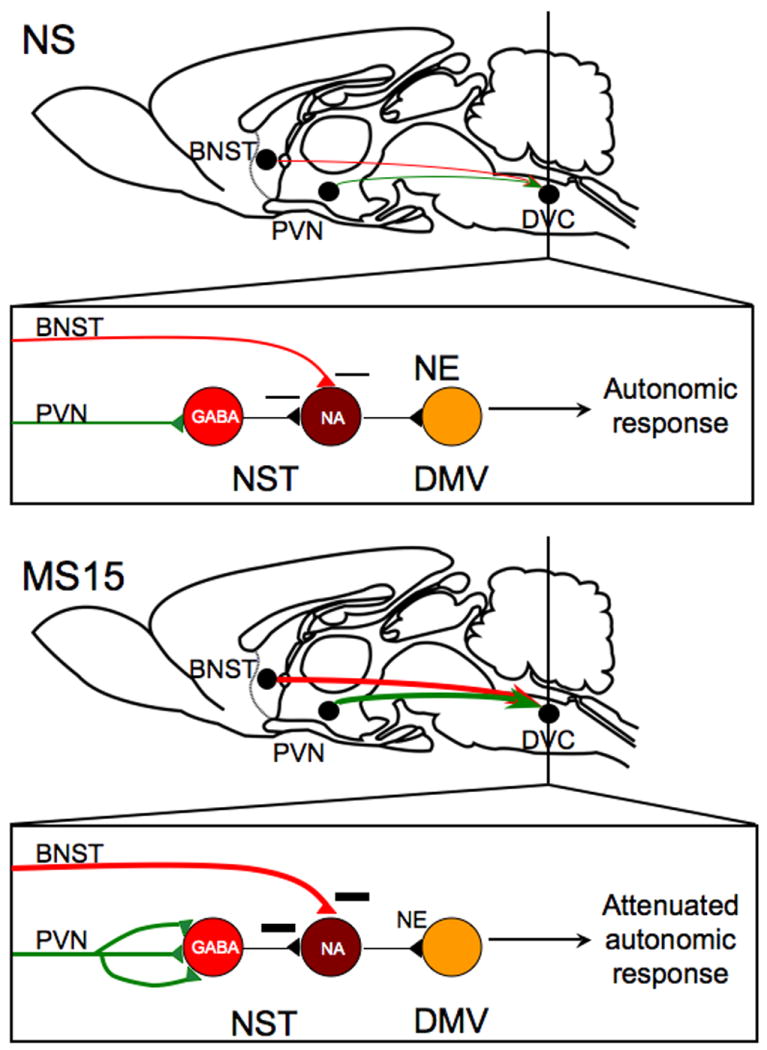
Repeated brief maternal separation (i.e. 15 min daily, MS15) of rat pups during the first one to two postnatal weeks enhances active maternal care received by the pups and attenuates their later behavioral and neuroendocrine responses to stress. In previous work, we found that MS15 also alters the developmental assembly and later structure of central neural circuits that control autonomic outflow to the viscera, suggesting that MS15 may alter central visceral circuit responses to stress. To examine this, juvenile rats with a developmental history of either MS15 or no separation (NS) received microinjection of retrograde neural tracer, FluoroGold (FG), into the hindbrain dorsal vagal complex (DVC). After 1 week, FG-injected rats and surgically intact littermates were exposed to either a 15-min restraint stress or an unrestrained control condition, and then perfused 1 h later. Brain tissue sections from surgically intact littermates were processed for Fos alone or in combination with phenotypic markers to examine stress-induced activation of neurons within the paraventricular nucleus of the hypothalamus (PVN), bed nucleus of the stria terminalis (BNST), and hindbrain DVC. Compared to NS controls, MS15 rats displayed less restraint-induced Fos activation within the dorsolateral BNST (dBNST), the caudal PVN, and noradrenergic neurons within the caudal DVC. To examine whether these differences corresponded with altered neural inputs to the DVC, sections from tracer-injected rats were double-labeled for FG and Fos to quantify retrogradely labeled neurons within hypothalamic and limbic forebrain regions of interest, and the proportion of these neurons activated after restraint. Only the dBNST displayed a significant effect of postnatal experience on restraint-induced Fos activation of DVC-projecting neurons. The distinct regional effects of MS15 on stress-induced recruitment of neurons within hypothalamic, limbic forebrain, and hindbrain regions has interesting implications for understanding how early life experience shapes the functional organization of stress-responsive circuits.
Copyright © 2011 IBRO. Published by Elsevier Ltd. All rights reserved.
Figures
References
-
- Abraham IM, Kovacs KJ. Postnatal handling alters the activation of stress-related neuronal circuitries. European Journal of Neuroscience. 2000;12:3003–3014. - PubMed
-
- Altschuler SM, Bao X, Bieger D, Hopkins DA, Miselis RR. Viscerotopic representation of the upper alimentary tract in the rat: sensory ganglia and nuclei of the solitary and spinal trigeminal tracts. The Journal of Comparative Neurology. 1989;283:248–268. - PubMed
-
- Aston-Jones G, Delfs JM, Druhan J, Zhu Y. The bed nucleus of the stria terminalis: a target site for noradrenergic actions in opiate withdrawal. Annals of the New York Academy of Sciences. 1999;877:486–498. - PubMed
-
- Bachelard H, Harland D, Gardiner SM, Kemp PA, Bennett T. Regional haemodynamic effects of noradrenaline injected into the hypothalamic paraventricular nuclei of conscious, unrestrained rats: possible mechanisms of action. Neuroscience. 1992;47:941. - PubMed
-
- Banihashemi L, Rinaman L. Noradrenergic inputs to the bed nucleus of the stria terminalis and paraventricular nucleus of the hypothalamus underlie hypothalamic-pituitary-adrenal axis but not hypophagic or conditioned avoidance responses to systemic yohimbine. The Journal of Neuroscience. 2006;26:11442–11453. - PMC - PubMed
Publication types
MeSH terms
Grants and funding
LinkOut - more resources
Full Text Sources
Medical
Miscellaneous
