


Programmed death-1 pathway limits central nervous system inflammation and neurologic deficits in murine experimental stroke
- PMID: 21737801
- PMCID: PMC3164218
- DOI: 10.1161/STROKEAHA.111.613182
Programmed death-1 pathway limits central nervous system inflammation and neurologic deficits in murine experimental stroke
Abstract
Background and purpose: Evaluation of infarct volumes and infiltrating immune cell populations in mice after middle cerebral artery occlusion strongly implicates a mixture of both pathogenic and regulatory immune cell subsets that affect stroke outcome. Our goal was to evaluate the contribution of the well-described coinhibitory pathway, programmed death (PD)-1, to the development of middle cerebral artery occlusion.
Methods: Infarct volumes, functional outcomes, and effects on infiltrating immune cell populations were compared in wild-type C57BL/6 versus PD-1-deficient mice after 60 minutes middle cerebral artery occlusion and 96 hours reperfusion.
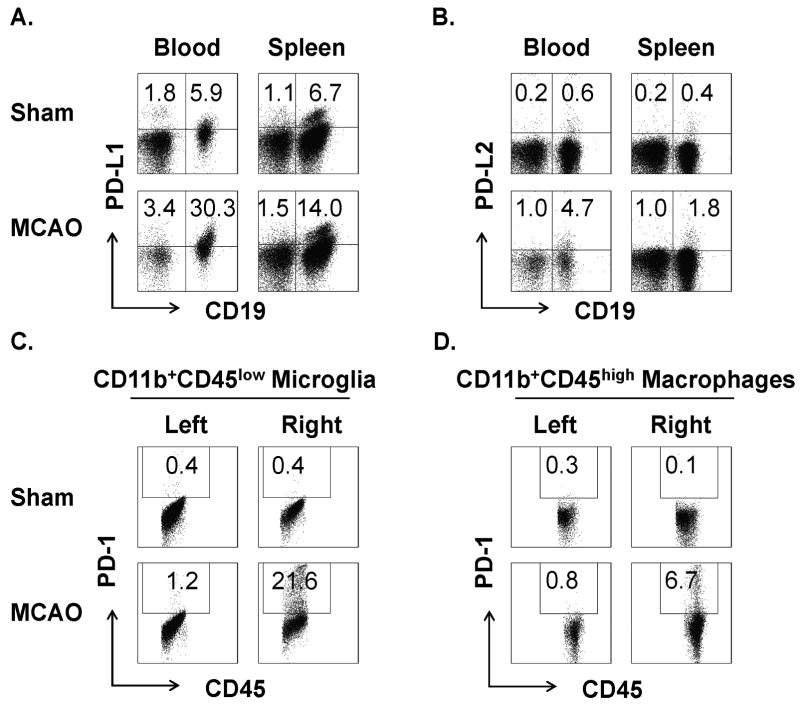
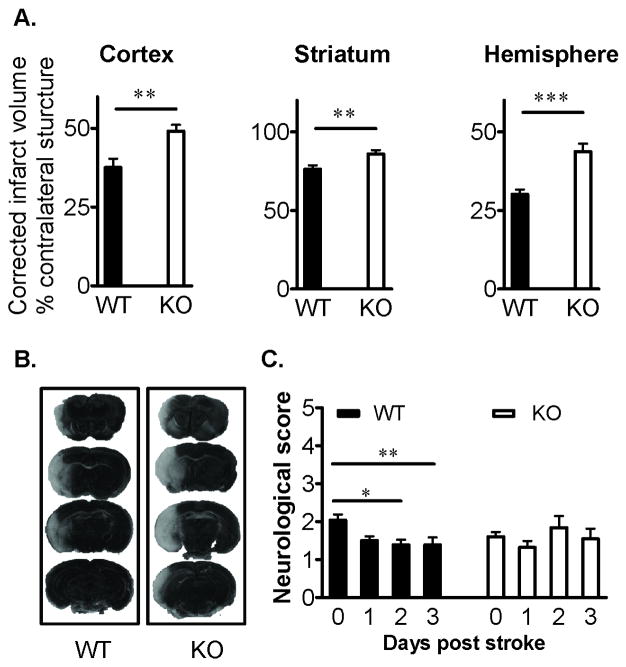
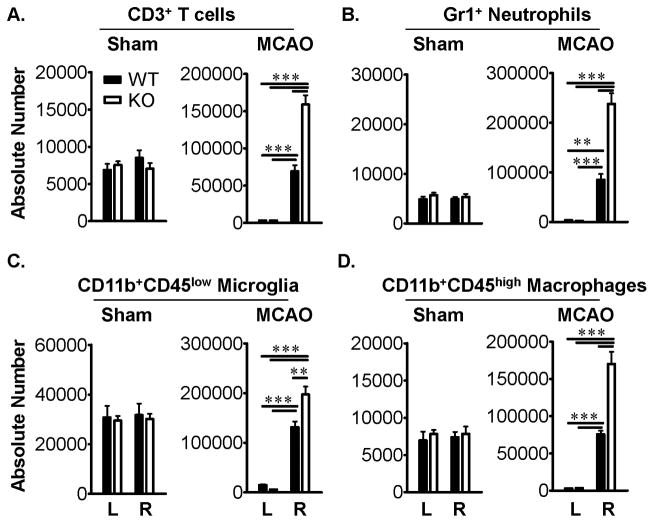
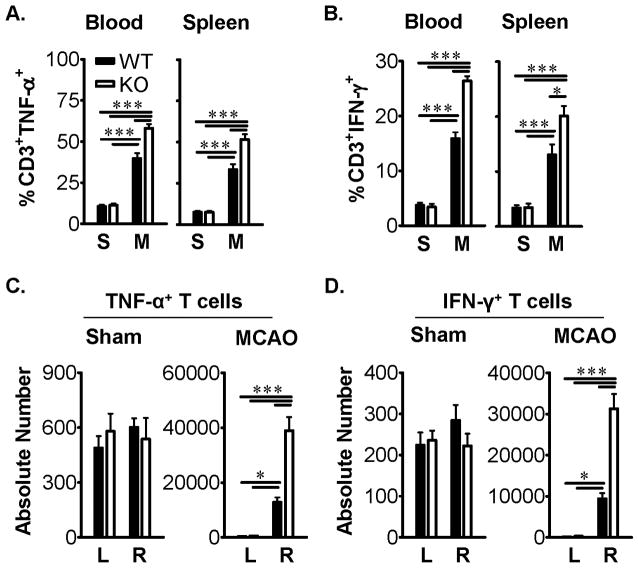
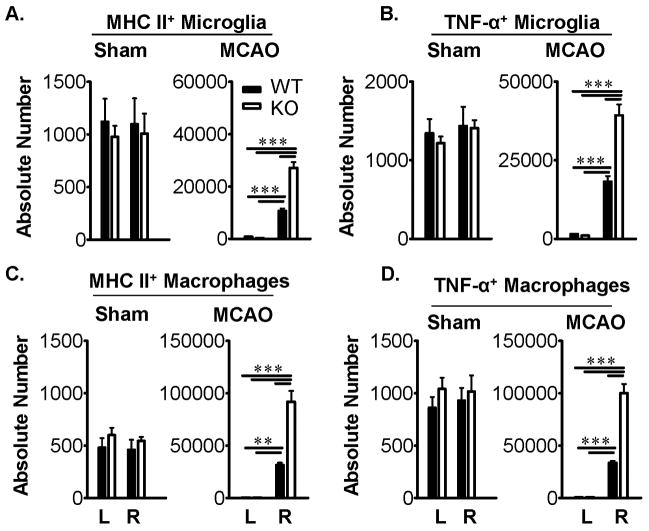
Results: The results clearly demonstrate a previously unrecognized activity of the PD-1 pathway to limit infarct volume, recruitment of inflammatory cells from the periphery, activation of macrophages and central nervous system microglia, and functional neurological deficits. These regulatory functions were associated with increased percentages of circulating PD-ligand-1 and PD-ligand-2 expressing CD19(+) B-cells in blood, the spleen, and central nervous system with the capacity to inhibit activation of inflammatory T-cells and central nervous system macrophages and microglial cells through upregulated PD-1.
Conclusions: Our novel observations are the first to implicate PD-1 signaling as a major protective pathway for limiting central nervous system inflammation in middle cerebral artery occlusion. This inhibitory circuit would likely be pivotal in reducing stroke-associated Toll-like receptor-2- and Toll like receptor-4-mediated release of neurotoxic factors by activated central nervous system microglia.
Conflict of interest statement
Figures
References
-
- Offner H, Subramanian S, Parker SM, Wang C, Afentoulis ME, Lewis A, et al. Splenic atrophy in experimental stroke is accompanied by increased regulatory T cells and circulating macrophages. J Immunol. 2006;176:6523–6531. - PubMed
-
- Nishimura H, Minato N, Nakano T, Honjo T. Immunological studies on PD-1-deficient mice: Implication of PD-1 as a negative regulator for B cell responses. Intl Immunol. 1998;10:1563–1572. - PubMed
-
- Keir ME, Francisco LM, Sharpe AH. PD-1 and its ligands in T-cell immunity. Current Opinion in Immunology. 2007;19:309–314. - PubMed
Publication types
MeSH terms
Substances
Grants and funding
LinkOut - more resources
Full Text Sources
Other Literature Sources
Medical
Research Materials
