


Evaluation of the SEDline to improve the safety and efficiency of conscious sedation
- PMID: 21738291
- PMCID: PMC3124903
- DOI: 10.1080/08998280.2011.11928715
Evaluation of the SEDline to improve the safety and efficiency of conscious sedation
Abstract
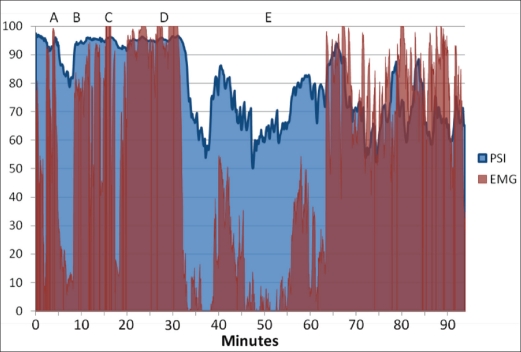
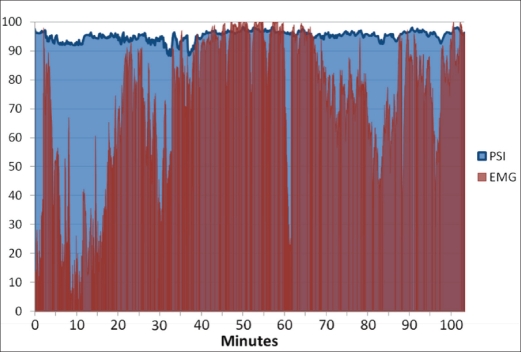
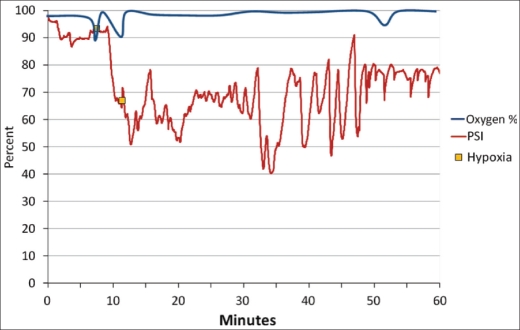
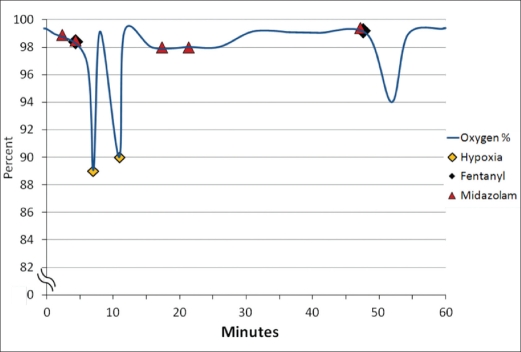
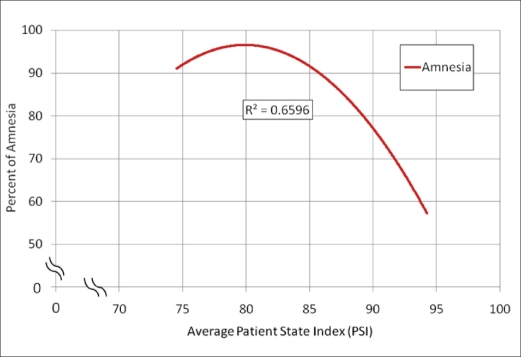
Brain function monitors have improved safety and efficiency in general anesthesia; however, they have not been adequately tested for guiding conscious sedation for periodontal surgical procedures. This study evaluated the patient state index (PSI) obtained from the SEDline monitor (Sedline Inc., San Diego, CA) to determine its capacity to improve the safety and efficiency of intravenous conscious sedation during outpatient periodontal surgery. Twenty-one patients at the periodontics clinic of Baylor College of Dentistry were admitted to the study in 2009 and sedated to a moderate level using midazolam and fentanyl during periodontal surgery. The PSI monitoring was blinded from the clinician, and the following data were collected: vital signs, Ramsay sedation scale (RSS), medications administered, adverse events, PSI, electroencephalography, and the patients' perspective through visual analogue scales. The data were correlated to evaluate the PSI's ability to assess the level of sedation. Results showed that the RSS and PSI did not correlate (r = -0.25) unless high values associated with electromyographical (EMG) activity were corrected (r = -0.47). Oxygen desaturation did not correlate with the PSI (r = -0.08). Satisfaction (r = -0.57) and amnesia (r = -0.55) both increased as the average PSI decreased. In conclusion, within the limits of this study, PSI appears to correlate with amnesia, allowing a practitioner to titrate medications to that effect. It did not provide advance warning of adverse events and had inherent inaccuracies due to EMG activity during oral surgery. The PSI has the potential to increase safety and efficiency in conscious sedation but requires further development to eliminate EMG activity from confounding the score.
Figures
References
-
- Bhananker SM, Posner KL, Cheney FW, Caplan RA, Lee LA, Domino KB. Injury and liability associated with monitored anesthesia care: a closed claims analysis. Anesthesiology. 2006;104(2):228–234. - PubMed
-
- Loskota WJ. Intraoperative EEG monitoring. J Crit Care. 2005;24(4):176–185.
-
- Green SM, Mason KP. Reformulation of the sedation continuum. JAMA. 2010;303(9):876–877. - PubMed
-
- Gan TJ, Glass PS, Windsor A, Payne F, Rosow C, Sebel P, Manberg P. Bispectral index monitoring allows faster emergence and improved recovery from propofol, alfentanil, and nitrous oxide anesthesia. BIS Utility Study Group. Anesthesiology. 1997;87(4):808–815. - PubMed
-
- Bannister CF, Brosius KK, Sigl JC, Meyer BJ, Sebel PS. The effect of bispectral index monitoring on anesthetic use and recovery in children anesthetized with sevoflurane in nitrous oxide. Anesth Analg. 2001;92(4):877–881. - PubMed
LinkOut - more resources
Full Text Sources