


Nonsurgical outpatient therapies for the management of female stress urinary incontinence: long-term effectiveness and durability
- PMID: 21738529
- PMCID: PMC3124122
- DOI: 10.1155/2011/176498
Nonsurgical outpatient therapies for the management of female stress urinary incontinence: long-term effectiveness and durability
Abstract
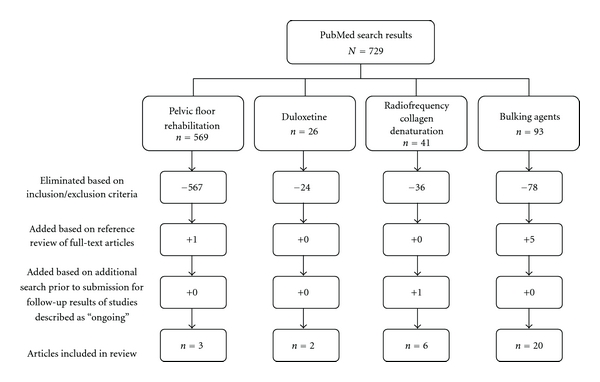
Objective. To evaluate long-term effectiveness and safety of conservative and minimally invasive outpatient treatments for female stress urinary incontinence (SUI) through a review of the literature. Methods. PubMed was searched for reports on prospective clinical trials with at least 12-month follow-up of minimally invasive treatments, pelvic floor rehabilitation, or pharmacotherapy in women with SUI. Each report was examined for long-term rates of effectiveness and safety. Results. Thirty-two clinical trial reports were included. Prospective long-term studies of pelvic floor rehabilitation were limited but indicated significant improvements with treatment adherence for at least 12 months. Poor initial tolerability with duloxetine resulted in substantial discontinuation. Most patients receiving transurethral radiofrequency collagen denaturation or urethral bulking agents reported significant long-term improvements, generally good tolerability, and safety. Conclusions. Conservative therapy is an appropriate initial approach for female SUI, but if therapy fails, radiofrequency collagen denaturation or bulking agents may be an attractive intermediate management step or alternative to surgery.
Figures
References
-
- Abrams P, Cardozo L, Fall M, et al. The standardisation of terminology in lower urinary tract function: report from the standardisation sub-committee of the International Continence Society. Urology. 2003;61(1):37–49. - PubMed
-
- NWHRC. Washington, DC, USA: National Women's Health Resource Center; 2007. Prevalence and treatment patterns of pelvic health disorders among U.S. women. Tech. Rep.
-
- Pang MW, Leung HY, Chan LW, Yip SK. The impact of urinary incontinence on quality of life among women in Hong Kong. Hong Kong Medical Journal. 2005;11(3):158–163. - PubMed
-
- Rogers RG. Urinary stress incontinence in women. The New England Journal of Medicine. 2008;358(10):1029–990. - PubMed
LinkOut - more resources
Full Text Sources
