


New insights into mechanisms of resistance to microtubule inhibitors
- PMID: 21741453
- PMCID: PMC3202616
- DOI: 10.1016/j.bbcan.2011.06.001
New insights into mechanisms of resistance to microtubule inhibitors
Abstract
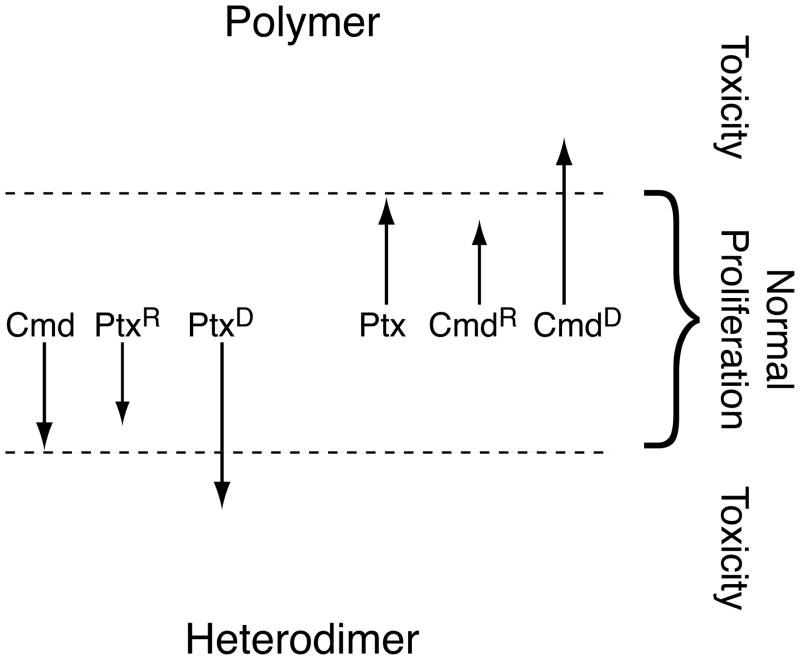
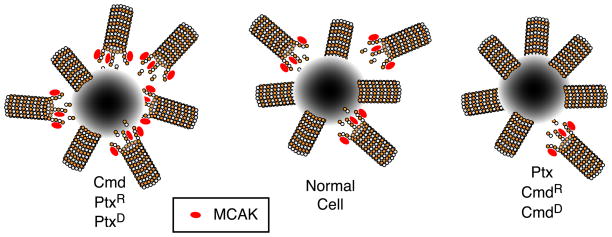
Mechanisms to explain tumor cell resistance to drugs that target the microtubule cytoskeleton have relied on the assumption that the drugs act either to suppress microtubule dynamics or to perturb the balance between assembled and nonassembled tubulin. Recently, however, it was found that these drugs also alter the stability of microtubule attachment to centrosomes, and do so at the same concentrations that are needed to inhibit cell division. Based on this new information, a new model is presented that explains resistance resulting from a variety of molecular changes that have been reported in the literature. The improved understanding of drug action and resistance has important implications for chemotherapy with these agents.
Copyright © 2011 Elsevier B.V. All rights reserved.
Figures
References
-
- Musacchio A, Salmon ED. The spindle-assembly checkpoint in space and time. Nat Rev Mol Cell Biol. 2007;8:379–393. - PubMed
-
- Blagosklonny MV. Mitotic arrest and cell fate: why and how mitotic inhibition of transcription drives mutually exclusive events. Cell Cycle. 2007;6:70–74. - PubMed
-
- Abdollahi A, Folkman J. Evading tumor evasion: current concepts and perspectives of anti-angiogenic cancer therapy. Drug Resist Updat. 2010;13:16–28. - PubMed
-
- Wiese C, Zheng Y. Microtubule nucleation: gamma-tubulin and beyond. J Cell Sci. 2006;119:4143–4153. - PubMed
Publication types
MeSH terms
Substances
Grants and funding
LinkOut - more resources
Full Text Sources
Other Literature Sources
