


Transverse versus vertical camera port incision in robotic radical prostatectomy: effect on incisional hernias and cosmesis
- PMID: 21741689
- PMCID: PMC4230820
- DOI: 10.1016/j.urology.2011.03.067
Transverse versus vertical camera port incision in robotic radical prostatectomy: effect on incisional hernias and cosmesis
Abstract
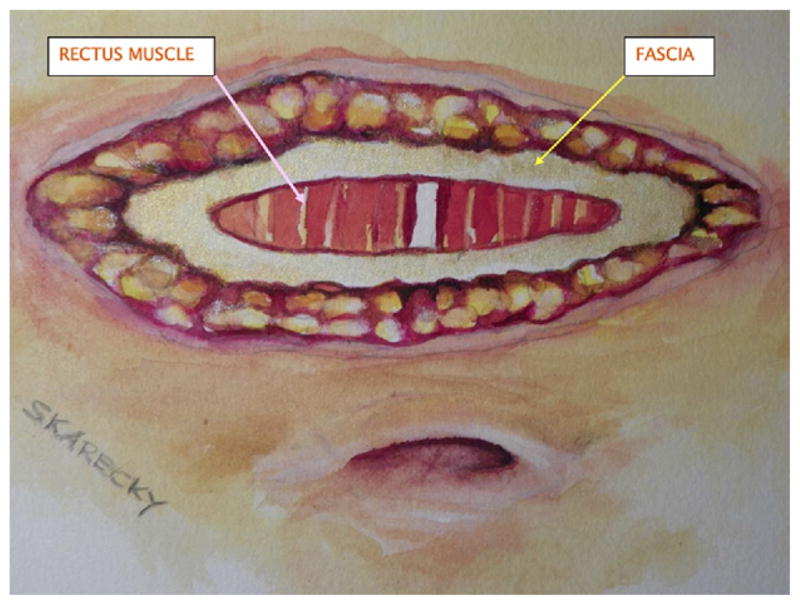
Objective: To examine the incidence of incisional hernias (IHs) and propose a simple modification to reduce the incidence of IHs. Robot-assisted radical prostatectomy (RARP) historically uses a vertical midline camera port incision to extract the prostate.
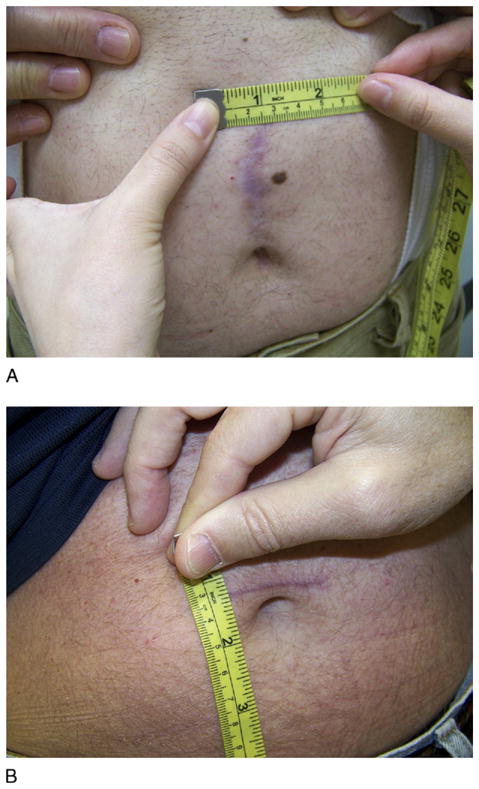
Methods: Of 900 consecutive RARPs, the initial 735 had a vertical and subsequent 165 transverse incisions. Two methods were used to identify IHs: clinic visits noted in the prospective database and screening using electronic mail. We compared the baseline factors between the vertical IH and IH-free cohorts. The maximal scar width was recorded in 178 consecutive men presenting to our clinic: vertical (n=107) and transverse (n=71).
Results: IHs occurred significantly more often after a vertical incision (5.3% vs 0.6%, P=.005). The IH rates after a vertical incision could be estimated to be as great as 16.7% (18 of 108) using the electronic mail respondents or as low as 3.3% (21 of 627) according to clinic follow-up. On univariate analysis, baseline age, International Index of Erectile Function 5-item questionnaire, prostate weight, bother score (all P≤.05), and body mass index (P=.058) were associated with an increased risk of an IH. After adjusting for baseline factors on multivariate logistic regression analysis, the relative odds of developing an IH with a vertical versus transverse incision was 11 (95% confidence interval 1.5-82). The average maximal scar width was reduced from 5.5 to 2.0 mm (P<.0001).
Conclusion: In the present sample population, the vertical IH rate was estimated to be potentially as low as 3.3% or as great as 16.7%. On multivariate analysis, a greater body mass index and larger prostate size significantly increased the risk of hernia development. Transverse incisions dramatically reduced the rate of IHs and the maximal scar width. The IH rates varied significantly by reporting method.
Copyright © 2011 Elsevier Inc. All rights reserved.
Figures
Comment in
-
Editorial comment.Urology. 2011 Sep;78(3):590-1. doi: 10.1016/j.urology.2011.05.001. Urology. 2011. PMID: 21884908 No abstract available.
References
-
- Patel VR, Palmer KJ, Coughlin G, Samavedi S. Robot-assisted laparoscopic radical prostatectomy: perioperative outcomes of 1500 cases. J Endourol. 2008;22:2299–2305. - PubMed
-
- Menon M, Shrivastava A, Kaul S, et al. Vattikuti Institute prostatectomy: contemporary technique and analysis of results. Eur Urol. 2007;51:648–657. - PubMed
-
- Martinez-Pineiro L, Caceres F, Sanchez C, et al. Learning curve of laparoscopic radical prostatectomy in a university teaching hospital; experience after the first 600 cases. Eur Urol Suppl. 2006;5:914–924.
-
- Blatt AM, Fadahunsi A, Ahn C, et al. Surgical complications related to robotic prostatectomy; prospective analysis (analysis) J Urol. 2009;181:353.
-
- Mudge M, Hughes LE. Incisional hernia; a 10 year prospective study of incidence and attitudes. Br J Surg. 1985;72:70–71. - PubMed
Publication types
MeSH terms
Grants and funding
LinkOut - more resources
Full Text Sources
Medical
