


G protein coupled receptor specificity for C3a and compound 48/80-induced degranulation in human mast cells: roles of Mas-related genes MrgX1 and MrgX2
- PMID: 21741965
- PMCID: PMC3169012
- DOI: 10.1016/j.ejphar.2011.06.027
G protein coupled receptor specificity for C3a and compound 48/80-induced degranulation in human mast cells: roles of Mas-related genes MrgX1 and MrgX2
Abstract
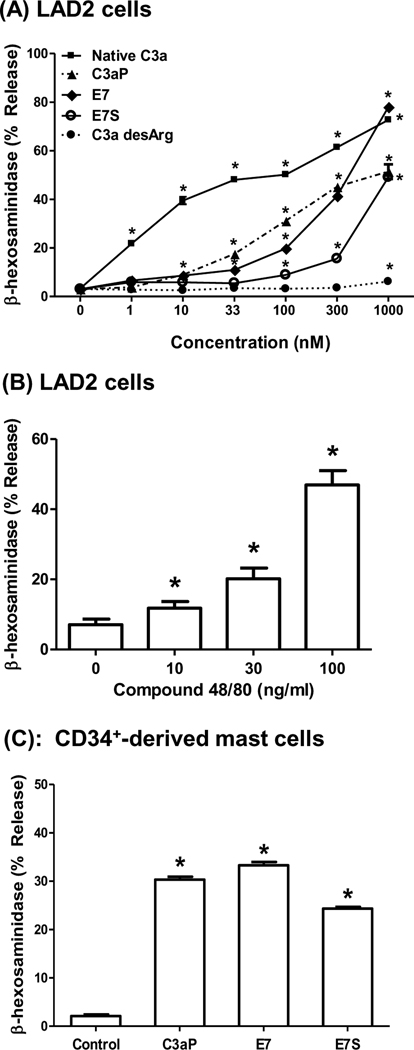
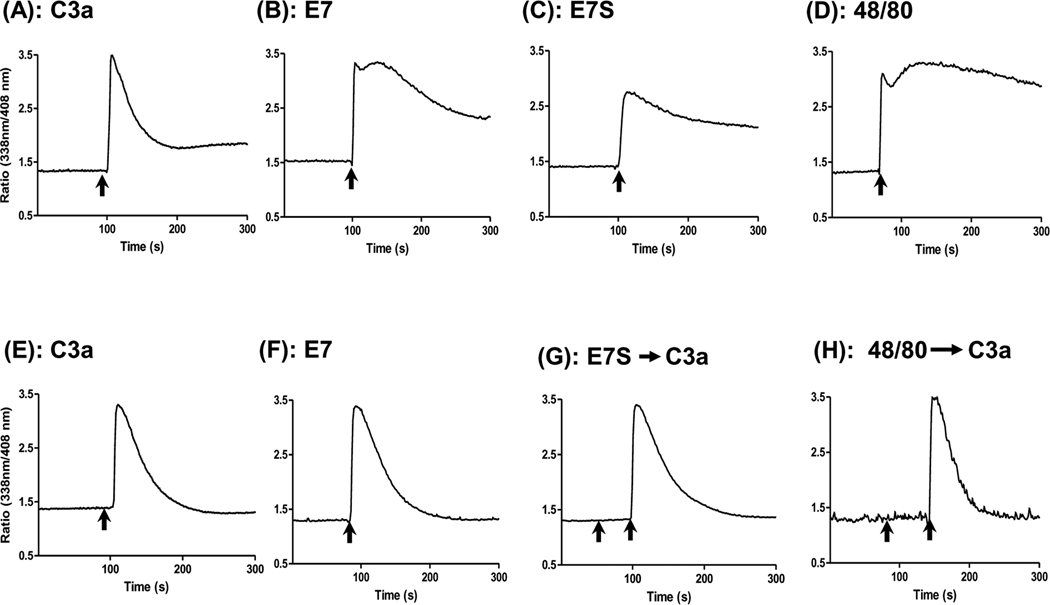
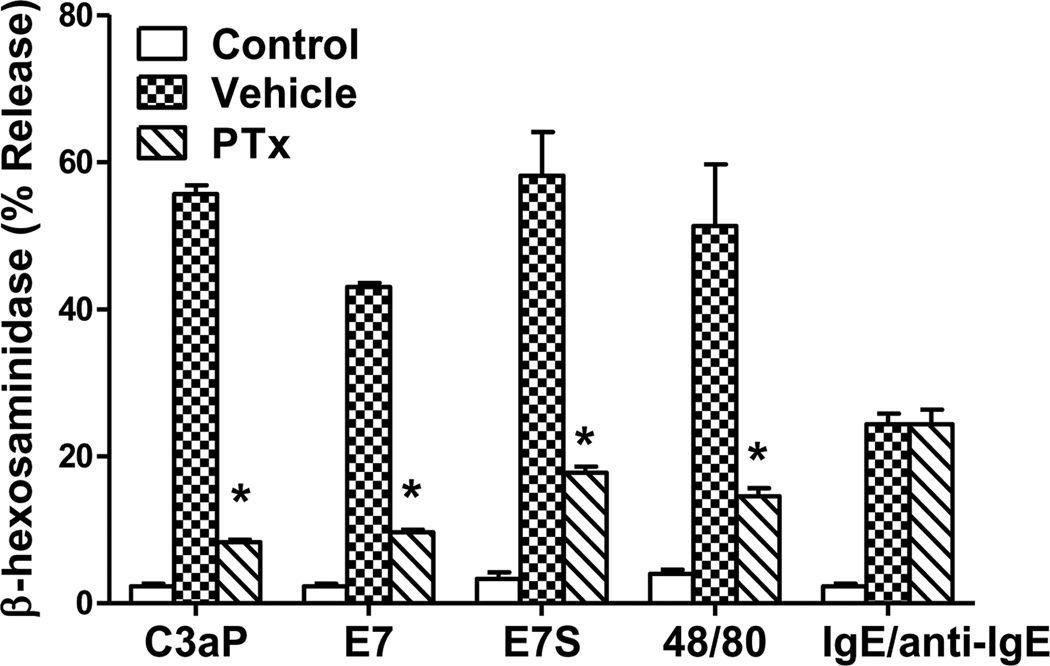
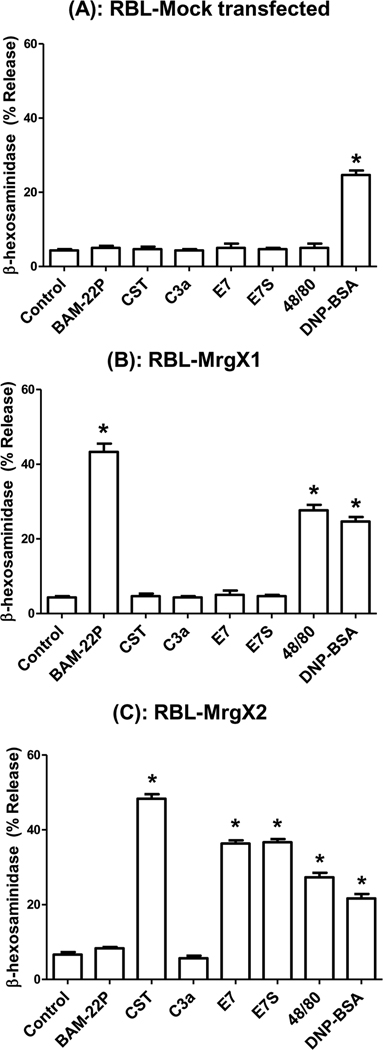
Although human mast cells express G protein coupled receptors for the anaphylatoxin C3a, previous studies indicated that C3a causes mast cell degranulation, at least in part, via a C3a receptor-independent mechanism similar to that proposed for polycationic molecules such as compound 48/80. The purpose of the present study was to delineate the receptor specificity of C3a-induced degranulation in human mast cells. We found that C3a, a C3a receptor "superagonist" (E7) and compound 48/80 induced Ca(2+) mobilization and degranulation in a differentiated human mast cell line, LAD2. However, C3a and E7 caused Ca(2+) mobilization in an immature mast cell line, HMC-1 but compound 48/80 did not. We have previously shown that LAD2 cells express MrgX1 and MrgX2 but HMC-1 cells do not. To delineate the receptor specificity for C3a and compound 48/80 further, we generated stable transfectants expressing MrgX1 and MrgX2 in a rodent mast cell line, RBL-2H3 cells. We found that compound 48/80 caused degranulation in RBL-2H3 cells expressing MrgX1 and MrgX2 but C3a did not. By contrast, E7 activated RBL-2H3 cells expressing MrgX2 but not MrgX1. These findings demonstrate that in contrast to previous reports, C3a and compound 48/80 do not use a shared mechanism for mast cell degranulation. It shows that while compound 48/80 utilizes MrgX1 and MrgX2 for mast cell degranulation C3a does not. It further reveals the novel finding that the previously characterized synthetic peptide, C3a receptor "superagonist" E7 activates human mast cells via two mechanisms; one involving the C3a receptor and the other MrgX2.
Copyright © 2011. Published by Elsevier B.V.
Figures
References
-
- Ahamed J, Haribabu B, Ali H. Cutting edge: Differential regulation of chemoattractant receptor-induced degranulation and chemokine production by receptor phosphorylation. J Immunol. 2001;167:3559–3563. - PubMed
-
- Ahamed J, Venkatesha RT, Thangam EB, Ali H. C3a enhances nerve growth factor-induced NFAT activation and chemokine production in a human mast cell line, HMC-1. J Immunol. 2004;172:6961–6968. - PubMed
-
- Ali H, Ahamed J, Hernandez-Munain C, Baron JL, Krangel MS, Patel DD. Chemokine production by G protein-coupled receptor activation in a human mast cell line: roles of extracellular signal-regulated kinase and NFAT. J Immunol. 2000;165:7215–7223. - PubMed
-
- Ali H, Richardson RM, Tomhave ED, Didsbury JR, Snyderman R. Differences in phosphorylation of formylpeptide and C5a chemoattractant receptors correlate with differences in desensitization. J Biol Chem. 1993;268:24247–24254. - PubMed
-
- Ali H, Richardson RM, Tomhave ED, DuBose RA, Haribabu B, Snyderman R. Regulation of stably transfected platelet activating factor receptor in RBL-2H3 cells. Role of multiple G proteins and receptor phosphorylation. J Biol Chem. 1994;269:24557–24563. - PubMed
Publication types
MeSH terms
Substances
Grants and funding
LinkOut - more resources
Full Text Sources
Other Literature Sources
Molecular Biology Databases
Miscellaneous
