


The dynamic modulation of GABA(A) receptor trafficking and its role in regulating the plasticity of inhibitory synapses
- PMID: 21742794
- PMCID: PMC4382539
- DOI: 10.1152/physrev.00015.2010
The dynamic modulation of GABA(A) receptor trafficking and its role in regulating the plasticity of inhibitory synapses
Abstract
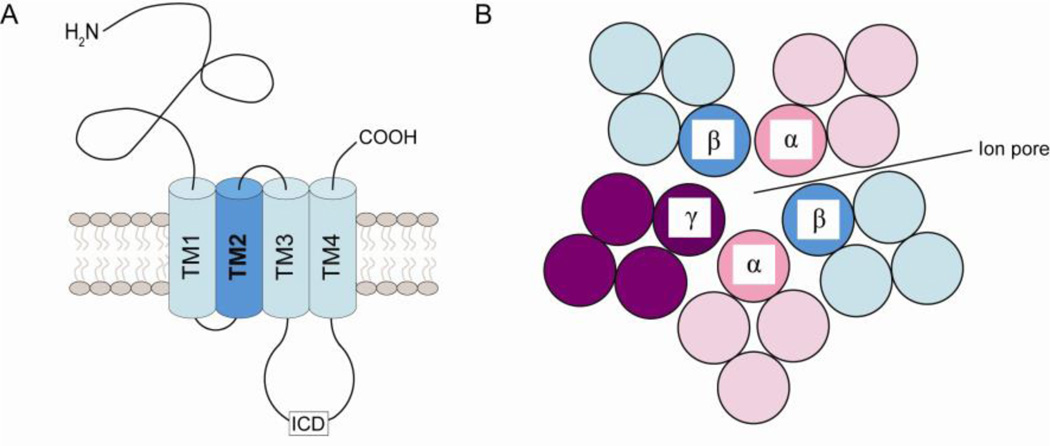
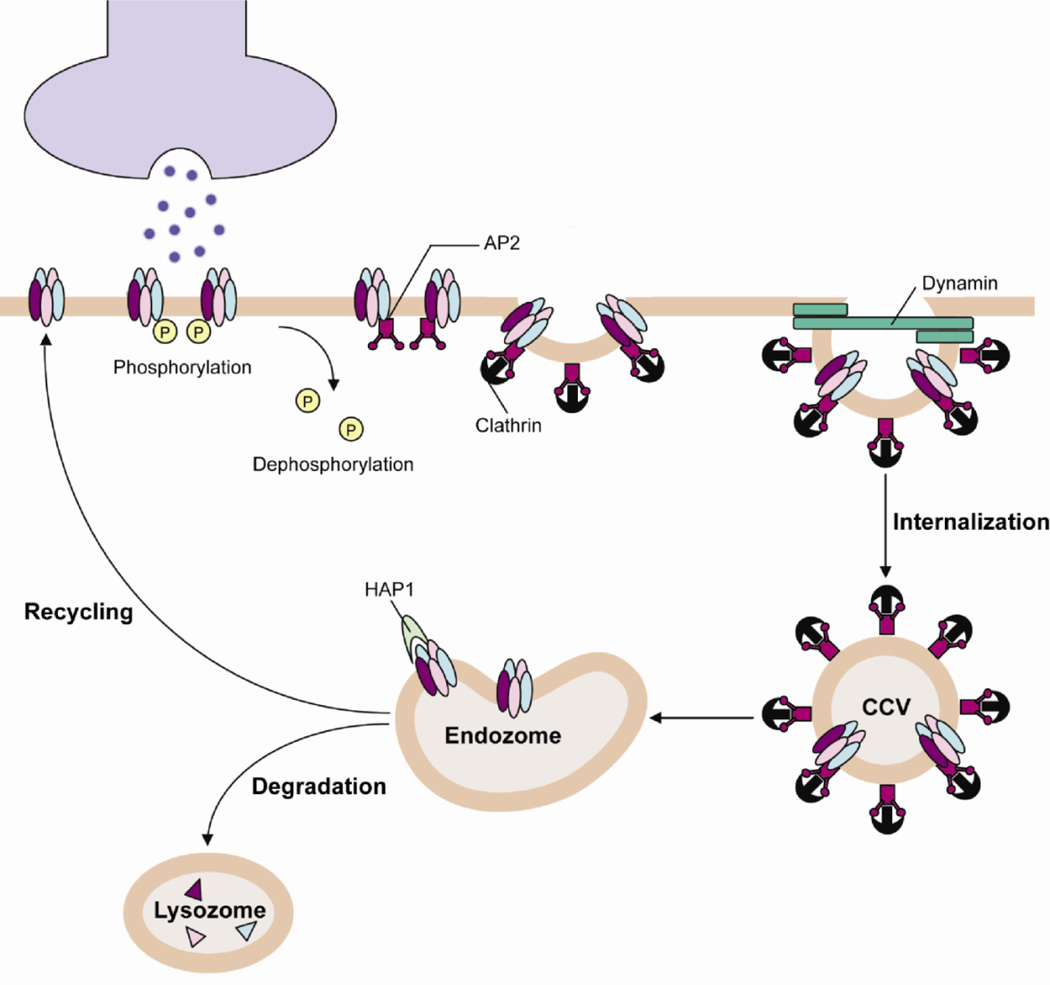
Inhibition in the adult mammalian central nervous system (CNS) is mediated by γ-aminobutyric acid (GABA). The fast inhibitory actions of GABA are mediated by GABA type A receptors (GABA(A)Rs); they mediate both phasic and tonic inhibition in the brain and are the principle sites of action for anticonvulsant, anxiolytic, and sedative-hypnotic agents that include benzodiazepines, barbiturates, neurosteroids, and some general anesthetics. GABA(A)Rs are heteropentameric ligand-gated ion channels that are found concentrated at inhibitory postsynaptic sites where they mediate phasic inhibition and at extrasynaptic sites where they mediate tonic inhibition. The efficacy of inhibition and thus neuronal excitability is critically dependent on the accumulation of specific GABA(A)R subtypes at inhibitory synapses. Here we evaluate how neurons control the number of GABA(A)Rs on the neuronal plasma membrane together with their selective stabilization at synaptic sites. We then go on to examine the impact that these processes have on the strength of synaptic inhibition and behavior.
Figures
References
-
- Ali AB, Thomson AM. Synaptic alpha 5 subunit-containing GABAA receptors mediate IPSPs elicited by dendrite-preferring cells in rat neocortex. Cereb Cortex. 2008;18:1260–1271. - PubMed
-
- Bannai H, Levi S, Schweizer C, Inoue T, Launey T, Racine V, Sibarita JB, Mikoshiba K, Triller AZ. Activity-dependent tuning of inhibitory neurotransmission based on GABAAR diffusion dynamics. 2009;62:670–682. 2009. - PubMed
-
- Beck M, Brickley K, Wilkinson HL, Sharma S, Smith M, Chazot PL, Pollard S, Stephenson FA. Identification, molecular cloning, and characterization of a novel GABAA receptor-associated protein, GRIF-1. J Biol Chem. 2002;277:30079–30090. - PubMed
Publication types
MeSH terms
Substances
Grants and funding
LinkOut - more resources
Full Text Sources
Other Literature Sources
Molecular Biology Databases
