


Tracking genome engineering outcome at individual DNA breakpoints
- PMID: 21743461
- PMCID: PMC3415300
- DOI: 10.1038/nmeth.1648
Tracking genome engineering outcome at individual DNA breakpoints
Abstract
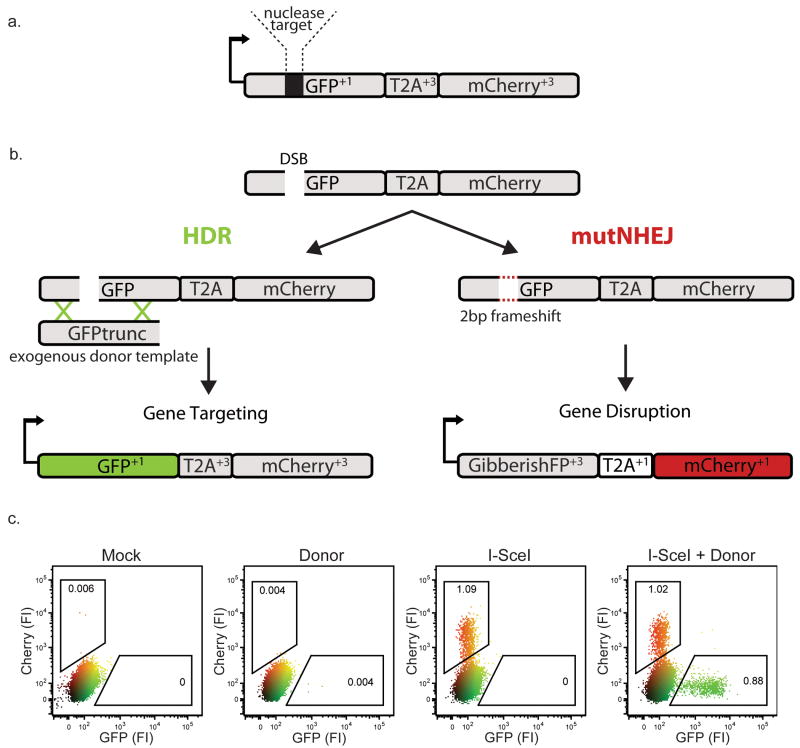
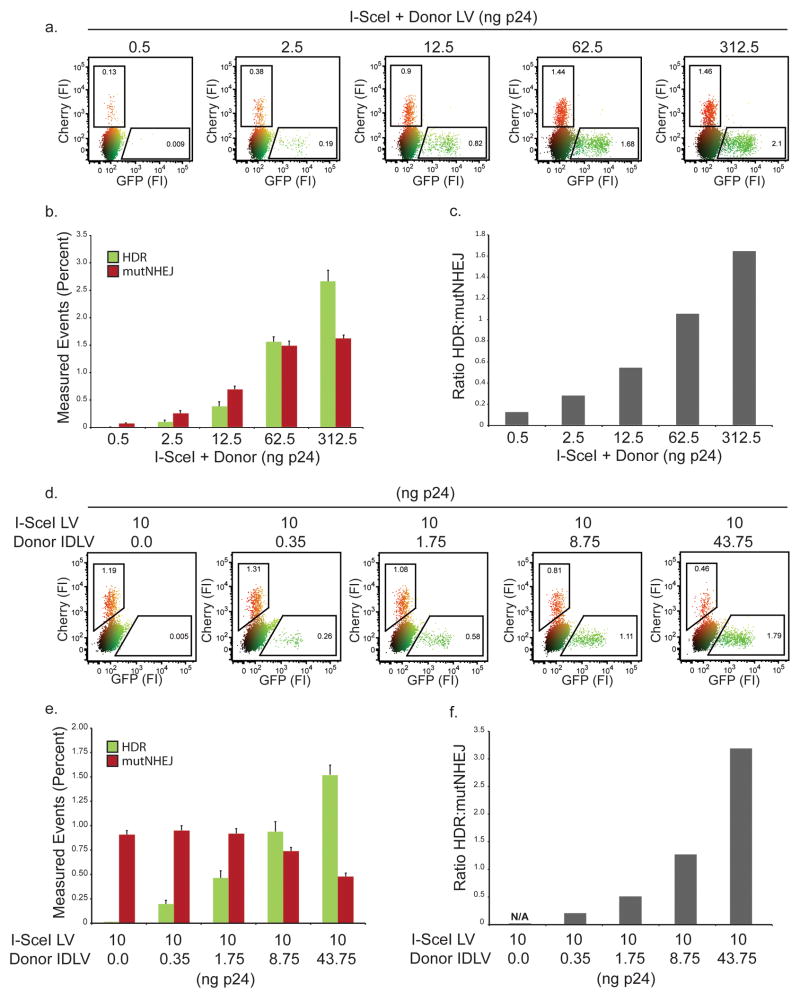
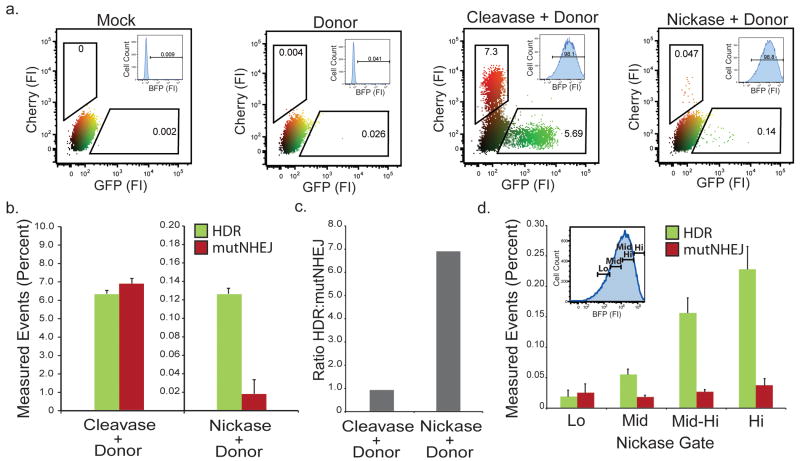
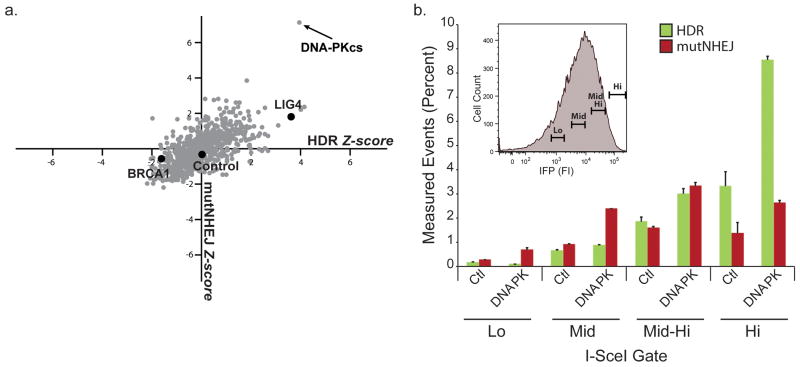
Site-specific genome engineering technologies are increasingly important tools in the postgenomic era, where biotechnological objectives often require organisms with precisely modified genomes. Rare-cutting endonucleases, through their capacity to create a targeted DNA strand break, are one of the most promising of these technologies. However, realizing the full potential of nuclease-induced genome engineering requires a detailed understanding of the variables that influence resolution of nuclease-induced DNA breaks. Here we present a genome engineering reporter system, designated 'traffic light', that supports rapid flow-cytometric analysis of repair pathway choice at individual DNA breaks, quantitative tracking of nuclease expression and donor template delivery, and high-throughput screens for factors that bias the engineering outcome. We applied the traffic light system to evaluate the efficiency and outcome of nuclease-induced genome engineering in human cell lines and identified strategies to facilitate isolation of cells in which a desired engineering outcome has occurred.
Conflict of interest statement
Figures

Comment in
-
Seeing the light: integrating genome engineering with double-strand break repair.Nat Methods. 2011 Jul 28;8(8):628-30. doi: 10.1038/nmeth.1656. Nat Methods. 2011. PMID: 21799496 No abstract available.
References
-
- Carr PA, Church GM. Genome engineering. Nat Biotechnol. 2009;27:1151–1162. - PubMed
-
- Pâques F, Duchateau P. Meganucleases and DNA double-strand break-induced recombination: perspectives for gene therapy. Curr Gene Ther. 2007;7:49–66. - PubMed
-
- Porteus MH, Carroll D. Gene targeting using zinc finger nucleases. Nat Biotech. 2005;23:967–973. - PubMed
-
- Caldecott KW. Single-strand break repair and genetic disease. Nat Rev Genet. 2008;9:619–631. - PubMed
Publication types
MeSH terms
Grants and funding
- R01 HL075453/HL/NHLBI NIH HHS/United States
- T32 GM07270/GM/NIGMS NIH HHS/United States
- RL1 CA133832/CA/NCI NIH HHS/United States
- T32 GM007270/GM/NIGMS NIH HHS/United States
- PL1-HL092557/HL/NHLBI NIH HHS/United States
- PL1 HL092557/HL/NHLBI NIH HHS/United States
- RL1CA133832/CA/NCI NIH HHS/United States
- R01-HL075453/HL/NHLBI NIH HHS/United States
- UL1 RR024921/RR/NCRR NIH HHS/United States
- RL1-HL092553/HL/NHLBI NIH HHS/United States
- UL1DE019582/DE/NIDCR NIH HHS/United States
- RL1 HL092553/HL/NHLBI NIH HHS/United States
- R21 AI064581/AI/NIAID NIH HHS/United States
- UL1 DE019582/DE/NIDCR NIH HHS/United States
LinkOut - more resources
Full Text Sources
Other Literature Sources
Research Materials
