Changes in risk perceptions in relation to self-reported colorectal cancer screening among first-degree relatives of colorectal cancer cases enrolled in a randomized trial
- PMID: 21744967
- PMCID: PMC3201806
- DOI: 10.1037/a0024288
Changes in risk perceptions in relation to self-reported colorectal cancer screening among first-degree relatives of colorectal cancer cases enrolled in a randomized trial
Abstract
Objective: This secondary data analysis was conducted to evaluate the applicability of the Risk Reappraisal Hypothesis, which has been proposed to explain the influence of performing a health behavior on perceived risk. Data were collected in the context of a randomized trial, which found that an individually tailored, multicomponent intervention was successful in increasing colorectal cancer (CRC) screening among first-degree relatives of CRC cases.
Method: The ethnically diverse study sample (N = 841; 29% Latino, 21% African American, 20% Asian) consisted of adult siblings and children (40-80 years) of CRC cases, identified through the California Cancer Registry. Data were collected at baseline and at 6- and 12-month follow-up. Changes in self-reported risk perception (perceived likelihood of developing CRC) were examined over the study period in relation to study condition and screening status.
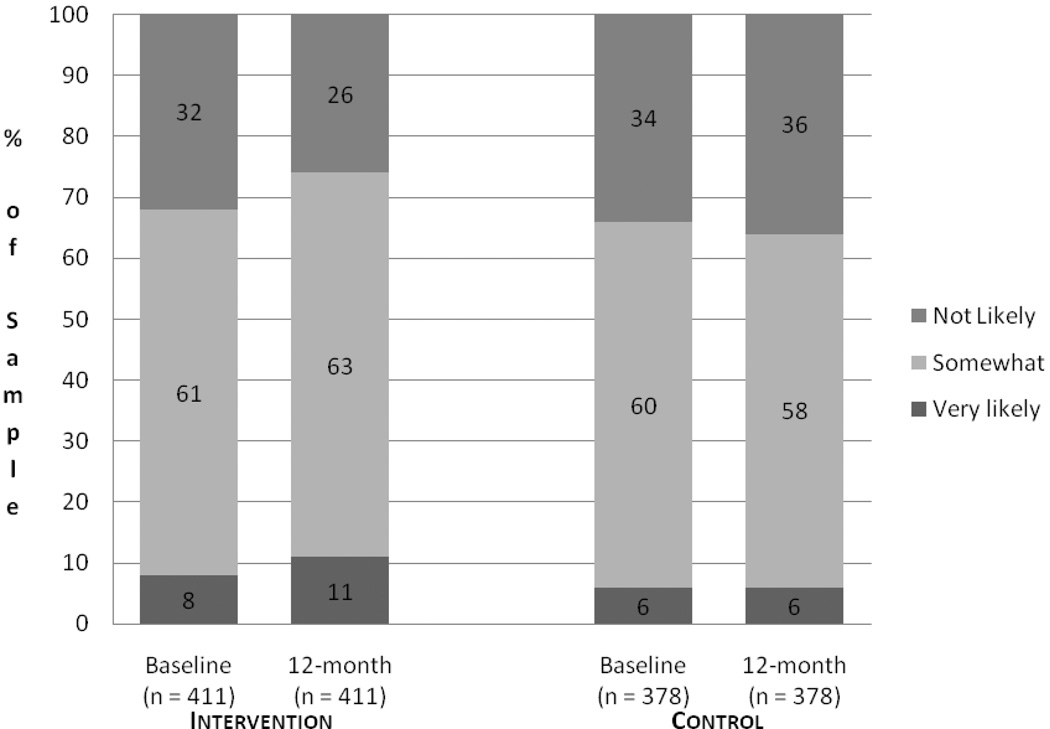
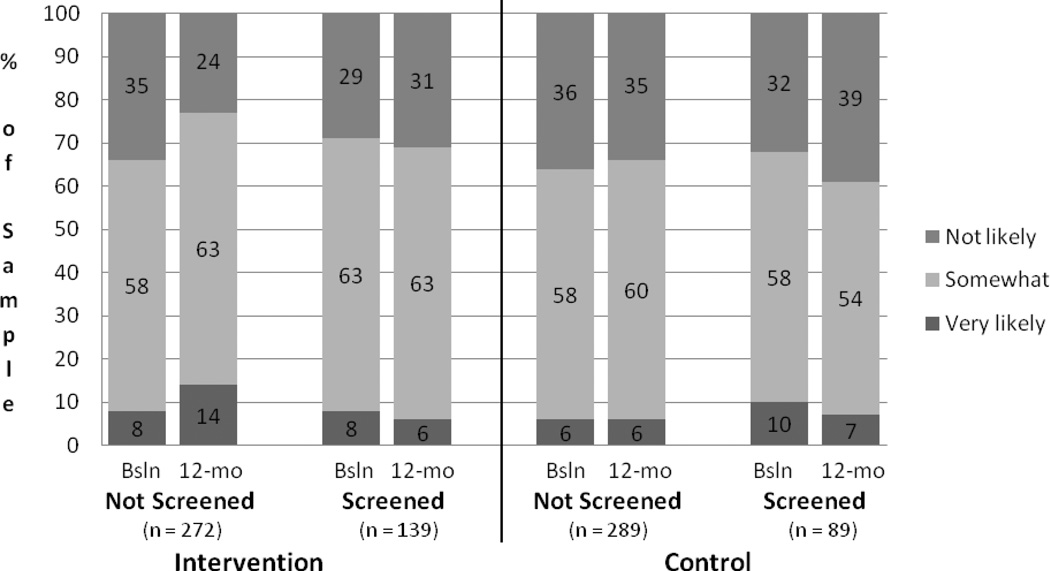
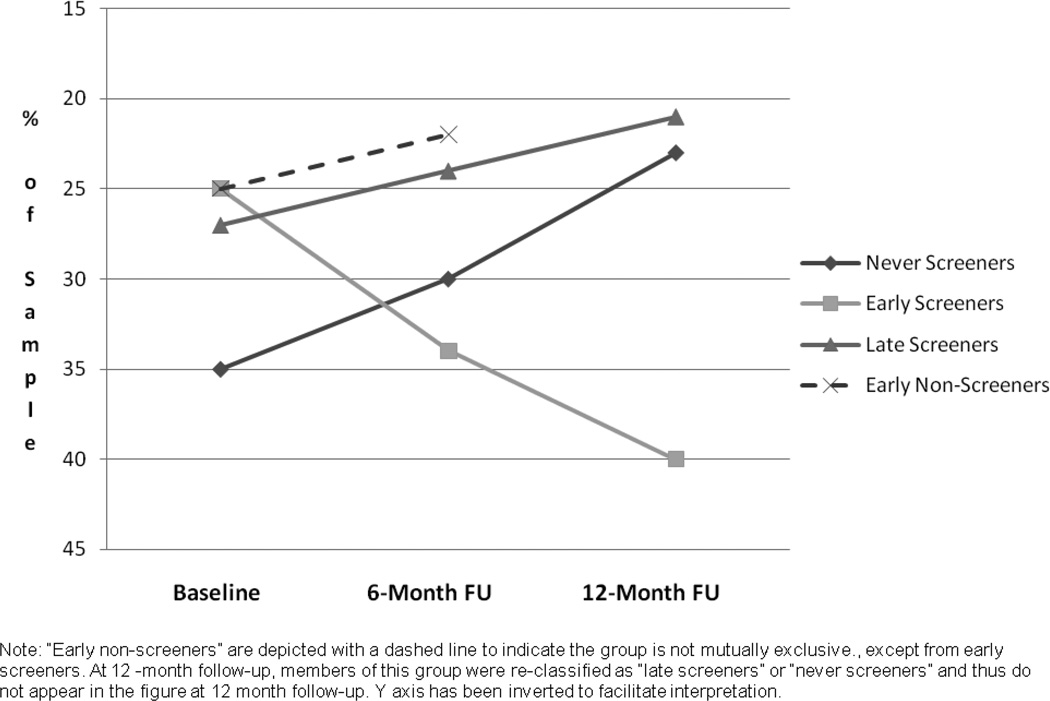
Results: Greater increases in perceived risk were observed among intervention versus control-group participants over the study period, but increases were limited to intervention participants who had not been screened. We also examined trajectories of perceived risk in relation to timing of screening receipt (e.g., before 6 months, 6-12 months, never). Continued upward shifts in risk were observed during the study period among intervention participants not screened during the study. In contrast, participants screened by 6 months displayed a reduction or leveling off in perceived risk between 6- and 12-month follow-up.
Conclusion: Results provide support for the applicability of the Risk Reappraisal Hypothesis within a high-risk sample enrolled in a CRC screening promotion trial. Future research is needed to explore the impact of short-term risk reductions on future CRC screening behavior.
Figures
References
-
- Ajzen I. From intentions to actions: A theory of planned behavior. In: Kuhl J, Beckmann J, editors. Action-control: From cognition to behavior. Heidelberg: Springer; 1985. pp. 11–39. 1985.
-
- American Cancer Society. Cancer Facts & Figures 2009. Atlanta: American Cancer Society; 2009.
-
- Bastani R, Glenn BA, Maxwell AE, Ganz PA, Mojica CM, Chang LC. Validation of self-reported colorectal cancer screening in a study of ethnically diverse first degree relatives of colorectal cancer patients. Cancer Epidemiology, Biomarkers & Prevention. 2008;17(4):791–798. - PubMed
-
- Bastani R, Maxwell AE, Glenn BA, Ganz PA, Mojica CM, Chang LC, Crespi CM. Increasing colorectal cancer screening within a sample of ethnically-diverse first-degree relatives of colorectal cancer cases: Results of a randomized trial. Manuscript in preparation.